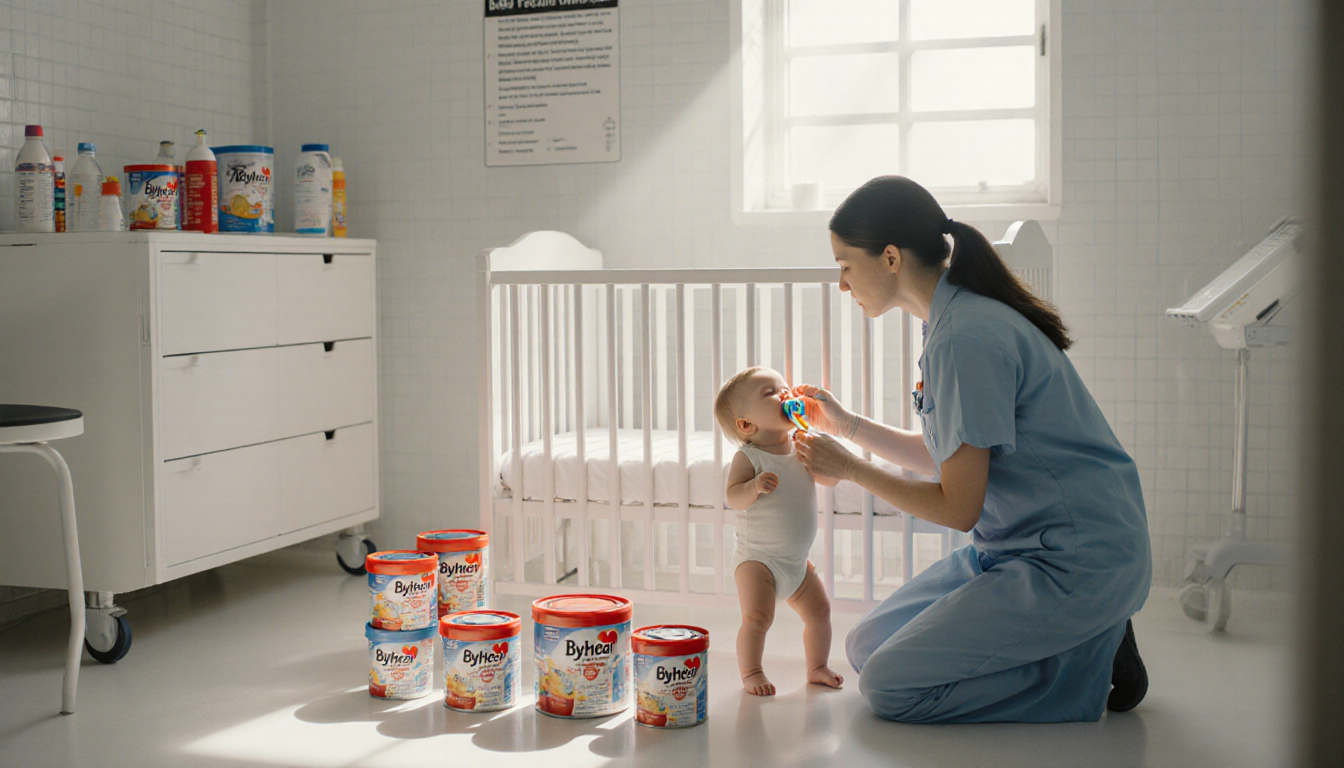

On Wednesday, federal health officials widened the scope of an infant botulism outbreak linked to the recalled ByHeart baby formula, now covering every case reported since the company began production in March 2022.
Expanded Outbreak Definition
The U.S. Centers for Disease Control and Prevention updated the case definition to include “any infant with botulism who was exposed to ByHeart formula at any time since the product’s release.” The most recent illness was reported on Dec. 1. The outbreak now includes at least 51 infants in 19 states, with no deaths reported.
Recall and Company Response
ByHeart, a New York‑based organic infant formula manufacturer founded in 2016, recalled all products sold in the U.S. on Nov. 11. The company, which supplies about 200,000 cans each month, accounts for roughly 1 % of the U.S. infant formula market. In a statement released late Wednesday, ByHeart officials said they are cooperating with federal officials “to understand the full scope of related cases” and that new CDC and FDA reports will help inform the investigation as the company seeks the root cause of the contamination.
Consumer Impact
Andi Galindo, 36, of Redondo Beach, California, shared her distress after her 5‑week‑old daughter Rowan was hospitalized in Dec. 2023 with infant botulism following consumption of ByHeart formula. Galindo said she had chosen the brand because a lactation consultant described it as “very natural, very gentle, very good for the babies.” She added, “That’s a hard one. If there is proof that there were issues with their manufacturing and their plant all the way back from the beginning, that is a problem and they really need to be held accountable.”
Amy Mazziotti, 43, of Burbank, California, recounted that her 5‑month‑old son Hank fell ill in March after starting ByHeart formula. She said being included in the investigation “feels like a win for all of us.” Mazziotti added, “I’ve known in my gut from the beginning that ByHeart was the reason Hank got sick, and to see that these cases are now part of the investigation brings me to tears — a mix of relief, gratitude and hope that the truth is finally being recognized.”
Lab Findings and Historical Issues
The FDA inspected ByHeart plants in Allerton, Iowa, and Portland, Oregon, last month; inspection results have not yet been released. An independent laboratory had earlier identified 36 samples from three lots that contained the bacteria that can cause infant botulism. The company noted on its website that it “cannot rule out the risk that all ByHeart formula across all product lots may have been contaminated.”
Dr. Jennifer Cope, a CDC scientist leading the investigation, said the contamination appeared to persist across all production runs, different lots, and different raw material lots, and that it could not be isolated to specific lots from a particular time period.
Historical inspection documents reveal a pattern of contamination problems. In 2022, the year ByHeart began production, the company recalled five batches after a sample at a packaging plant tested positive for Cronobacter sakazakii. In 2023, the FDA sent a warning letter detailing “areas that still require corrective actions.” A ByHeart plant in Reading, Pennsylvania, was shut down in 2023 just before inspectors found mold, water leaks, and insects.
Infant Botulism Overview
Infant botulism is a rare disease affecting fewer than 200 babies in the U.S. each year. It occurs when infants ingest spores that germinate in the intestines, producing a toxin that attacks the nervous system. Babies are vulnerable until about age 1 because their gut microbiomes are not yet mature enough to fight the toxin.
Symptoms can take up to 30 days to develop and include constipation, poor feeding, loss of head control, drooping eyelids, a flat facial expression, and a “floppy” appearance with swallowing or breathing problems.
The only treatment is BabyBIG, an IV medication made from pooled blood plasma of adults immunized against botulism. California’s infant botulism program developed BabyBIG and remains the sole worldwide source. Dr. Sharon Nachman, a pediatric infectious disease expert at Stony Brook Children’s Hospital, noted that the antibodies are most effective for about a month but may circulate for several months. She added in an email, “The risk to the infant is ongoing and the family should not be using this formula after it was recalled.”
Legal Actions
Families of several babies treated for botulism after consuming ByHeart formula have filed lawsuits in federal courts. The claims allege that the formula was defective and that ByHeart was negligent in selling it, seeking compensation for medical bills, emotional distress, and other harm.
Key Takeaways
- The outbreak now includes 51 infants in 19 states, with no deaths reported.
- ByHeart recalled all U.S. products on Nov. 11 and is cooperating with federal investigations.
- Historical contamination issues and recent lab findings suggest a persistent problem across all product lots.
The expanded outbreak underscores the importance of rigorous testing and oversight in infant formula production and highlights the ongoing risk to vulnerable infants.