

At a Glance
- Brazil’s competition watchdog has frozen WhatsApp’s plan to bar third-party AI chatbots from its Business API starting January 15.
- The agency opened an investigation into whether Meta’s new terms illegally favor its own Meta AI bot.
- The EU and Italy have launched parallel antitrust probes; Meta could face fines up to 10% of global revenue.
- Why it matters: Millions of businesses that rely on OpenAI, Microsoft, or Perplexity bots inside WhatsApp can keep operating while regulators decide if Meta is stifling competition.
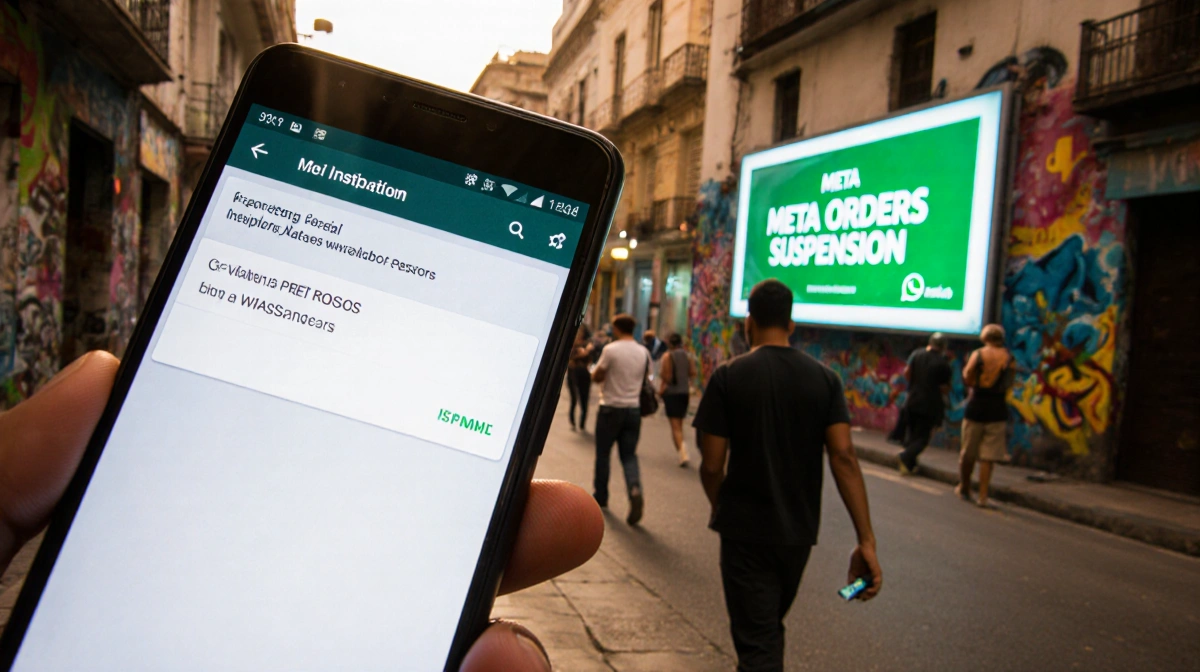
Brazilian regulators have slammed the brakes on WhatsApp’s upcoming ban on third-party AI chatbots, issuing an immediate suspension while they probe whether parent company Meta is breaching competition law.
The Conselho Administrativo de Defesa Econômica (CADE) late Tuesday said the policy, set to take effect January 15, appears “exclusionary” and could unlawfully entrench Meta’s own AI assistant inside the messaging app used by over 200 million Brazilians.
Investigation Targets Meta AI Advantage
CADE’s probe zeroes in on WhatsApp’s revised Business API terms announced last October. The new contract strips outside AI vendors of the right to offer chatbots through the platform, while allowing Meta AI to remain available to users.
> “There is possible anti-competitive conduct of an exclusive nature that arises from the application of the New WhatsApp Terms,” the agency wrote in its 22-page decision.
Investigators will examine whether the move amounts to self-preferencing, a practice where a dominant platform tilts the playing field toward its own services. If CADE finds wrongdoing, Meta could face fines or be forced to reopen its API to competitors on equal terms.
Global Domino Effect
Brazil’s action adds to a growing stack of regulatory headaches for Meta:
- The European Commission opened a formal antitrust case in December
- Italy’s competition authority launched its own probe the same month
- Both investigations center on identical concerns that Meta is abusing WhatsApp’s market power
Under EU rules, Meta could be fined up to 10% of its global turnover if found guilty. The company reported $134 billion in revenue for 2025, putting the theoretical maximum penalty at roughly $13.4 billion.
Tech Giants Scramble
OpenAI, Perplexity, and Microsoft have all confirmed their WhatsApp bots will go dark on January 15 unless the policy is reversed. The services let businesses embed GPT-4, Perplexity Assistant, or Copilot directly into customer chats for tasks like order tracking or technical support.
Meta, however, insists the restriction is a capacity issue, not a competitive land-grab.
> “The purpose of the WhatsApp Business API is to help businesses provide customer support and send relevant updates. Our focus is on supporting the tens of thousands of businesses who are building these experiences on WhatsApp,” a spokesperson told News Of Philadelphia in October.
The company reiterated that users wanting different chatbots can access them outside WhatsApp, though it has not explained why Meta AI alone is exempt from the strain on infrastructure.
Temporary Reprieve for Developers
Following CADE’s order, Meta has already begun telling AI partners they can continue serving Italian users past the January 15 deadline, according to developer notices seen by News Of Philadelphia. Industry insiders expect Meta to extend the same carve-out to Brazil while the watchdog’s investigation proceeds.
No immediate public comment from Meta was available; the company declined to respond outside U.S. business hours.
Key Takeaways
- Immediate impact: Third-party AI chatbots remain live on WhatsApp in Brazil at least until CADE completes its review
- Regulatory risk: Meta faces parallel antitrust probes on three continents, with potential multibillion-dollar penalties
- Business uncertainty: Thousands of companies that built customer-service workflows around external AI bots must now weigh contingency plans in case the ban eventually takes effect