
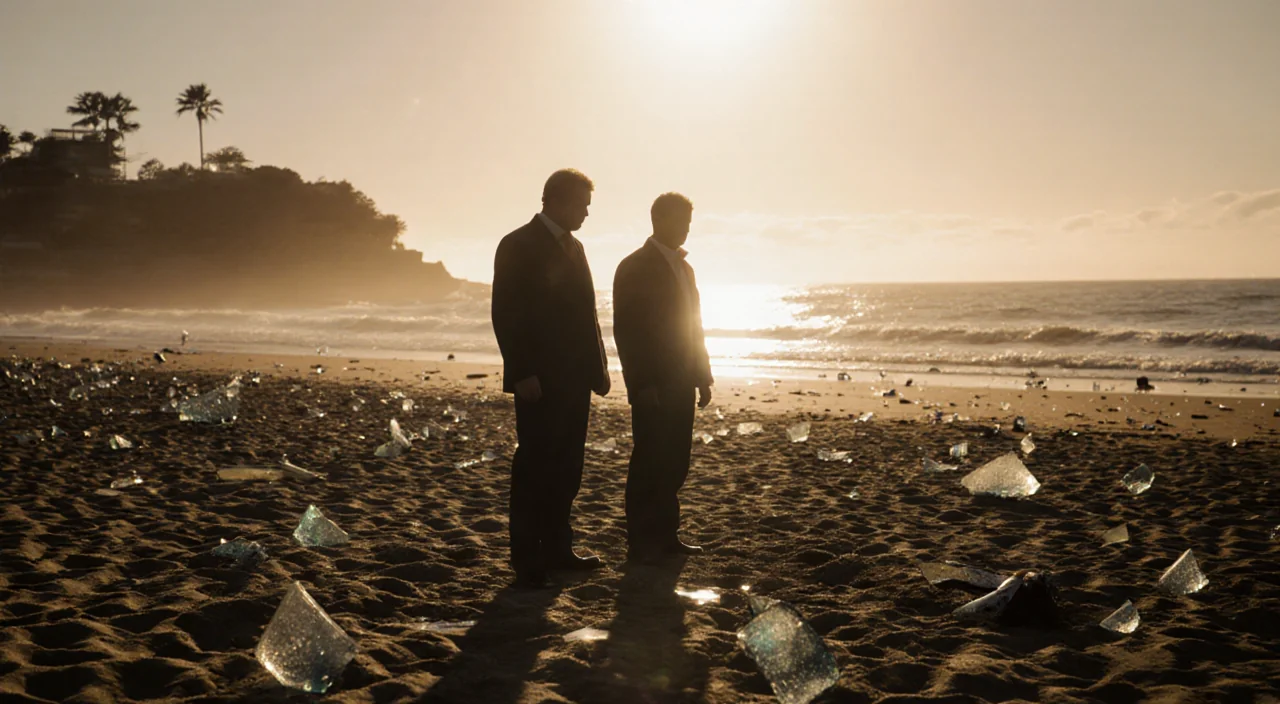
The fatal attack on Bondi Beach on Sunday left 15 people dead and sent shockwaves through Australia.
The Attack
Sajid Akram, a 50‑year‑old licensed gun owner, and his 24‑year‑old son Naveed Akram opened fire from a bridge over the beach, targeting a Hanukkah celebration. Police shot Sajid on the scene; Naveed suffered critical injuries and was hospitalized.
Suspects and Background
The Australian intelligence agency flagged Naveed in October 2019 for potential extremist associations. Prime Minister Anthony Albanese said the investigation lasted six months and that “no indication of any ongoing threat or threat of him engaging in violence” was found.
Sajid arrived in Australia in 1998 on a student visa, moved to a partner visa three years later, and now holds a resident return visa. He is a member of a gun club and has held a firearms licence since 2015, which allowed him to own the long guns used in the attack.
Motive and Evidence
Albanese stated that the father and son were “clearly” motivated by extremist ideology, though he added there was “no evidence of collusion” with a wider cell. He confirmed that a number of improvised explosive devices were found in a car, but Naveed was not on a counter‑terrorism watchlist.
Police raided an Airbnb in Campsie, close to Bondi Beach, where the men had been staying, and a property in Bonnyrigg, about 22 miles from Sydney’s central business district.
Community Reaction
Neighbors in the quiet Campsie area were stunned to see armed police cordon off their street. 66‑year‑old Lemanatua Fatu told Reuters that residents “mind their own business” until the shooting.
The wife of the suspects, who identified herself as the mother, said she could not recognize her son from images of the attack. She told the Sydney Morning Herald that the two men had told her they were going on a fishing trip and that “he doesn’t have a firearm. Anyone would wish to have a son like my son.”
Expert Insight
Andrew Silke, a professor of criminology at Royal Holloway University, told NBC News that family connections can be a significant risk factor in extremist involvement. He noted that attacks by brothers are more common than by father and son, and that the older family member usually introduces the ideology. “There have been a few cases where the opposite has happened,” Silke said. “An attack completely out of the blue, with no evidence of engaging with more radical ideas, would be incredibly rare. Normally, there are signs.”

Government Response
New South Wales Police Commissioner Mal Lanyon said Sajid met the eligibility criteria for a firearms licence and was entitled to a recreational hunting licence. He added that the licence allowed the ownership of registered long guns used in the attack. Lanyon promised that “no stone will be left unturned” as authorities continue to investigate.
The government is considering measures to limit the number of firearms held by one individual, restrict licences to Australian citizens and narrow the types of weapons deemed legal.
Key Takeaways
- 15 people were killed in the Bondi Beach shooting, the deadliest in Australia in decades.
- The attack was carried out by Sajid Akram and his son Naveed Akram, who were motivated by extremist ideology.
- Sajid held a firearms licence since 2015; Naveed was previously investigated for extremist links but was not on a counter‑terrorism watchlist.
The incident has reignited debate over gun laws and anti‑antisemitism efforts in Australia.
Closing
The tragic events at Bondi Beach underscore the urgency of addressing extremist ideology and ensuring stringent oversight of firearms. Australian authorities remain committed to a thorough investigation and to implementing reforms that could prevent future tragedies.