

At a Glance
- Blue Origin targets late February for its third New Glenn launch.
- The rocket will carry an AST SpaceMobile satellite to low-Earth orbit.
- The company has postponed its Blue Moon lunar lander launch.
- Why it matters: The move underscores a shift toward commercial payloads amid a packed February of spaceflight.
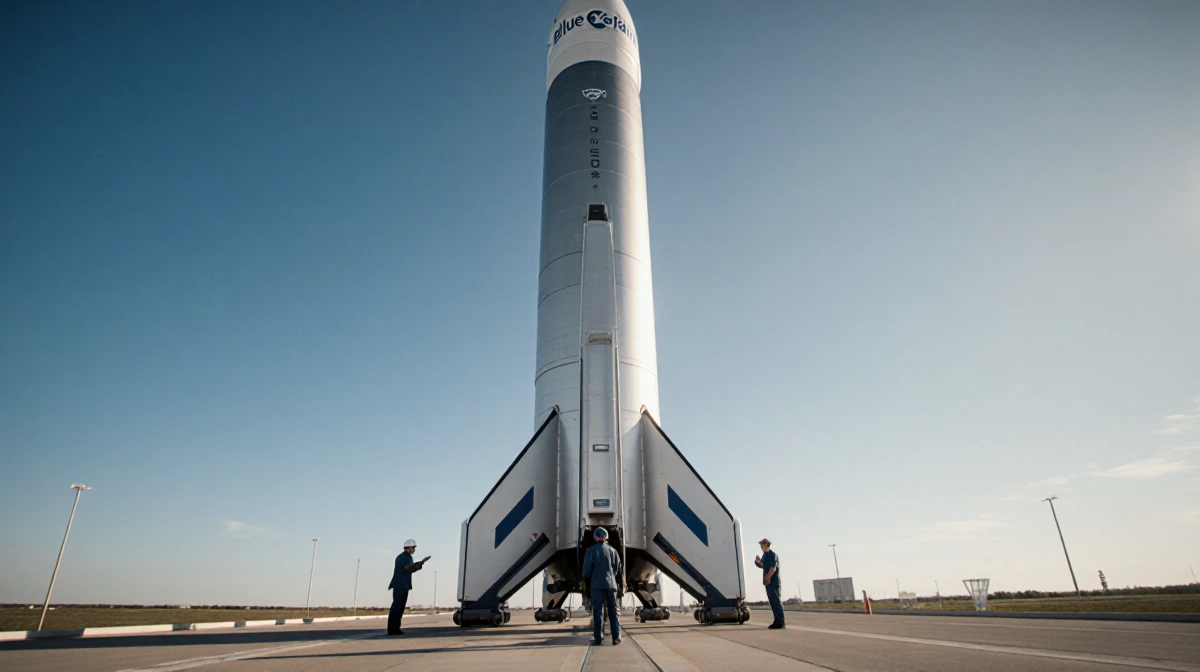
Blue Origin has set a target for late February to fire its New Glenn rocket for a third time, this time carrying a commercial satellite into low-Earth orbit instead of its own lunar lander. The decision comes amid a busy month of launches, including NASA’s Artemis II and SpaceX’s Starship testing. The move signals a pivot toward commercial payloads while the lunar lander remains in testing.
New Glenn is Blue Origin’s first orbital launch vehicle designed to deliver payloads to Earth orbit and beyond. It builds on the decades-old suborbital New Shepard program that has flown repeatedly. The company has already flown two test missions, recovering a booster stage from the ocean each time.
The company announced the launch window as late February, but did not set an exact day. It also said the launch will use the booster recovered from the November flight, which landed on a drone ship. This reuse demonstrates Blue Origin’s commitment to reducing launch costs.
AST SpaceMobile is a satellite-based cellular broadband company that aims to provide global connectivity. Blue Origin has signed a deal to launch multiple satellites for the firm, helping it build out its constellation. The new launch will be the second time New Glenn carries a commercial payload.
The Blue Moon Mark 1 lander is being shipped to NASA’s Johnson Space Center for vacuum-tested. A launch date for the lander has not been set, and the company has not explained why it chose a commercial satellite for this flight. The lander will eventually target lunar missions.
The second New Glenn flight in November recovered a booster stage that landed on a drone ship in the ocean. Blue Origin has used the same technique for its New Shepard launches. The reusable booster is a key part of the company’s cost-saving strategy.
New Glenn was conceived after Blue Origin’s long-term vision to place payloads in orbit and beyond. The design incorporates lessons from the New Shepard program, including reusable engines and a robust air-bag landing system. The rocket is intended to compete with other heavy-lift vehicles in the market.
Blue Origin has secured a contract with AST SpaceMobile to launch multiple satellites, helping the company build out its global broadband network. The partnership underscores the growing demand for satellite-based communication services. The launch will showcase New Glenn’s payload-delivery capability.
In November, Blue Origin announced a super-heavy version of New Glenn that would be taller than the Saturn V rocket, comparable to SpaceX’s Starship. The variant would be capable of carrying heavier payloads to deep-space destinations. The company plans to develop the vehicle for future missions.
On Wednesday, Blue Origin announced a satellite internet constellation called TeraWave that it plans to start deploying in late 2027. The constellation will consist of multiple satellites that provide global coverage. The launch of the AST SpaceMobile satellite is a step toward that goal.
Blue Origin is also developing Blue Ring, a spacecraft that can host and deploy payloads for other companies. The vehicle would act as a platform for satellite launch services. Blue Ring would enable other firms to reach orbit without building their own rockets.
February will host several high-profile launches. NASA’s Artemis II is scheduled for as early as February 6, carrying four astronauts around the moon. SpaceX plans to test the third version of its Starship rocket, while NASA and SpaceX will launch the Crew-12 mission to support the International Space Station.
Artemis II will carry a crew of four astronauts around the moon, marking the first crewed lunar fly-by since the Apollo era. The mission will use NASA’s Orion spacecraft and the Space Launch System rocket. The launch is expected to occur before the end of the month.
SpaceX’s Starship will undergo third-version testing in February. The company aims to demonstrate its fully reusable launch system. The test will involve a high-altitude flight and a controlled descent.
The Crew-12 mission will transport astronauts to the International Space Station, restoring the crew to full capacity. The launch will be carried out by NASA and SpaceX in partnership. The mission follows the medical evacuation of the Crew-11 team earlier this month.
NASA’s Johnson Space Center in Texas is where the Blue Moon Mark 1 lander is being vacuum-tested. The chamber simulates lunar conditions to validate the lander’s design. The testing is a critical step before the lander can be flown to the moon.
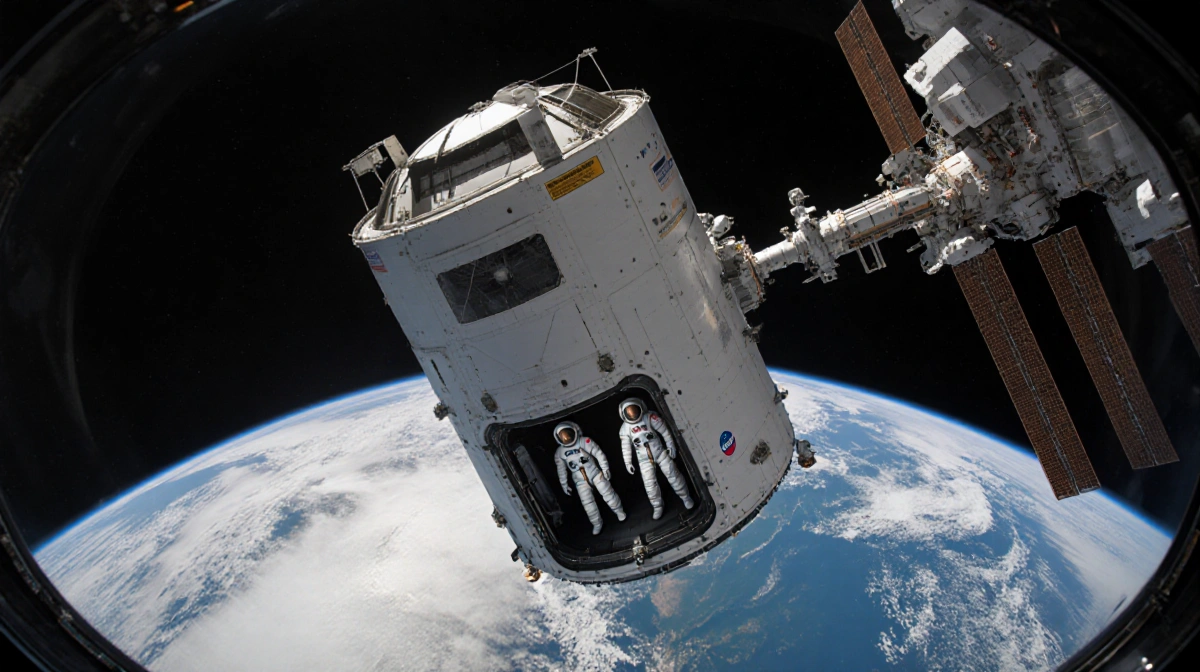
The vacuum chamber at Johnson Space Center will expose the lander to low-pressure environments. Engineers will monitor the lander’s reaction to the vacuum and space-flight conditions. The test will help ensure reliability during the lunar landing.
The booster from the November flight landed on a drone ship in the ocean. The landing occurred 1,000 km off the U.S. coast. This is a first-time-in-history test for the landing technique.
New Glenn is designed to lift up to 45 tonnes to low-Earth orbit. It can also deliver payloads to the Moon and Mars. The rocket’s reusable boosters reduce the cost per launch.
The rocket uses a liquid-hydrogen core engine and a cluster of nine Merlin-vac engines. The design allows for a high thrust-to-weight ratio. The vehicle is modular and can be scaled for different missions.
Blue Origin is pursuing a strategy that combines reusable launch vehicles with satellite deployment services. The company aims to capture a share of the growing commercial launch market. The strategy also supports its broader vision for space exploration.
The launch demonstrates Blue Origin’s capability to deliver commercial payloads, potentially attracting new customers. Investors may view the mission as a milestone for the company’s growth. The move also reflects the competitive nature of the launch services sector.
Analysts have noted the company’s focus on commercial launches as a sign of a shift toward revenue generation. The company’s stock price has remained stable during the announcement. Market watchers are monitoring the impact of the launch on investor sentiment.
SpaceX and other launch providers are also expanding their commercial payload services. The competition highlights the importance of reusable technology. Companies are racing to secure contracts for satellite constellations.
Blue Origin plans to deploy the TeraWave constellation in late 2027, followed by the super-heavy New Glenn variant for deeper missions. The company also aims to use Blue Ring to provide launch services to other firms. The timeline reflects the company’s long-term goals.
The Blue Moon lander is intended for lunar surface operations and future Mars missions. Its design incorporates a robotic arm and autonomous navigation. The lander will eventually support scientific experiments on the moon.
Blue Ring would act as a platform for satellite deployment, allowing other companies to launch payloads without building rockets. The system could launch multiple satellites in one flight. This would reduce costs for small-satellite operators.
The company announced the TeraWave launch schedule in early 2026. It will start deploying the constellation in late 2027, with a focus on global coverage. The first few satellites will use the New Glenn rocket.
Blue Origin’s late February launch marks a strategic shift toward commercial payloads while its lunar lander remains in testing. The company’s reusable technology and satellite partnerships position it as a key player in the growing launch market. The outcome of this flight will set a benchmark for future New Glenn missions.