
At a Glance
- Bark beetles use spruce tree antibiotics to create stronger toxins.
- Beauveria bassiana fungus adapts to counter beetle defenses.
- The study reveals an ongoing evolutionary arms race.
- Why it matters: insights could lead to natural pest-control solutions.
Spruce bark beetles (Ips typographus) burrow deep into trees, draining nutrients. They rarely kill the tree outright, but their presence can weaken trees after storms or human activity. Scientists wondered if beetles might use the tree’s own antibiotics for protection.
Three-Party Interaction
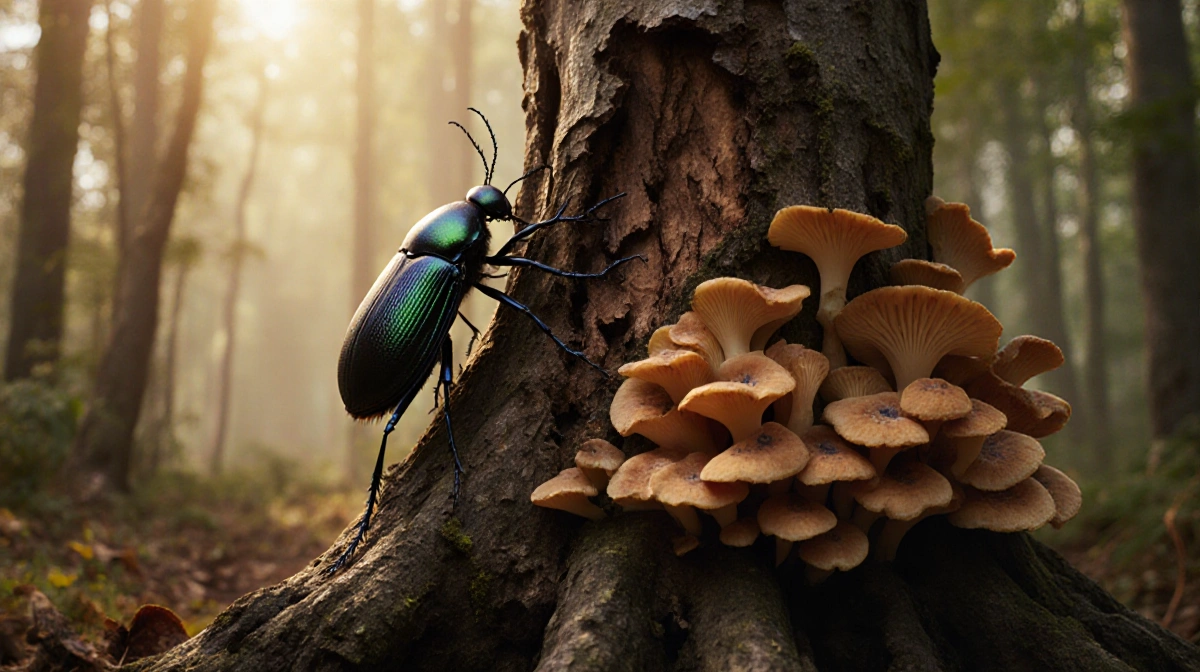
The system involves spruce trees, bark beetles, and the fungus Beauveria bassiana. The beetles feed on tree tissues, while the fungus can infect both organisms. Researchers studied how each organism adapts to the others.
Beetles Hijack Tree Defenses
The beetles consume tree-produced antibiotic compounds. They chemically transform these compounds into even more toxic derivatives. This conversion gives the beetles a stronger shield against fungal attacks.
- Beetles extract antibiotics from spruce bark.
- They convert them into potent toxins.
- The toxins help repel Beauveria bassiana.
Fungus Responds
The fungus shows its own adaptation, evolving to survive the beetle’s enhanced defenses. Some fungal strains have naturally infected and killed beetles, according to the researchers. Identifying these strains could inform future pest-control strategies.
Ruo Sun stated:
> “We did not expect the beetles to be able to convert the spruce’s defenses into more toxic derivatives in such a targeted way.”
Ruo Sun added:

> “Some fungal strains had naturally infected and killed the beetles.”
- The fungus adapts to beetle-derived toxins.
- Certain strains kill beetles naturally.
- Potential for developing fungal-based pesticides.
Key Takeaways
- Beetles co-opt spruce antibiotics for defense.
- Beauveria bassiana evolves to counter beetle toxins.
- Natural interactions suggest new pest-control avenues.
The findings illustrate how intertwined natural systems can inspire innovative, eco-friendly solutions to pest problems.