
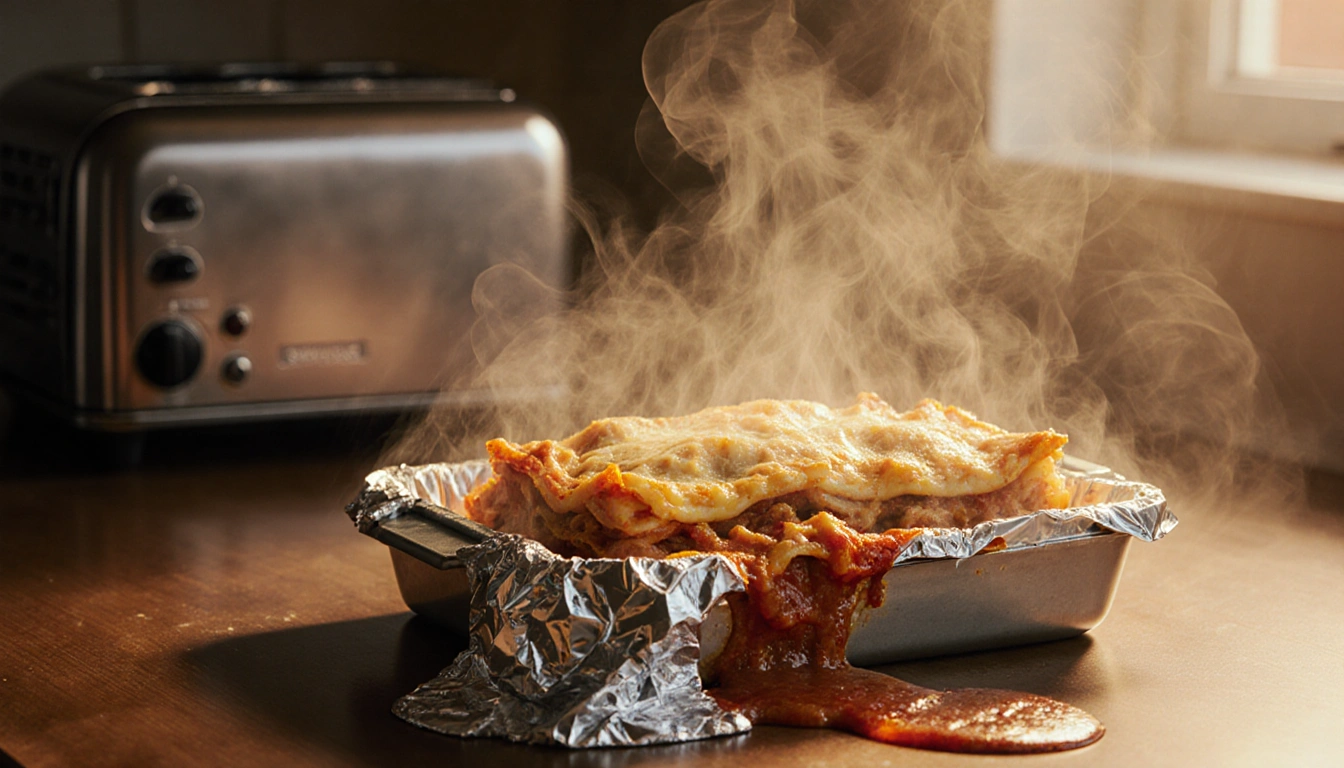

On Dec. 5, a Threads user posted a photo of a lasagna that had turned into a science experiment. The dish, meant to be a comforting dinner, became inedible after the aluminum foil melted into it while baking.
The Unexpected Oven Disaster
Tay Tanesha shared the mishap on Threads, writing, “I didn’t know aluminum foil melted in such low heat tf is this 🤔😒🤬.” Three photos accompanied the post: the first shows the foil on top of the pan speckled with burn holes; the second shows the foil melted into the lasagna; and the third displays the many holes in the foil held up to the light. Users reacted with humor and concern. One asked, “Did you set it to hell,” while another joked, “Lasagna looking like E.T. at the end of the movie.”
The Science Behind the Melt
The incident sparked a discussion about the chemistry at play. One commenter explained, “Me when I create a simple galvanic cell where the aluminum and steel act as electrodes and the food’s moisture/ions act as the electrolyte, causing the foil to corrode and the food to taste metallic 😔.” Another added, “Put enough of these together and you can light an LED!” The conversation turned to galvanic corrosion, an electrochemical process that occurs when two different metals contact each other in the presence of an electrolyte.
Shane C. Street, an associate professor of chemistry at the University of Alabama, clarified the reaction to TODAY.com. He said the galvanic cell “apparently formed” between the iron or steel pan and the aluminum foil, supported by an electrolyte-tomato sauce, which is salty and acidic. “The aluminum oxidizes to aluminum oxide (gives up electrons) and iron oxide in the pan is reduced to metallic iron (takes the electrons),” Street explained. He added that the overall reaction is exothermic, meaning it gives off heat and could become hot enough to melt aluminum. The melting point of aluminum is 1220 °F.
Jin Suntivich, an associate professor of materials science and engineering at Cornell University, discussed how the reaction creates holes in the foil. “Tomato sauce contains water and dissolved salts that allow charged atoms (so-called ‘ions’) to move,” Suntivich told TODAY.com. “Aluminum foil is a material that readily gives up electrons, while oxygen in the air can accept them. Together, they form a battery that slowly eats away the foil.” He noted the principle is similar to an aluminum-air battery, a technology explored for large-scale energy storage.
Street added that a more dramatic form of this reaction is called the thermite reaction. “This forms molten iron and gives off a tremendous amount of heat (energy), so much that it can be used in welding!” he said. He cautioned that the conditions of a thermite reaction and the exothermic nature of the lasagna are “totally different.”
Lasagna Batteries in Pop Culture
The idea of a lasagna battery isn’t new to pop culture. A comment mentioned that the sitcom “The Big Bang Theory” referenced lasagna batteries. A more recent clip from the Netflix show “A Man on the Inside” shows a lasagna battery created during a Thanksgiving dinner. In a Season 2 episode, Charles (played by Ted Danson) comments, “I think what just happened was you accidentally made a lasagna battery.” He explains, “The steel pan acts as the cathode and the aluminum port, and then all the acid and the salt in the lasagna is the electrolyte. So a current just runs all through it.” Danson’s character suggests scraping off the corrosion to serve, which is probably a bad idea.
Key Takeaways
- The incident began when aluminum foil melted into lasagna during baking, making the dish inedible.
- Galvanic corrosion occurs when aluminum and steel contact in the presence of an electrolyte like tomato sauce, producing an exothermic reaction that can melt the foil.
- The melting point of aluminum is 1220 °F, and the reaction can generate enough heat to reach that temperature.
- Similar principles underlie aluminum-air batteries and thermite reactions, though the conditions differ.
- Using a glass or ceramic pan can prevent accidental electrochemical reactions while cooking.
The story first appeared on TODAY.com. While the mishap was humorous on social media, it also served as a reminder that everyday cooking can involve surprising chemistry.
Closing
Tay Tanesha’s lasagna adventure turned into a live demonstration of galvanic corrosion, illustrating how ordinary kitchen materials can create unexpected chemical reactions. By understanding the science behind the incident, cooks can avoid similar mishaps and keep their meals safe and delicious.

References
- TODAY.com article on the lasagna incident
- Comments from Threads user Tay Tanesha and other users
- Statements from Shane C. Street and Jin Suntivich
- Pop-culture references from “The Big Bang Theory” and “A Man on the Inside”