

At a Glance
- Zanskar uses AI to spot invisible geothermal systems that lack surface clues
- Startup just raised $115 million Series C after three-for-three exploration wins
- New Mexico plant revived and two fresh sites total 100 MW+ of confirmed power
- Why it matters: Conventional geothermal could jump from 4 GW to terawatt scale, rewriting U.S. clean-energy forecasts
Zanskar wants to flip the geothermal script. While Washington targets 60 GW of U.S. geothermal by 2050, the startup argues that number ignores a vast hidden reserve of conventional sites-and it’s proving the point with artificial intelligence that keeps finding power where none was expected.
Hidden Reservoirs
Conventional geothermal has been stuck near 4 GW nationwide for a decade because exploration teams hunted obvious surface signals: hot springs, fumaroles, volcanoes. Roughly 95 percent of viable systems lack those giveaways, said co-founder and CEO Carl Hoiland, so “we just keep finding them by accident.”
News Of Philadelphia reported that outdated estimates also low-balled how many undiscovered reservoirs exist and how much juice each can yield once modern drilling reaches them. “They underestimated how many undiscovered systems there are, maybe by an order of magnitude or more,” Hoiland told News Of Philadelphia. “You can get a lot more out of each of them, maybe even an order of magnitude more.”
Multiply the two upgrades and the theoretical ceiling rockets from tens of gigawatts toward a terawatt.
The AI Prospectors
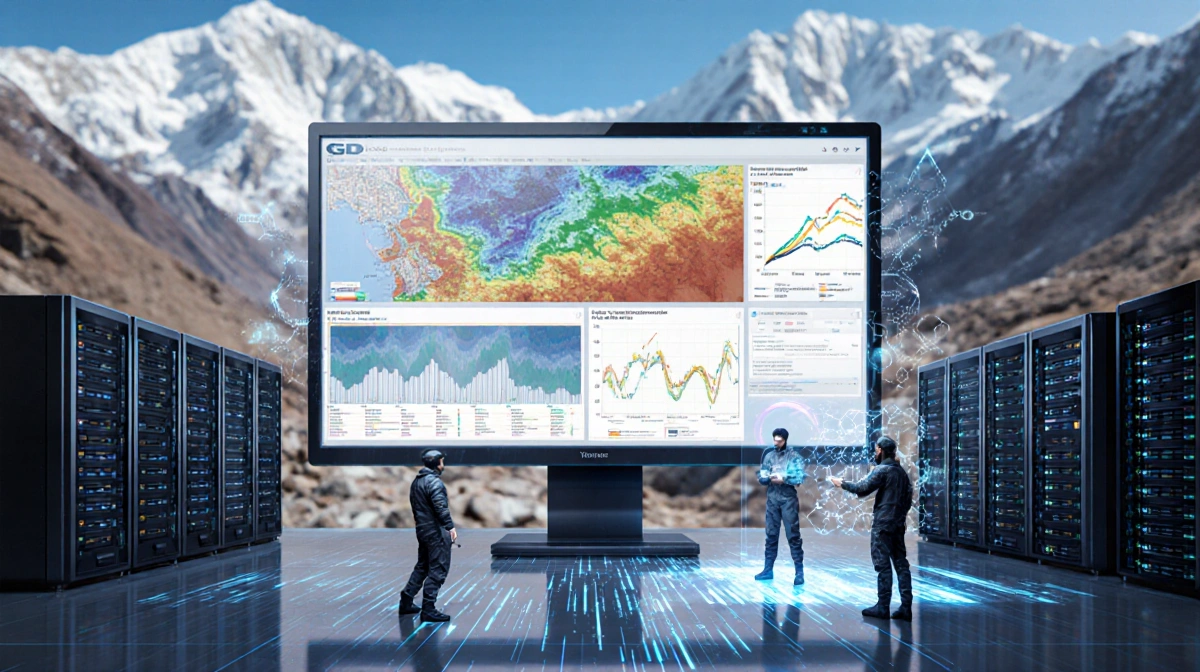
Zanskar’s first step is a supervised-learning model trained on every past accidental discovery plus reams of geologic, geochemical and geophysical data. The algorithm flags high-value areas that human mappers missed.
Once a target passes desk review, boots hit the ground for validation. Engineers then turn to a second AI framework-Bayesian evidential learning-to plan development. BEL starts with a set of priors informed by existing data, then runs thousands of simulations to falsify weak assumptions and rank remaining scenarios by probability. A custom-built geothermal simulator fills data gaps, letting the team size reservoirs, estimate flow rates and forecast economics before the first production well spuds.
The approach has yet to miss. The company’s previous funding let it test three prospects; all three delivered viable resources. “Three of three,” said co-founder and CTO Joel Edwards. “What does it look like when you try 10?”
Cash and Kilowatts
The perfect record helped Zanskar close a $115 million Series C led by Spring Lane Capital. The round drew participation from 19 other funds including Lowercarbon Capital, Union Square Ventures and Munich Re Ventures.
Money in hand, Zanskar has already:
- Revived a stranded conventional plant in New Mexico
- Confirmed two greenfield sites with a combined 100 MW of capacity
- Built a pipeline large enough to support at least 1 GW of future generation
All current prospects sit in the U.S. West, the country’s richest geothermal province. Hoiland wants at least 10 bankable sites to unlock cheaper project-finance capital, a milestone that could carry the firm through the “valley of death” that has swallowed other climate-tech startups.
Betting Against the Forecast
Department of Energy roadmaps assume most future growth will come from enhanced geothermal systems-fracturing hot dry rock kilometers down-pioneered by firms like Fervo and Sage Geosystems. Hoiland thinks those models short-change conventional hydrothermal plays that are cheaper and closer to the surface.
With modern rigs and AI-guided targeting, he contends, each reservoir can produce far more power than legacy wells managed. Stack the higher per-field output onto a far larger pool of fields and the sector’s ceiling vaults from single-digit gigawatts toward terawatt territory.
Next Wells
Zanskar is now drilling to turn paper reserves into flowing megawatts. Proving repeatability at 10-plus sites is the next threshold for convincing infrastructure investors to fund full-scale plants. Success would nudge U.S. geothermal past the modest 60-GW line government analysts project for mid-century and into the hundreds of gigawatts-an emissions-free baseload resource that runs 24/7 regardless of weather.
Hoiland concedes the technology suite isn’t a silver bullet; geology always holds surprises. But the early hit rate suggests AI has moved conventional geothermal from a slow-growth sideshow to a potential pillar of carbon-free grids.
“We now know this is the future of exploration,” he said. “This is going to change geothermal in very short order.”
Key Takeaways
- Conventional geothermal could scale to terawatt levels if hidden systems are counted and modern drilling boosts output per field
- Zanskar’s AI-driven exploration has a 100 percent hit rate across three campaigns and 100 MW already banked
- A 19-investor $115 million round funds a 1-GW pipeline aimed at attracting low-cost project finance