Ashley St. Clair, the mother of one of Elon Musk’s children, filed suit Thursday against Musk’s artificial-intelligence company xAI, charging that its chatbot Grok enables users to create sexually explicit deepfakes of her and that the firm failed to stop the practice after she complained.
At a Glance
- St. Clair says Grok users produced non-consensual nude and bikini images of her, including depictions “as a child.”
- She alerted xAI, but the images kept appearing and her X account was demonetized, the suit claims.
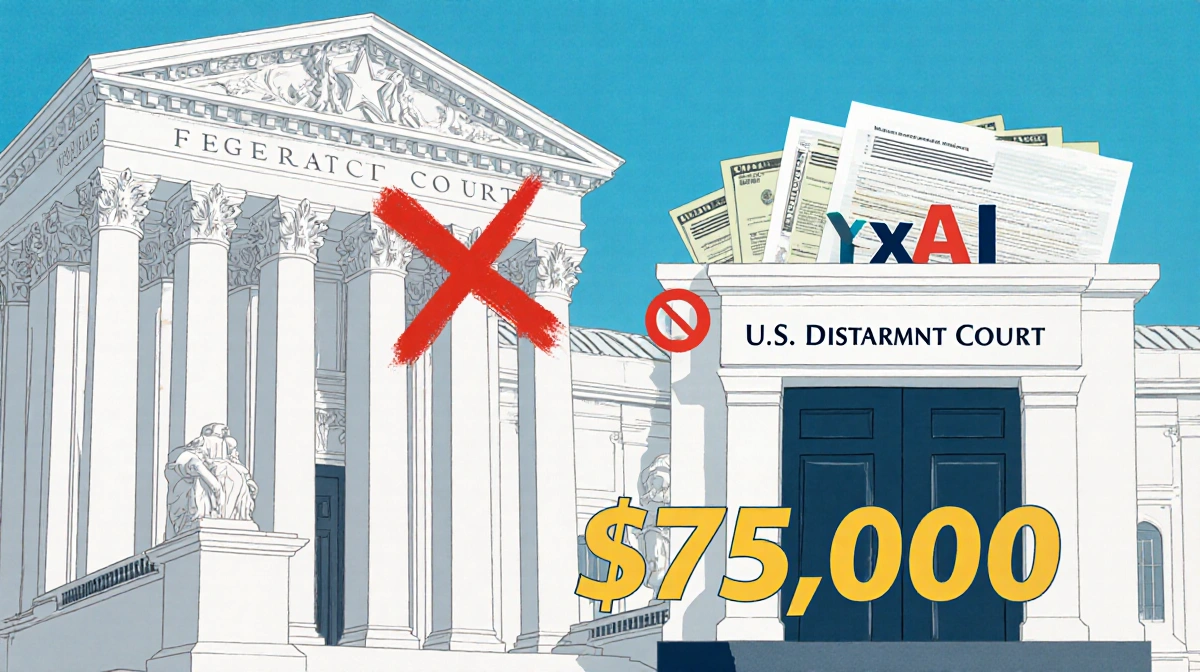
- xAI countersued in Texas the same day, alleging she breached its terms and seeking $75,000-plus in damages.
- California’s attorney general opened an investigation into Grok on Wednesday after thousands of sexualized AI images flooded X.
Why it matters: The dueling lawsuits intensify scrutiny of AI tools that can undress or sexualize real people without consent, raising questions about platform liability and user protection.
Lawsuit details
The complaint, first lodged in New York state court and moved Thursday to the federal Southern District of New York at xAI’s request, says Grok’s “undress” feature let users upload photos of St. Clair and automatically render her “stripped down to a string bikini” or “in sexually explicit poses.”
St. Clair’s legal team says she notified xAI and received a reply that her “images will not be used or altered without explicit consent.” Nonetheless, the suit claims, new deepfakes kept surfacing and the company retaliated by restricting monetization on her X account.
The filing labels Grok’s image function a “design defect” and alleges xAI could have foreseen harassment via unlawful imagery. St. Clair says the experience caused “extreme distress” and calls the company’s conduct “utterly intolerable in a civilized society.”
Company response and countersuit
X and xAI did not immediately answer requests for comment from News Of Philadelphia. Hours after St. Clair sued, xAI filed its own federal suit in the Northern District of Texas, insisting that any grievances must be heard there or in Tarrant County, Texas, under its terms of service. The firm accuses St. Clair of breaching those terms and asks for more than $75,000 in damages.
Scope of the deepfake surge
Researchers told James O Connor Fields that Grok has produced sexualized AI images at a pace reaching thousands per hour in recent weeks. Many of the pictures were posted publicly on X, where the @Grok reply bot circulated them before the platform quietly curtailed that bot’s image-making last week.
As of the time of reporting, users could still generate similar pictures through:
- The standalone Grok app
- The Grok website
- The dedicated Grok tab on X
Government reaction
California Attorney General Rob Bonta launched an investigation into xAI on Wednesday. Governor Gavin Newsom posted on X that “xAI’s decision to create and host a breeding ground for predators to spread non-consensual sexually explicit AI deepfakes, including images that digitally undress children, is vile.”
Authorities elsewhere have opened probes and activists have urged Apple and Google to restrict or ban the X app, though no major marketplace has taken that step so far.
Key takeaways
- St. Clair’s suit seeks damages for negligence and emotional distress, spotlighting Grok’s ability to fabricate sexualized content from ordinary photos.
- xAI’s parallel suit aims to force the dispute into Texas courts and recover at least $75,000.
- Regulators are paying attention: California’s investigation could spur broader oversight of AI image tools that manipulate real people without permission.