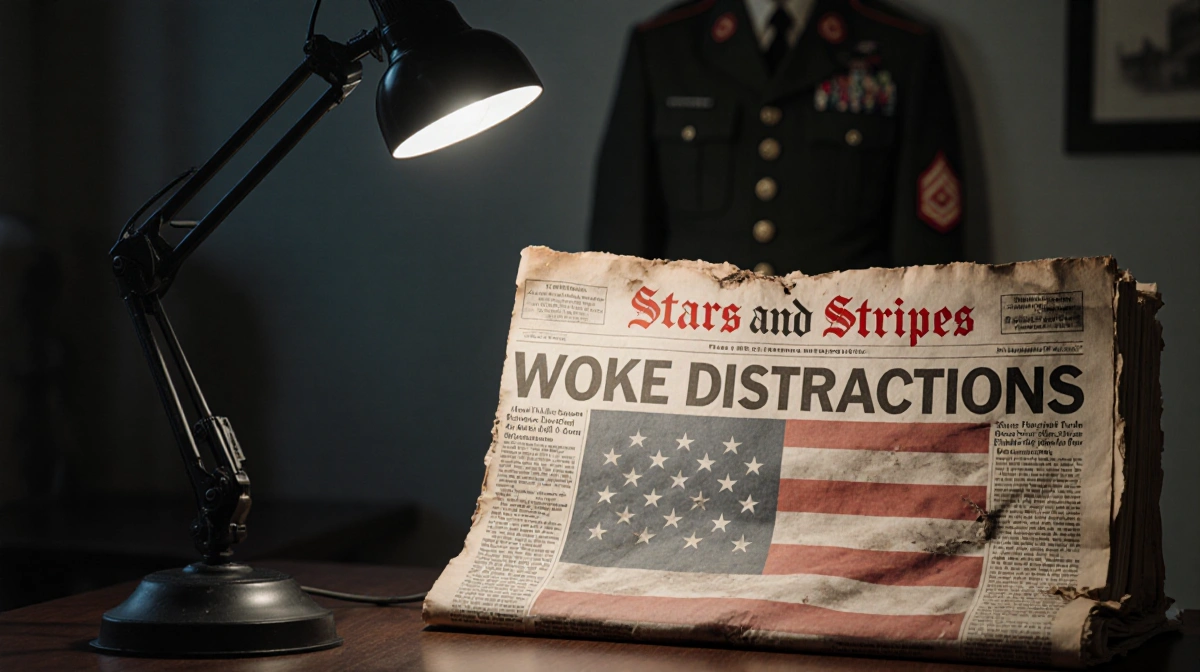

The Pentagon announced sweeping changes to the military newspaper Stars and Stripes, stripping its editorial independence and refocusing content on warfighting while eliminating civilian leadership.
At a Glance
- Pentagon will eliminate civilian publisher and editor roles at Stars and Stripes
- Half of content will be generated by Defense Department, no more AP/Reuters reprints
- Job applicants asked how they would advance Trump’s policies
- Publisher warns changes “will either destroy or significantly reduce” the paper’s value
- Why it matters: The move eliminates one of the last independent military news sources serving service members worldwide
The dramatic overhaul, announced Thursday by Defense Secretary Pete Hegseth’s spokesman Sean Parnell, strips the publication of its congressional mandate for civilian leadership and First Amendment protections that have guided it since the 1990s.
“Stars and Stripes will be custom tailored to our warfighters,” Parnell wrote on X. “It will focus on warfighting, weapons systems, fitness, lethality, survivability and ALL THINGS MILITARY. No more repurposed DC gossip columns; no more Associated Press reprints.”
Independence Eliminated
The changes eliminate the civilian publisher and editor positions that Congress mandated to ensure editorial independence from military leadership. Max Lederer, the current civilian publisher, said the Pentagon has not communicated its intentions directly to him.
“This will either destroy the value of the organization or significantly reduce its value,” Lederer warned.
Stars and Stripes traces its lineage to the Civil War and has provided independent military news since World War II, serving primarily service members stationed overseas. Roughly half its budget comes from Pentagon funding, with staff considered Defense Department employees.
The outlet’s mission statement emphasizes it is “editorially independent of interference from outside its own editorial chain-of-command” and governed by First Amendment principles.
Congress established these protections in the 1990s after military leadership interfered in editorial decisions. During Trump’s first term, Defense Secretary Mark Esper attempted to eliminate funding and shut down the publication before being overruled.
Content Overhaul
The Pentagon plan calls for dramatic changes to content creation and sources:
- 50% of content generated by Defense Department
- No more AP or Reuters news service reprints
- All content potentially written by active-duty service members
- Focus shift from comprehensive news to military-specific topics
The Daily Wire reported that Pentagon officials plan to have all content written by active-duty service members, though this conflicts with current congressional mandates.
The Pentagon also announced elimination of 1990s-era directives governing Stars and Stripes operations through a Federal Register notice, though Lederer questioned whether this requires congressional authorization.
Loyalty Questions for Journalists
The announcement follows revelations that job applicants faced political loyalty questions. The Washington Post reported applicants were asked how they would advance Trump’s executive orders and policy priorities.
Applicants had to identify significant orders or initiatives, effectively creating a loyalty test for journalists. The questions came from the Office of Personnel Management rather than Stars and Stripes itself.
“The loyalty is to the truth, not the administration,” said Jacqueline Smith, the outlet’s ombudsman. Her position was created by Congress three decades ago with reporting responsibility to the House Armed Services Committee.
Smith, a longtime Connecticut newspaper editor, said Stars and Stripes covers matters important to service members and families beyond weapons systems, and she’s detected nothing “woke” about its reporting.
“I think it’s very important that Stars and Stripes maintains its editorial independence, which is the basis of its credibility,” Smith emphasized.
Broader Pattern
The Stars and Stripes overhaul represents the latest Trump administration effort to reshape government-funded media. Most Pentagon reporters from legacy outlets have left rather than accept new restrictions giving Hegseth control over reporting.
The New York Times has sued to overturn the regulations. The administration has also targeted Voice of America and Radio Free Europe/Radio Liberty for shutdown attempts.
This week, federal agents raided a Washington Post journalist’s home during an investigation into a contractor accused of stealing government secrets, which many journalists interpreted as intimidation.
The changes leave Stars and Stripes facing an uncertain future as it loses the independence that military communities have valued for decades. The publication’s ability to provide objective news to service members worldwide hangs in the balance as Pentagon leadership restructures it into a military-focused communications outlet.