
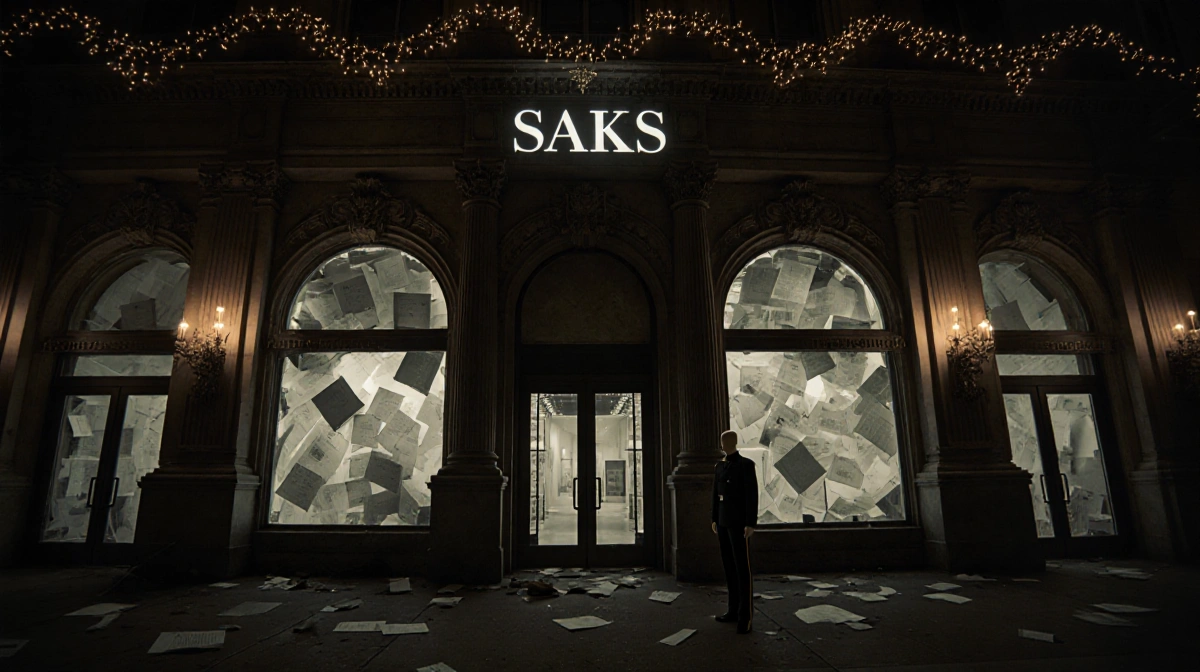
Just eight weeks after flipping the switch on its glittering holiday lights in Manhattan, Saks Global Holdings has filed for bankruptcy protection, ending a 159-year run for the flagship Saks Fifth Avenue brand.
At a Glance
- Saks Global owes $2.5 billion from its 2024 purchase of Neiman Marcus
- Stores stay open under a $1.75 billion financing package
- Double-digit sales drops have plagued Saks for two straight years
- Why it matters: The bankruptcy signals deeper trouble for the department-store model, not just luxury demand
The November premiere-complete with Radio City Rockettes-looked like a comeback after the previous year’s cost-cutting cancellation. Instead, it became a farewell. On Wednesday the parent company, which also owns Neiman Marcus and Bergdorf Goodman, asked a federal court for Chapter 11 relief.
Debt Load Crushes Retail Empire
Saks Global took on the massive debt load when it acquired rival Neiman Marcus in 2024. Amazon, which invested $475 million in that deal, told the court its stake is now “presumptively worthless.”
“You had too much debt. You couldn’t pay your bills, and now they have to figure their way out of this in a new format,” said Dana Telsey, luxury and retail analyst at Telsey Advisory Group.
In a press release the company said it has secured $1.75 billion in new financing and promised shoppers every department store will remain open during reorganization.
Luxury Market Rebounds-Without Saks
Global luxury sales slumped in 2024 as Chinese housing weakness and shifting tastes hammered demand. Early fall data showed life: Bank of America tracked an 8 % jump in luxury-fashion spending during the first half of October versus the prior year.
“Recent improvement has been comforting investors that possibly the worst is over for luxury demand,” said Luca Solca, global luxury goods analyst at Bernstein.
Yet the broader upturn bypassed Saks. Private ownership means no quarterly earnings, but Bloomberg Second Measure estimates sales at Saks Fifth Avenue stores have fallen by double digits nearly every quarter for the past two years. The company declined to confirm those figures.
Department Stores Lose Relevance
Analysts say the bankruptcy is less about luxury appetite and more about structural decline in the department-store format.
“The Saks bankruptcy isn’t really about luxury declining. It’s about the department store model overall struggling,” said Jenna Rennert, contributing editor at Vogue. “Department stores really used to be the gateway to luxury. Today, they’re kind of the middleman that luxury brands no longer need.”
Standalone boutiques and direct-to-consumer websites now capture high-spending shoppers who once browsed mall anchors. Even the so-called K-shaped economy-where affluent households keep splurging-hasn’t helped Saks.
Confidence among stock owners is so high, McKinsey senior partner Colleen Baum noted, that “there is even willingness to splurge-particularly among younger consumers.”
Meanwhile, cash-strapped lower- and middle-income households have pulled back, but their absence doesn’t explain Saks’ slide; the chain targets the upper tier that is still spending.
Competitors Outperform
Luxury conglomerate LVMH, owner of Louis Vuitton, Christian Dior, Fendi and Marc Jacobs, posted 1 % year-over-year growth in its latest third quarter, underscoring that well-run luxury houses can still win customers.
“LVMH is really doing well where department stores like Saks have struggled because it owns the brand and the customer experience,” Rennert said.
Telsey echoed the point: “Many of the other luxury brands who have their own stores, the Louis Vuittons, the Hermès, they are performing, and they’re able to attract customers.”
What Happens Next
Saks Global’s reorganization plan centers on three pillars:
- Selectively closing under-performing locations
- Repairing relationships with vendors who have grown wary of shipment terms
- Paying down corporate debt to a sustainable level
Throughout the process the company vows to “remain focused on what has always defined the company: exceptional brands, trusted relationships and an unwavering commitment to its loyal customers,” according to Wednesday’s statement.
Key Takeaways
- Chapter 11 keeps stores open and employees on payroll for now
- The filing stems from balance-sheet overload, not collapsing luxury demand
- Department stores face an existential crisis as brands go direct
- Stand-alone luxury houses like LVMH continue to outperform mall-based peers
The court-supervised turnaround will test whether a slimmer, less indebted Saks can still lure shoppers away from boutiques, online flagships and luxury outlets that have already seized much of its customer base.