OpenAI has invested in Merge Labs, a brain-computer interface startup led by its own CEO Sam Altman, in a move that tightens the already-circular ties between the AI giant and Altman’s growing portfolio of companies.
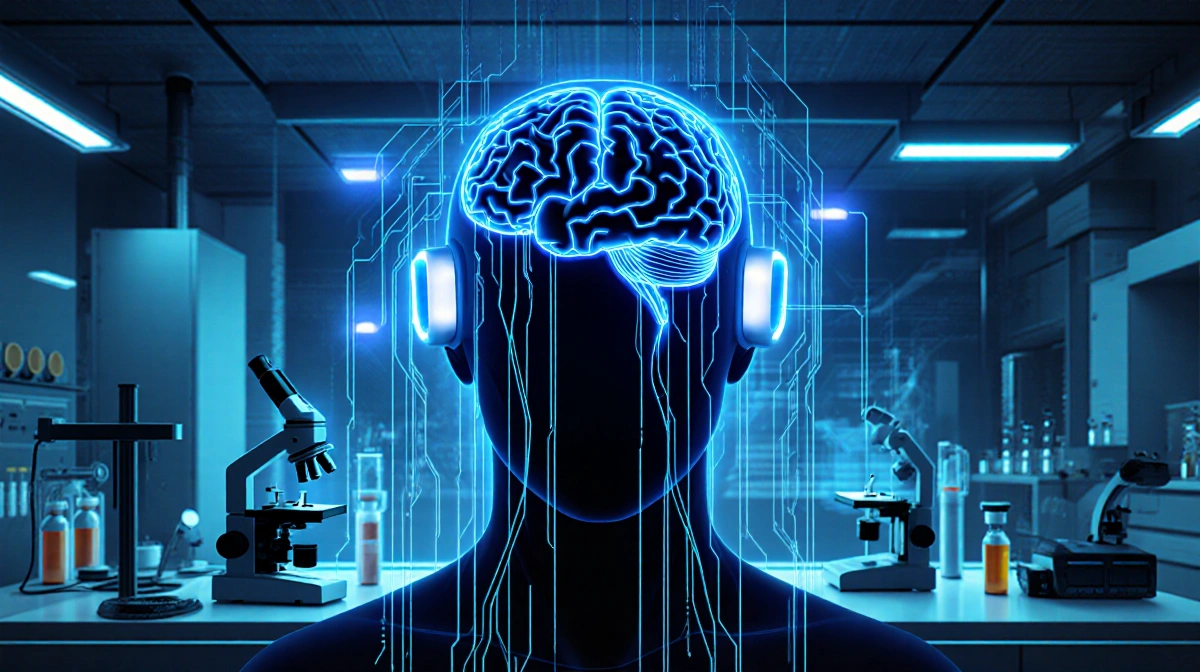
At a Glance
- OpenAI wrote the largest single check in Merge Labs’ $250 million seed round at an $850 million valuation
- Merge Labs aims to connect with neurons noninvasively using molecules and ultrasound instead of electrodes
- Altman has publicly predicted a “merge” between humans and machines since 2017, calling it our best shot at surviving superintelligent AI
- Why it matters: The deal could turn Merge Labs into a human interface for OpenAI’s software, driving more users to the AI platform while inflating the value of Altman’s own startup
Merge Labs emerged from stealth Thursday, billing itself as a “research lab” focused on “bridging biological and artificial intelligence to maximize human ability.” A source familiar with the round confirmed that OpenAI supplied the largest contribution to the $250 million seed raise, which valued the company at $850 million.
“Our individual experience of the world arises from billions of active neurons,” Merge Labs said in a statement. “If we can interface with these neurons at scale, we could restore lost abilities, support healthier brain states, deepen our connection with each other, and expand what we can imagine and create alongside advanced AI.”
The company plans to achieve this without surgery, developing “entirely new technologies that connect with neurons using molecules instead of electrodes” and that “transit and receive information using deep-reaching modalities like ultrasound.”
The investment pits Altman against Elon Musk, whose Neuralink is also building brain-interface chips. Neuralink’s device requires a surgical robot to remove a piece of skull and insert ultra-fine electrode threads into the brain. The company raised a $650 million Series E at a $9 billion valuation in June 2025.
While BCIs can help people with paralysis control devices, Merge Labs’ language points toward a broader Silicon Valley goal: combining human biology with AI to unlock superhuman capabilities.
“Brain computer interfaces are an important new frontier,” OpenAI wrote in a blog post. “They open new ways to communicate, learn, and interact with technology. BCIs will create a natural, human-centered way for anyone to seamlessly interact with AI. This is why OpenAI is participating in Merge Labs’ seed round.”
Founders and Governance
Altman is joined by:
- Alex Blania and Sandro Herbig, respectively CEO and product/engineering lead at Tools for Humanity (the Worldcoin orb company)
- Tyson Aflalo and Sumner Norman, co-founders of implantable-neural-tech firm Forest Neurotech
- Caltech researcher Mikhail Shapiro
Blania and Herbig say they will keep their posts at Tools for Humanity. Merge Labs would not confirm whether Aflalo and Norman will remain at Forest Neurotech, noting only that Forest will continue operating and enjoy a “wonderful working relationship” with Merge. Shapiro plans to keep teaching at Caltech.
A spokesperson told News Of Philadelphia that all co-founders also sit on Merge Labs’ board.
Strategic Overlap
Under the agreement, OpenAI will collaborate with Merge Labs on scientific foundation models and other frontier tools to “accelerate progress.” The AI firm said artificial intelligence will speed R&D in bioengineering, neuroscience, and device engineering, while the interfaces will gain from AI that “can interpret intent, adapt to individuals, and operate reliably with limited and noisy signals.”
In practical terms, Merge Labs could serve as a remote control for OpenAI’s software. That outcome would complete a feedback loop: success for Merge Labs could funnel more users to OpenAI, validating the investment and inflating the valuation of Altman’s own startup using resources from the company he runs.
OpenAI is also collaborating with Jony Ive’s startup io-acquired last year-on screen-free AI hardware. Leaks, not yet confirmed, suggest the device may be an earbud.
Altman’s Longstanding Vision
Altman has floated the idea of a “merge” between humans and machines since at least 2017, predicting in a blog post it would arrive between 2025 and 2075. He speculated it could involve “plugging electrons into our brains” or simply becoming “really close friends with a chatbot.”
He calls the merge humanity’s “best-case scenario” for surviving superintelligent AI, which he describes as a separate species in conflict with humans.
“Although the merge has already begun, it’s going to get a lot weirder,” Altman wrote. “We will be the first species ever to design our own descendants. My guess is that we can either be the biological bootloader for digital intelligence and then fade into an evolutionary tree branch, or we can figure out what a successful merge looks like.”
Investment Pattern
OpenAI typically invests through the OpenAI Startup Fund, which has backed several Altman-linked companies:
- Red Queen Bio
- Rain AI
- Harvey
The fund has also struck commercial deals with Altman-owned or chaired firms such as nuclear-fusion startup Helion Energy and nuclear-fission company Oklo.
News Of Philadelphia has requested additional information from both OpenAI and Merge Labs.
The article has been updated to confirm that Merge Labs’ founders will retain their positions at their current companies.