
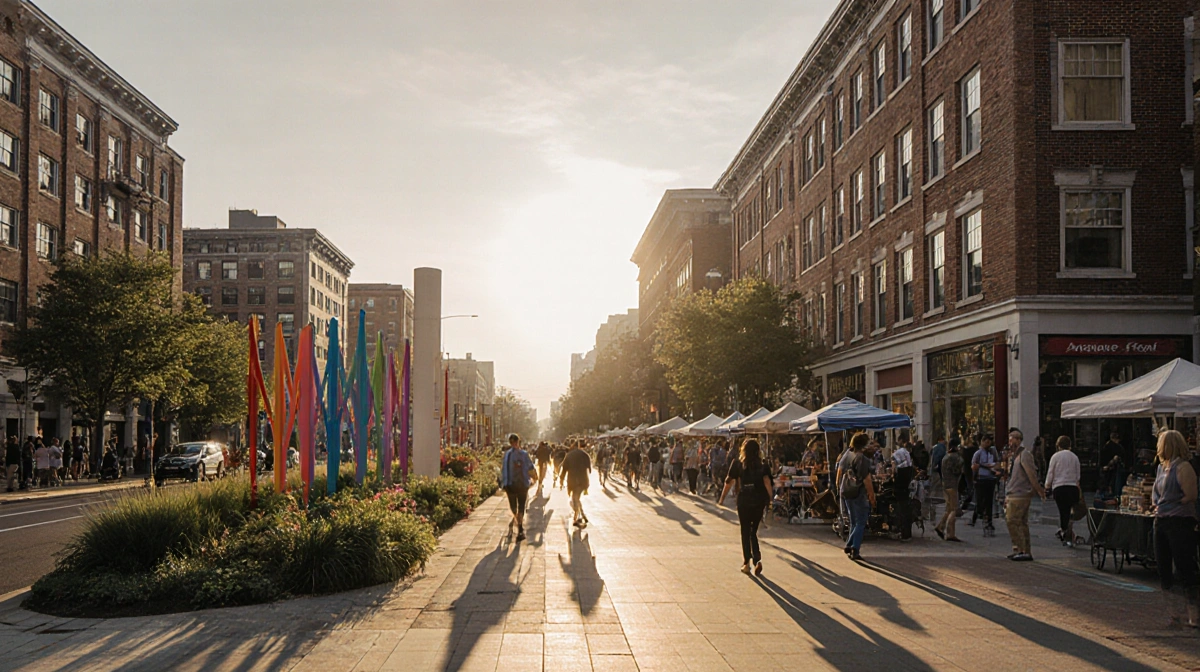

Philadelphia’s iconic South Broad Street is poised for a decade-long, $150 million facelift designed to turn the one-mile cultural corridor into a global pedestrian destination.
At a Glance
- Construction starts January 30, 2026, on the block between Spruce and Pine streets
- First phase wraps June 2026, in time for the city’s major 250th-anniversary events
- Avenue of the Arts ranks second only to Broadway in total theater seats
- Why it matters: The overhaul aims to boost climate resilience, tourism, and everyday street life in the heart of Philadelphia
The initiative-branded AveArts 2.0-will remake the stretch from City Hall to Washington Avenue with landscaped medians, performance spaces, rotating public art, rainwater-capture systems, and widened sidewalks that prioritize walkers over cars.
From Declining Corridor to Cultural Powerhouse
Established 33 years ago by then-Mayor Ed Rendell, the Avenue of the Arts reversed a slide in office occupancy by luring theaters, music venues, and arts education centers. Today the district:
- Holds $4.4 billion in assessed cultural real estate
- Houses the Philadelphia Orchestra, the Rock School of Dance, and multiple historic venues
- Contains one of the largest public-art collections in the country
Carl Dranoff, board chair of the nonprofit Avenue of the Arts, Inc., framed the upgrade as a statement of civic ambition: “Cities that lead the world invest boldly in culture, public space, and greening. With AveArts 2.0, the Avenue of the Arts will become one of those rare, magical streets the world talks about.”
Design Prioritizes Pedestrians and Planet
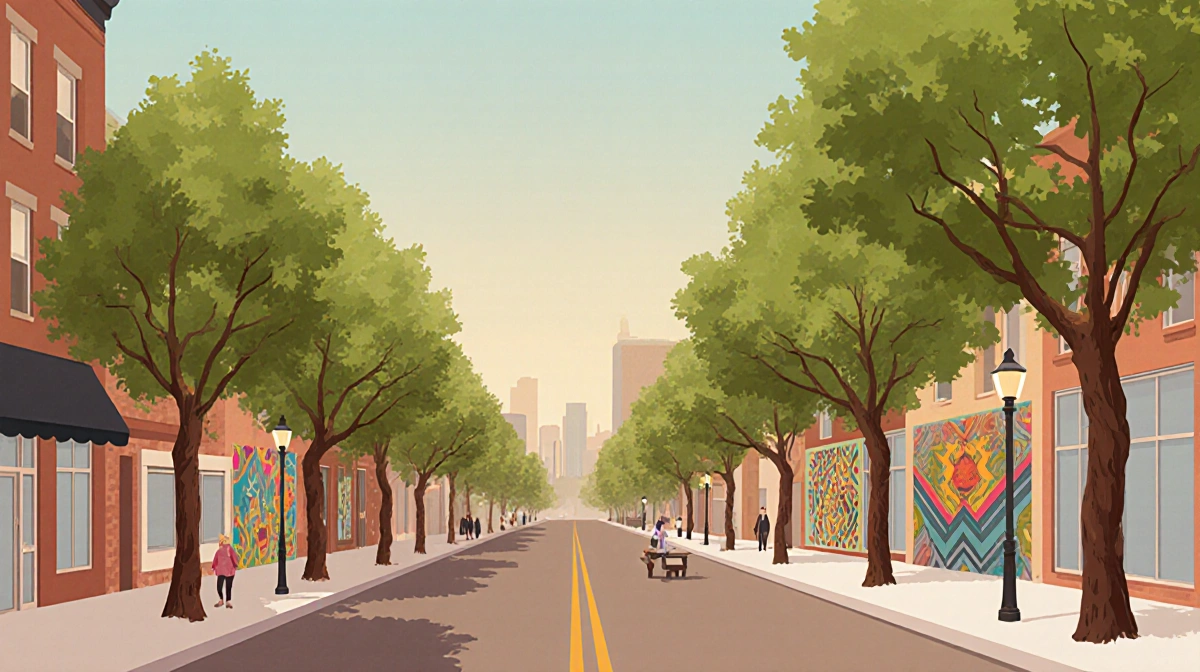
Global architecture firm Gensler and landscape studio OJB envision a tree-lined boulevard that doubles as a climate-resilient spine. Plans call for:
- Continuous landscaped medians planted with native species
- Rainwater-collection cisterns to reduce storm-water runoff
- Sculptural seating, enhanced lighting, and outdoor stages
- Rotating public-art installations to keep the streetscape fresh
“By prioritizing people, this transformation turns infrastructure into experience,” said Oliver Schaper, Gensler principal and lead designer. “It’s a model for how cultural corridors can support climate resilience, economic vitality, and everyday life in a 21st-century city.”
Phase One Timeline Anchored to 2026 Celebrations
City officials confirmed the first construction zone will span the block directly in front of the Kimmel Center for the Performing Arts. Work will start January 30, 2026, and finish June 2026, aligning with Philadelphia’s slate of 250th-anniversary events expected to draw national attention.
The initial segment will introduce:
| Feature | Purpose |
|---|---|
| Raised median with native trees | Traffic-calming and shade |
| Integrated cistern | Collect and reuse rainwater |
| Upgraded lighting | Safety and nighttime ambiance |
| Wider sidewalk zones | Outdoor dining and performances |
Funding sources for the full $150 million have not yet been detailed, but officials say the 10-year build-out will proceed block-by-block to minimize disruption to theaters, restaurants, and university buildings that line the corridor.
Key Takeaways
- The Avenue of the Arts will remain open to traffic, but redesigned medians and sidewalks will slow speeds and widen pedestrian space
- Construction is scheduled in phases so cultural venues can keep operating
- City leaders hope the finished design positions Philadelphia beside world-famous cultural streets like Barcelona’s La Rambla or Paris’s Champs-Élysées
- The 2026 completion of Phase One is timed to showcase the district during America’s Semiquincentennial celebrations
Emily Carter Reynolds first reported the overhaul timeline, noting that additional design specifics and financing details are expected later this year.