
The Senate narrowly blocked a resolution that would have forced President Donald Trump to seek congressional approval before using military force in Venezuela, after two Republicans reversed their positions under White House pressure.
At a Glance
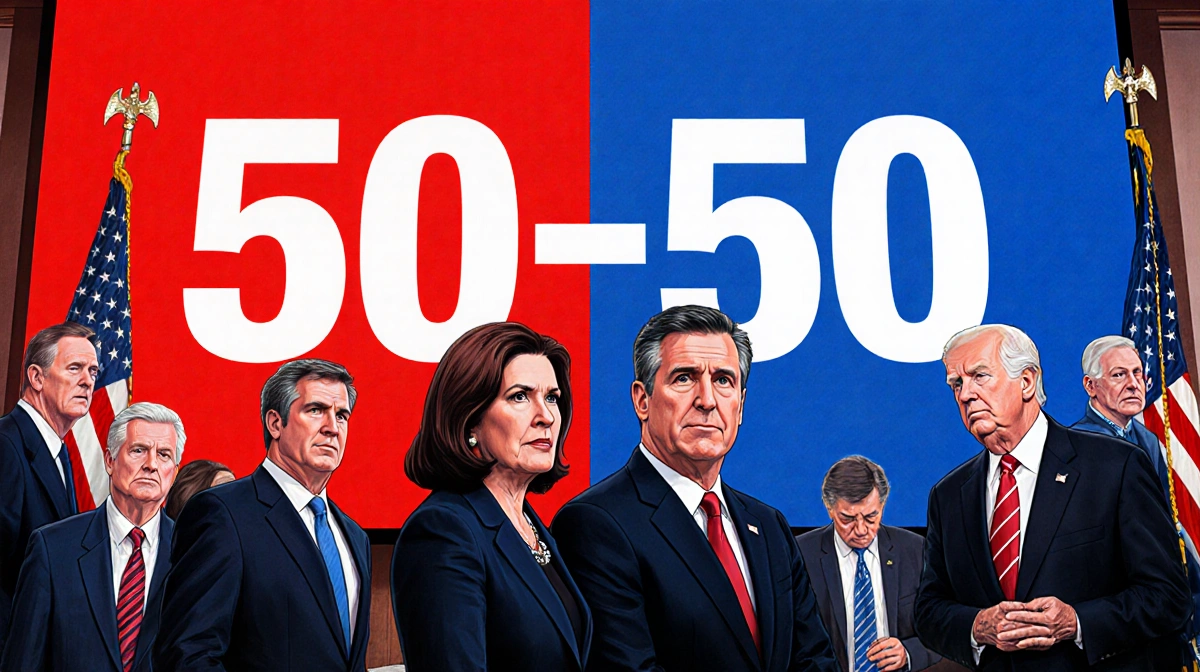
- The chamber voted 51-50 to strip the resolution of its privileged status, effectively killing it
- Sens. Josh Hawley and Todd Young flipped from last week’s vote after Trump lobbied them
- Vice President JD Vance cast the tiebreaking vote
- Why it matters: The move keeps the door open for unilateral military action in Venezuela as Trump escalates threats in the region
The procedural vote Wednesday scuttled the war-powers measure led by Sen. Tim Kaine, D-Va., which had advanced 52-47 last week and appeared poised to pass. The resolution would have required the president to obtain prior congressional authorization for any strike on Venezuela.
How the Vote Flipped
The final tally split 50-50, with all 47 Senate Democrats joined by Republican Sens. Rand Paul of Kentucky, Lisa Murkowski of Alaska and Susan Collins of Maine. Vance then voted to break the deadlock, removing the measure’s privileged status and dooming its chances in the chamber.
Hawley and Young, who had both voted last week to advance the resolution, switched sides after Trump publicly attacked the five GOP defectors and privately pressed them to stand down.
Trump warned last week that the five Republicans who supported the resolution “should never be elected to office again.”
What Changed Their Minds
Hawley said he reversed course after receiving a letter from Secretary of State Marco Rubio stating that no U.S. ground troops are currently in Venezuela and that the administration would seek congressional authorization before deploying them.
Young offered a similar explanation.
“After numerous conversations with senior national security officials, I have received assurances that there are no American troops in Venezuela,” Young said in a statement. “I’ve also received a commitment that if President Trump were to determine American forces are needed in major military operations in Venezuela, the Administration will come to Congress in advance to ask for an authorization of force.”
Democrats Warn of Escalation
Senate Minority Leader Chuck Schumer, D-N.Y., who championed the war-powers measure, argued the resolution was necessary to reassert Congress’s constitutional role over military action.
“The American people don’t want Donald Trump sending our troops into harm’s way without so much as a debate in Congress,” Schumer said before the vote. “Donald Trump is turning the Caribbean into a dangerous powder keg-and Congress must rein him in before one mistake ignites a larger, more unstable conflict. So, the Senate needs to exert its constitutional role when it comes to the use of military force.”
Broader Implications
The vote highlights the reluctance among Republican lawmakers to challenge Trump as he ramps up rhetoric not only against Venezuela but also Iran and Greenland. The outcome leaves the president with wide latitude to order military operations without prior congressional approval, even as tensions simmer across multiple regions.
According to News Of Philadelphia, the administration has given no public indication it plans to deploy ground forces to Venezuela, but the failed resolution means future decisions could be made without a congressional vote.