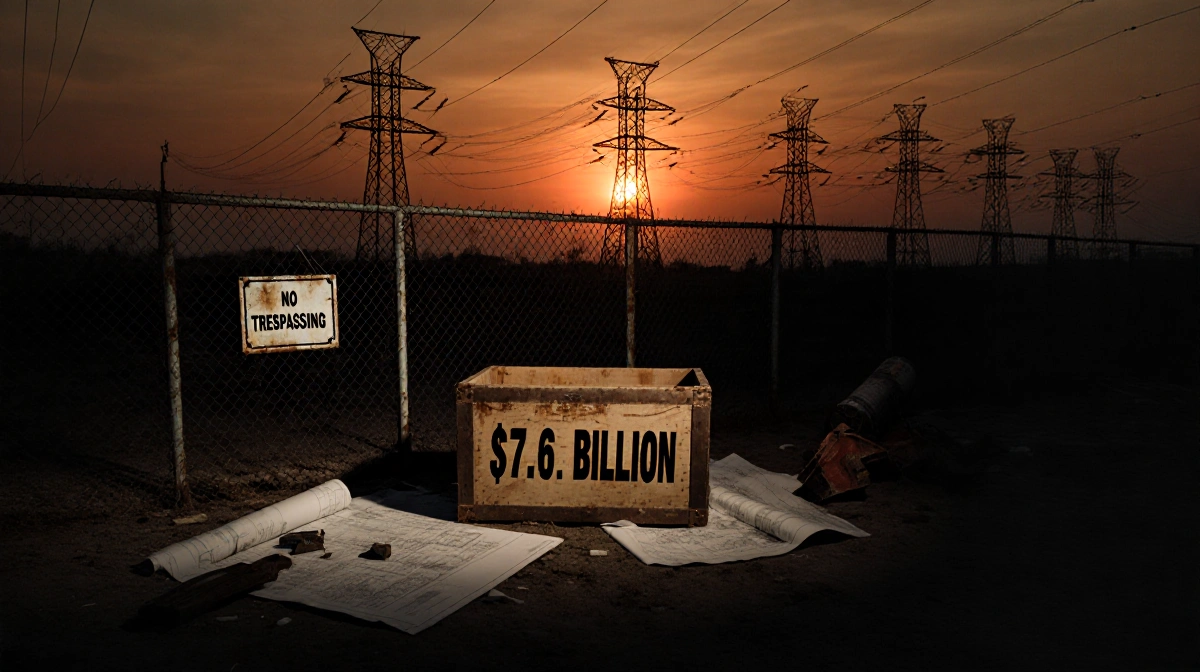

A federal judge ruled Monday that the Trump administration acted illegally when it canceled $7.6 billion in clean energy grants for projects in states that voted for Democrat Kamala Harris in the 2024 election.
The grants supported hundreds of clean energy projects in 16 states, including battery plants, hydrogen technology projects, upgrades to the electric grid and efforts to capture carbon dioxide emissions.
At a Glance

- A federal judge blocked the Trump administration’s cancellation of $7.6 billion in clean-energy grants
- The grants targeted 16 states that voted for Kamala Harris in 2024
- Projects included battery plants, hydrogen hubs and grid upgrades
- Why it matters: The ruling restores funding that could lower energy costs and preserve thousands of jobs
The Energy Department said the projects were terminated after a review determined they did not adequately advance the nation’s energy needs or were not economically viable. Russell Vought, the White House budget director, said on social media that “the Left’s climate agenda is being canceled.”
U.S. District Judge Amit Mehta said the administration’s action violated the Constitution’s equal protection requirements.
“Defendants freely admit that they made grant-termination decisions primarily – if not exclusively – based on whether the awardee resided in a state whose citizens voted for President Trump in 2024,” Mehta wrote in a 17-page opinion. The administration offered no explanation for how their purposeful targeting of grant recipients based on their electoral support for Trump – or lack of it – “rationally advances their stated government interest,” the judge added.
The ruling was the second legal setback for the administration’s rollback of clean energy programs in a matter of hours. A separate federal judge ruled Monday that work on a major offshore wind farm for Rhode Island and Connecticut can resume, handing the industry at least a temporary victory as Trump seeks to shut it down.
A spokesman for the Energy Department said officials disagree with the judge’s decision on clean energy grants.
Officials “stand by our review process, which evaluated these awards individually and determined they did not meet the standards necessary to justify the continued spending of taxpayer dollars,” spokesman Ben Dietderich said. “The American people deserve a government that is accountable and responsible in managing taxpayer funds.”
Projects were canceled in California, Colorado, Connecticut, Delaware, Hawaii, Illinois, Maryland, Massachusetts, Minnesota, New Hampshire, New Jersey, New Mexico, New York, Oregon, Vermont and Washington state. All 16 targeted states supported Harris.
The cuts include:
- Up to $1.2 billion for California’s hydrogen hub aimed at accelerating hydrogen technology and production
- Up to $1 billion for a hydrogen project in the Pacific Northwest
A Texas hydrogen project and a three-state project in West Virginia, Ohio and Pennsylvania were spared, according to clean-energy supporters who obtained a list of the DOE targets.
The city of St. Paul and a coalition of environmental groups filed a lawsuit after they lost grants.
Connecticut and Rhode Island on Thursday filed a lawsuit against the Trump administration for the order stopping work on the Revolution Wind project off the coast of Rhode Island.
Trump said in an interview last fall with One America News, a conservative outlet, that his administration could cut projects that Democrats want. “I’m allowed to cut things that never should have been approved in the first place and I will probably do that,” Trump said in the Oct. 1 interview.
Vickie Patton, general counsel for the Environmental Defense Fund, one of the groups that filed the suit, said the court ruling “recognized that the Trump Department of Energy vindictively canceled projects for clean affordable energy that just happened to be in states disfavored by the Trump administration, in violation of the bedrock Constitutional guarantee that all people in all states have equal protection under the law.”
The administration’s actions violated the Constitution, foundational American values and “imposed high costs on the American people who rely on clean affordable energy for their pocketbooks and for healthier lives,” Patton said.
Anne Evens, CEO of Elevate Energy, one of the groups that lost funding, said the court ruling would help keep clean energy affordable and create jobs.
“Affordable energy should be a reality for everyone, and the restoration of these grants is an important step toward making that possible,” she said.
Key Takeaways
- The judge’s decision restores $7.6 billion in federal clean-energy funding
- Projects span battery manufacturing, hydrogen hubs and grid modernization
- Legal challenges continue over offshore wind and other climate initiatives
- Grant restorations could preserve consumer savings and employment across 16 states