

At a Glance
- Astronaut brains tilt upward and shift 2-3 mm after months in orbit
- Longer missions produce larger changes; year-long flights show biggest shifts
- Changes occur in motion and balance centers, causing brief disorientation
- Why it matters: NASA’s moon and Mars plans hinge on understanding these shifts to keep crews healthy
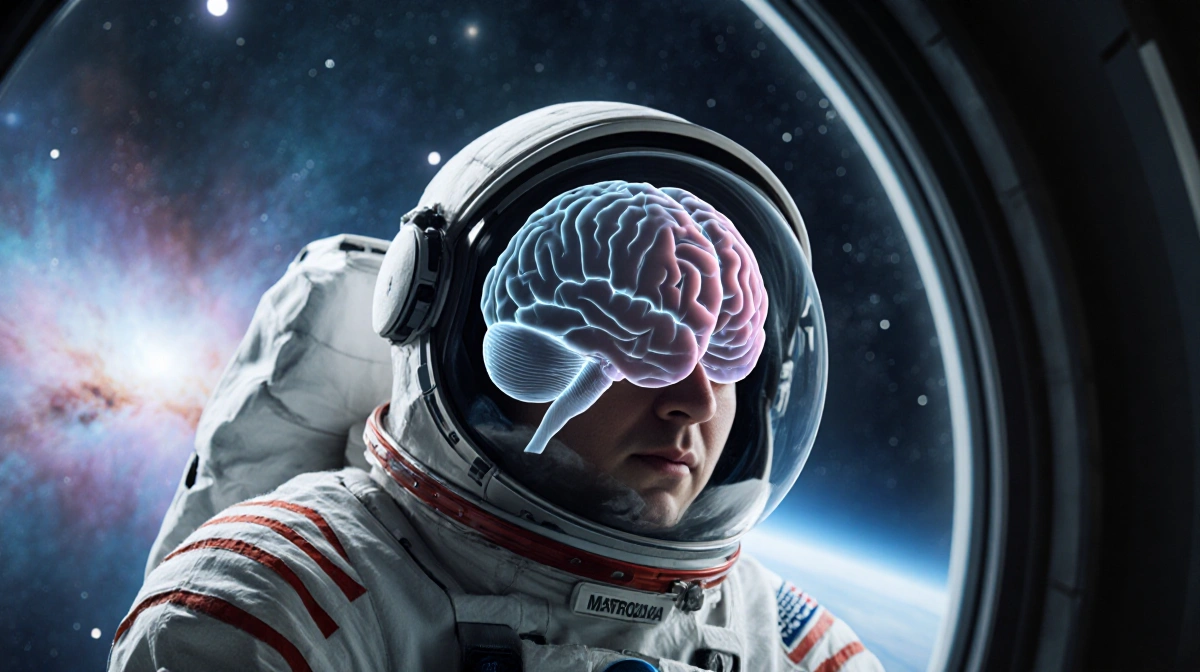
Astronauts’ brains physically move inside the skull during space missions, with longer stays producing bigger shifts, according to a study that could shape how NASA prepares for trips to the moon and Mars. The work, published Monday in the Proceedings of the National Academy of Sciences, tracked 26 astronauts and found measurable upward and backward motion of brain tissue after flights lasting from two weeks to one year.
Brain Shifts Detected After Every Mission
Researchers led by University of Florida’s Rachael Seidler compared MRI scans taken before and after flight. Every astronaut showed the same pattern: the brain drifted up and back, pressing against the top of the skull. The distance sounds small-about two millimeters-but Seidler stressed that “when you’re talking about brain movement, it really is. That kind of change is visible by eye.”
The displacement was most pronounced in people who spent 12 consecutive months aboard the International Space Station. Those on standard six-month tours still showed “pretty extensive” upward movement in structures near the crown of the head. Shuttle crew members on short two-week assignments had the smallest shifts, yet the changes were still detectable.
Motion and Balance Centers Most Affected
The brain regions that moved are tied to motion sensing, balance, and spatial orientation. In orbit these shifts can create “sensory conflicts,” producing the temporary disorientation or space motion sickness many astronauts report. Once back on Earth, the same displacement appears to contribute to balance hiccups while the body readjusts to gravity.
Despite the physical rearrangement, the team found no headaches, memory problems, or other serious neurological symptoms during or after flight. “That was surprising to me,” Seidler said.
Earth Bed-Rest Tests Show Similar, Smaller Changes
To separate space-specific effects from simple head-ward fluid shift, the researchers also scanned 24 Earth-bound volunteers kept in bed for 60 days with their heads tilted six degrees below their feet. This ground-based microgravity mimic produced a comparable but milder upward brain slide, confirming that fluid redistribution plays a role yet suggesting weightlessness adds extra mechanical stress.
Implications for Deep-Space Travel
Dr. Mark Rosenberg, who oversees the aerospace neurology program at the Medical University of South Carolina and was not part of the study, called the work the first to link measurable brain shifts to how crew members actually function in space and after return. “We knew the brain shifts upward,” he said, “but does it actually have any kind of operational impact? This study is able to make some of those associations.”
Open questions remain:
- Are female astronauts affected differently from males?
- Does age influence the degree of shift?
- Could partial gravity on the moon or Mars slow or accelerate recovery?
NASA launches only about a dozen people to the station each year, and the astronaut corps has historically skewed male, limiting the data set. Researchers emphasize the need for larger, more diverse samples before drawing firm conclusions.
Changes Appear Reversible-For Now
Like bone density loss and muscle weakening, the brain displacement seems to reverse once gravity returns. Scans show structures drifting back toward their original positions within weeks or months of landing. What no one knows yet is how the brain will respond to months or years in the weaker gravity fields of the moon (one-sixth Earth gravity) or Mars (one-third Earth gravity). “Will it take three or six times as long to get back to normal?” Rosenberg asked.
Both he and Seidler caution against treating the findings as a reason to curtail exploration. Instead, they see the data as a baseline for monitoring crews and, if necessary, designing countermeasures-possibly rotating spacecraft sections to create artificial gravity or tailored exercise regimens that stabilize brain position.
Key Takeaways
- Duration drives change: every extra month in orbit increases brain shift
- No lasting harm detected so far, yet long-term effects beyond a year remain untested
- Moon and Mars missions will expose crews to different gravity levels, requiring new studies
- Countermeasures may be needed before NASA sends astronauts on multi-year expeditions
As humanity eyes permanent lunar bases and eventual trips to Mars, understanding how the brain adapts-and how to protect it-moves from academic curiosity to mission-critical necessity.