
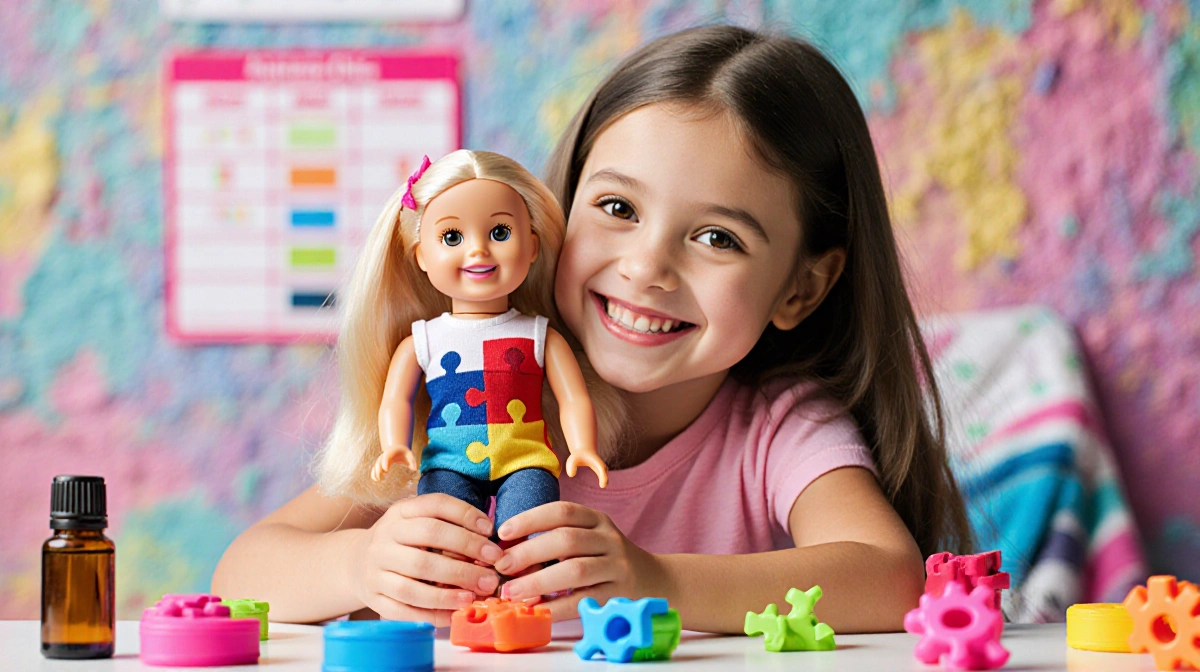

Mattel Inc. is launching an autistic Barbie on Monday, expanding its line aimed at celebrating diversity and inclusion. The doll joins existing models representing Down syndrome, blindness, vitiligo, prosthetic limbs, and hearing aids.
At a Glance
- Mattel spent over 18 months developing the autistic Barbie with the Autistic Self Advocacy Network
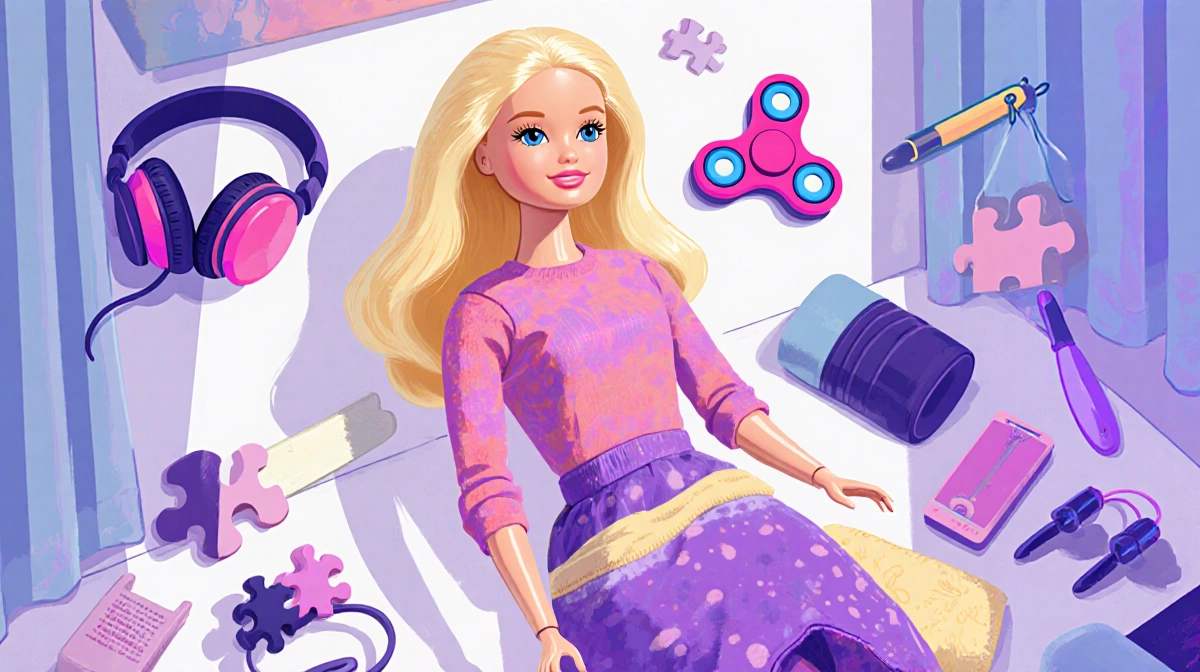
- The doll features eyes that shift slightly to the side, articulated joints, and sensory-friendly clothing
- Each doll includes a fidget spinner, noise-canceling headphones, and a communication tablet
- The autistic Barbie will retail for $11.87 at Mattel’s online shop and Target stores starting Monday
The toymaker collaborated with the Autistic Self Advocacy Network, a nonprofit advocating for autistic rights and media representation, to ensure the doll authentically reflects autistic experiences. The goal was to create a Barbie that mirrors how some autistic individuals perceive and interact with their environment.
Design Challenges
Autism presents a broad spectrum of behaviors and traits, many of which aren’t immediately visible. Noor Pervez, community engagement manager at the Autistic Self Advocacy Network, emphasized the complexity of representing autism visually.
“Autism doesn’t look any one way,” Pervez said. “But we can try and show some of the ways that autism expresses itself.”
The doll’s design incorporates several subtle features:
- Eyes positioned slightly to the side to represent reduced eye contact
- Articulated elbows and wrists acknowledging stimming behaviors
- A-line dress with short sleeves and flowy skirt to minimize fabric contact
- Flat shoes promoting stability and ease of movement
The development team debated clothing choices extensively. Some autistic individuals prefer loose garments due to fabric sensitivity, while others favor tight-fitting clothes for body awareness. The final design balances these needs with a flowy dress that reduces skin contact.
Sensory Accessories
Each autistic Barbie includes accessories designed to support sensory needs:
- Pink finger clip fidget spinner
- Noise-canceling headphones
- Pink tablet modeled after communication devices used by non-speaking autistic individuals
These additions aim to normalize tools commonly used by autistic people while providing play value for children.
Representation Matters
The autistic doll’s creation presented an opportunity for Mattel to address underrepresentation within the autistic community. The doll’s facial features draw inspiration from the company’s employees in India, with mood boards reflecting diverse women of Indian backgrounds.
Pervez noted the importance of representing segments of the autistic community that typically receive less visibility in media and marketing.
Expanding the Fashionistas Line
Mattel’s Fashionistas collection has progressively expanded to include dolls with various conditions and body types. Recent additions include:
- First Down syndrome doll introduced in 2023
- Barbie representing Type 1 diabetes last summer
- Barbie and Ken with prosthetic legs
- Barbie with hearing aids
- Tall, petite, and curvy body types
- Multiple hair textures and skin tones
Jamie Cygielman, Mattel’s global head of dolls, stated in a release: “Barbie has always strived to reflect the world kids see and the possibilities they imagine, and we’re proud to introduce our first autistic Barbie as part of that ongoing work.”
Availability and Pricing
The autistic Barbie hits stores with an accessible price point designed for broad availability. Starting Monday, the doll will be available at:
- Mattel’s online shop
- Target stores nationwide
Walmart locations will begin carrying the doll in March. The $11.87 suggested retail price positions the doll within the standard Barbie Fashionistas price range.
Autism Prevalence Data
The Centers for Disease Control and Prevention’s latest data highlights autism’s significant presence among American children. The estimated prevalence among 8-year-olds is 1 in 31, according to the CDC’s Autism and Developmental Disabilities Monitoring Network.
The data reveals notable disparities:
- Black, Hispanic, Asian, and Pacific Islander children show higher diagnosis rates than white children
- Boys are diagnosed at more than three times the rate of girls
These statistics underscore the importance of representation and understanding within communities.
Industry Impact
Mattel’s continued expansion of inclusive dolls reflects broader industry trends toward representation and diversity. The company’s approach involves extensive collaboration with advocacy organizations to ensure authenticity rather than relying on stereotypes or assumptions.
The 18-month development timeline for the autistic Barbie demonstrates the complexity involved in creating toys that accurately represent diverse experiences while maintaining play value and commercial viability.
Key Takeaways
- Mattel’s autistic Barbie represents the company’s most recent effort to create inclusive toys that reflect diverse experiences
- The doll’s design incorporates subtle features representing common autistic traits while avoiding stereotypes
- Partnership with the Autistic Self Advocacy Network ensured authentic representation
- The doll’s affordable price point and wide distribution aim to make representation accessible to families nationwide