
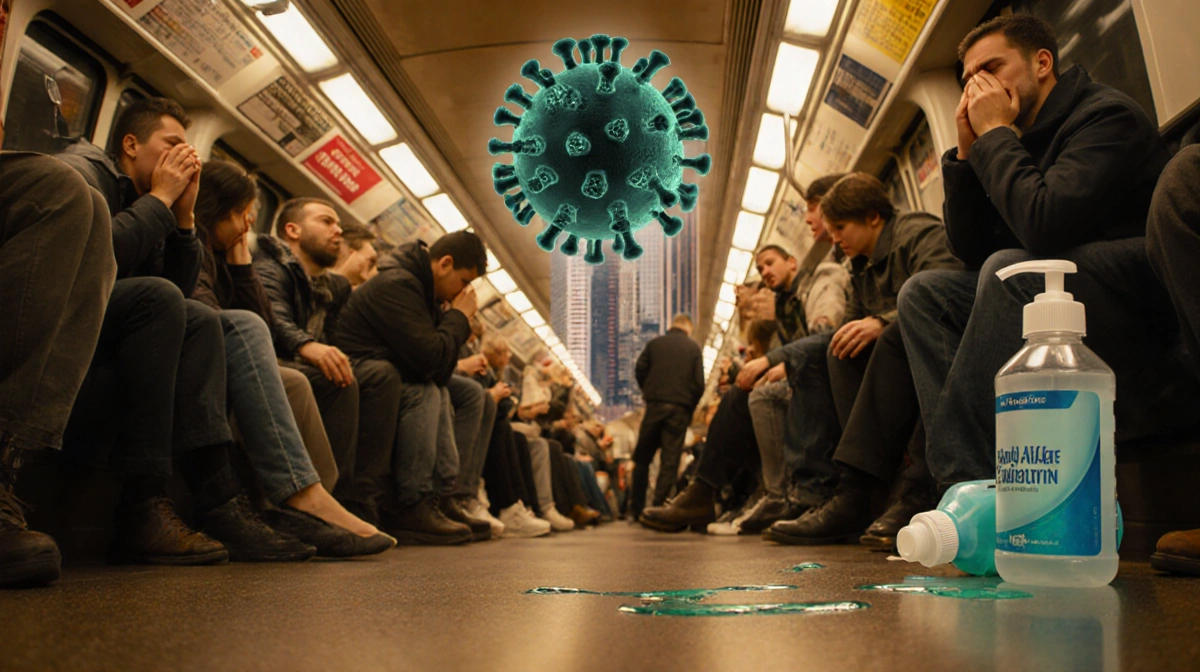

> At a Glance
> – Norovirus levels are “high” nationwide, up 45% since November
> – New GII.17 strain caused 75% of outbreaks this season
> – Midwest and Northeast seeing highest concentrations
> – Why it matters: The winter vomiting bug spreads fast-here’s how to avoid it
The infamous “winter vomiting disease” is sweeping the U.S. again. Wastewater data show virus concentrations climbing steeply since October, with the Midwest and Northeast hit hardest.
Tracking the Spike
WastewaterSCAN reports a 45% jump in norovirus particles since November and a clear three-week upward trend. The CDC’s NoroSTAT network logged 268 outbreaks across 14 states between Aug. 1 and Dec. 11.
Lab positivity is also rising:
- Week ending Dec. 13: 12% positive
- Same week last year: 19% positive
Last winter delivered decade-high outbreak numbers; this season started earlier but remains within the typical range-so far.
A New Variant Takes Over
Since the early 2000s, strain GII.4 ruled outbreaks. This season, GII.17 grabbed the spotlight, causing 75% of U.S. outbreaks versus <10% in 2023.
Dr. Scott Roberts, Yale School of Medicine, explains:
> “Whenever there is a new strain, it’s really easy for it to start spreading rapidly, and that’s what we saw last year.”
Immunity from past infections offers only partial, short-lived protection and may not cover the new variant.
What to Watch For
Symptoms strike 12-48 hours after exposure:
- Sudden vomiting
- Diarrhea
- Nausea
- Stomach cramps
Less common: low-grade fever, chills, headache. Illness usually resolves in 1-3 days, but dehydration can send young children and adults over 85 to the hospital.
Seek care if symptoms linger, blood appears, or dehydration signs (dark urine, dizziness) develop.
How It Spreads
An infected person sheds billions of viral particles; ingesting 1-10 is enough to get sick. Transmission routes:
- Direct contact with a sick person
- Touching contaminated surfaces
- Eating contaminated food (leafy greens, shellfish)
- Breathing aerosolized vomit particles
People remain contagious for days after recovery and can shed virus in stool for two weeks.
Surface Survival & Cleaning
Virus particles linger on surfaces up to two weeks. Bleach-based products kill the bug; alcohol-based cleaners do not.
Dr. William Schaffner, Vanderbilt University Medical Center, warns:
> “It’s a devilish virus because it can spread in so many ways, and it is so highly contagious.”
Hand sanitizer is ineffective; wash vigorously with soap and water instead.
Protection Checklist
Lower your risk by:
- Washing hands often, especially before eating
- Disinfecting surfaces with bleach
- Avoiding close contact with sick people
- Staying home 48 hours after symptoms stop
- Cooking shellfish to ≥145°F
There’s no treatment beyond rest and fluids; a Moderna vaccine candidate is in Phase 3 trials.
Key Takeaways
- Norovirus is climbing nationwide, led by the newer GII.17 strain
- Outbreaks are highest in the Midwest and Northeast
- New strain may spread faster due to lower population immunity
- Bleach, not sanitizer, kills the virus on surfaces
- Hand-washing and isolation remain the best defenses
Expect cases to keep rising through winter-act now to shield yourself and others.