

At a Glance
- White House plans to dismantle NCAR, a key climate and space weather research center.
- The move follows Trump administration cuts to science funding.
- NASA’s heliophysics missions CMEx and STRUVE rely on NCAR scientists.
- Why it matters: The decision threatens critical research that protects satellites and astronauts.
The White House announced on December 16 that it intends to dismantle the National Center for Atmospheric Research (NCAR) in Colorado. The plan was posted by OMB Director Russ Vought on X, where he called NCAR “one of the largest sources of climate alarmism in the country.” The move is the latest in a series of actions aimed at cutting climate-science funding and removing data from government sites.
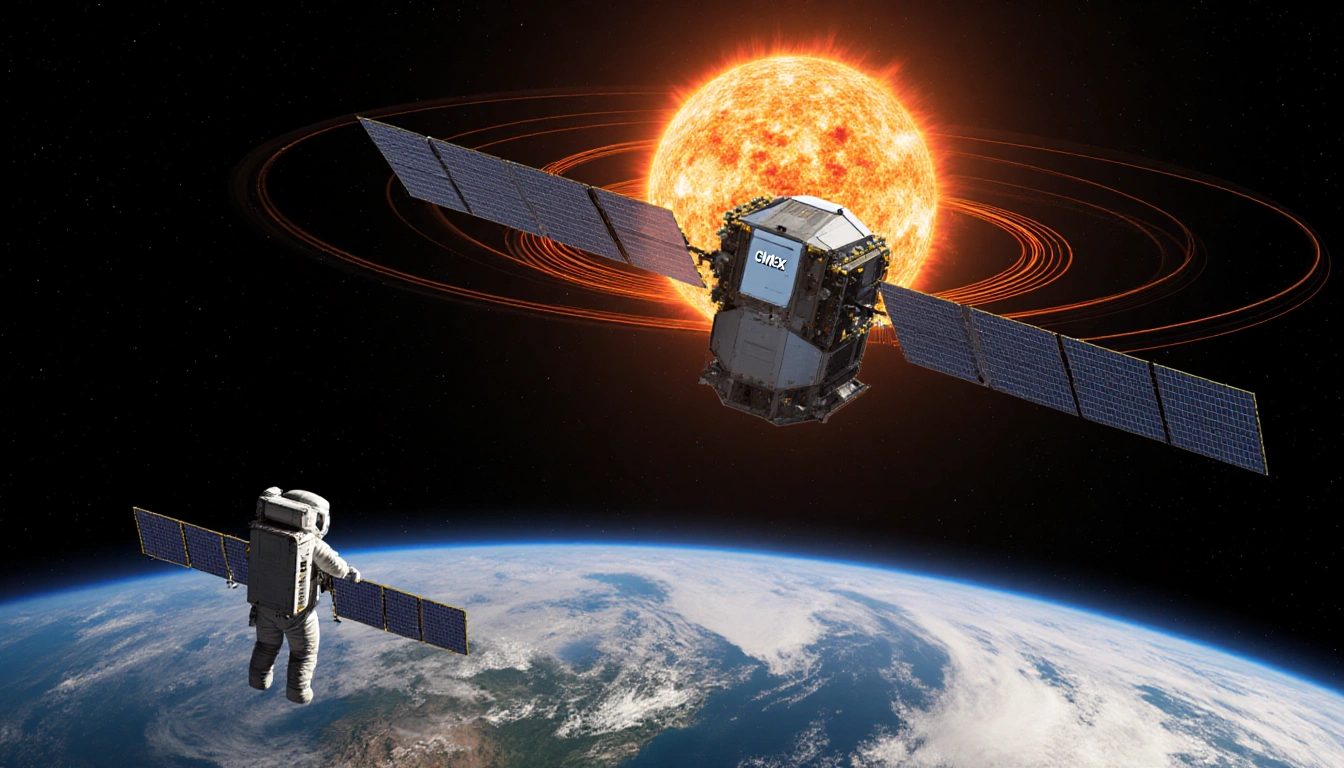
NCAR, founded more than sixty years ago, studies Earth’s atmosphere, weather and climate, but it also researches space weather-solar activity that can disturb the magnetosphere. Two upcoming NASA heliophysics missions, the Chromospheric Magnetism Explorer (CMEx) and the Solar Transition Region Ultraviolet Explorer (STRUVE), depend on NCAR scientists for data and expertise.
NASA Missions at Risk
CMEx, led by NCAR scientist Holly Gilbert, is designed to probe the Sun’s chromosphere and identify the magnetic sources of solar wind. The mission aims to improve predictions of solar events that threaten satellites and astronauts.
STRUVE, another NCAR-led project, will launch in 2029 to study the Sun’s chromosphere and corona. It will collect data on the energy buildup that leads to solar storms.
Asal Naseri, acting associate flight director for heliophysics at NASA Headquarters, said:
> “These mission concepts, if advanced to flight, will improve our ability to predict solar events that could harm satellites that we rely on every day and mitigate danger to astronauts near Earth, at the Moon, or Mars.”
Alfred de Wijn, NCAR scientist and STRUVE’s principal investigator, added:
> “The chromosphere is a really important part of the solar atmosphere when it comes to storage and release of magnetic energy. We know that the magnetic field of the photosphere connects to the heliosphere, but we don’t know how it makes its way through the chromosphere. We’re interested in what’s actually going on in that middle layer and seeing how the magnetic field changes leading up to eruptions.”
Reactions and Next Steps
Dara Norman, president of the American Astronomical Society, stated:
> “Research conducted at NCAR informs our understanding of space weather hazards caused by solar storms and the atmospheric properties of other planets in and beyond our solar system. The AAS requests that Congress exercise its oversight authority and investigate the basis for and process of NSF’s decision making about NCAR.”
Lawmakers have introduced legislation to reverse the White House’s proposed cuts to NASA and other agencies. They face a January 30 deadline to pass spending bills that could resolve the issue.
Key Takeaways
- The White House plans to dismantle NCAR, a cornerstone of climate and space weather research.
- NASA’s heliophysics missions CMEx and STRUVE could be jeopardized by the move.
- Congressional oversight and potential legislation may determine NCAR’s fate.