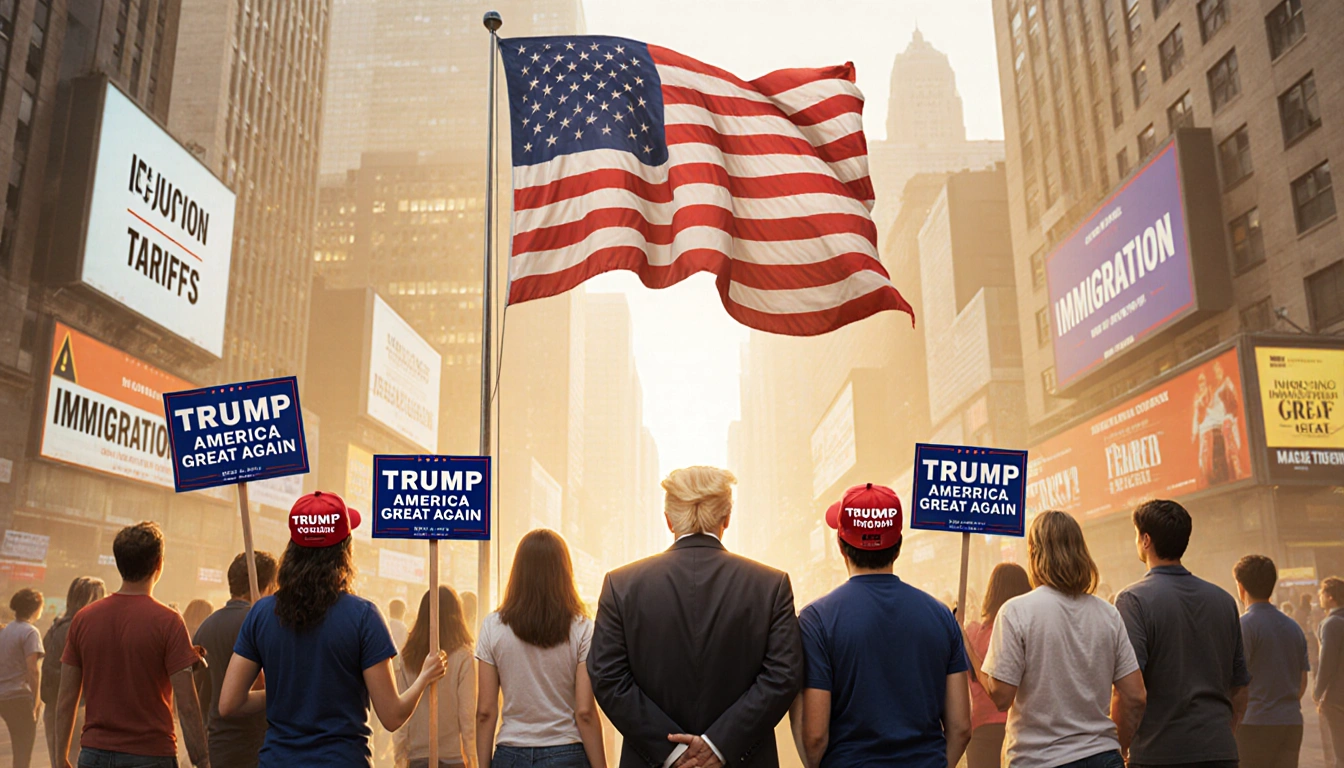

At a Glance
- Trump supporters still back him but growing discontent on the economy and immigration.
- Inflation and tariffs emerge as main points of frustration.
- Deportation policy causes division even among loyal voters.
- Why it matters: Shifts in this coalition could reshape the 2025 midterms.
A year of focus-group conversations with over 50 Black, Hispanic, and young Trump voters revealed that while most still approve of the president’s job performance, many are questioning his handling of the economy and border policy. The research, conducted by Syracuse University and firms Engagious and Sago, spanned March, June, September, and December of 2024.
Shifting Loyalty in Trump’s Base
The groups included voters who had voted for Trump in 2024, those who switched to Democrats in the New Jersey and Virginia gubernatorial races, and a handful who had almost abandoned Trump entirely.
Margaret Talev said:
> “Many of these voters gave President Trump a long runway well into the summer because they believed that he understands how business works better than they do and that his own fortune would eventually translate to enriching the country and their own finances or because they felt so strongly that unchecked immigration was a huge problem that needed a huge fix.”
She added that, as the year progressed, cracks appeared in their faith:
Margaret Talev continued:
> “But as the year wore on, we have seen a shift among these voters collectively, cracks in their faith, more questioning, oscillating or outright change of heart about Trump.”
The focus groups showed that Trump supporters were rarely looking for a “do-over” vote or a sudden rush toward Democrats.
Economic Concerns Grow
Inflation and tariffs were the most cited reasons for growing frustration.
- Inflation: Less than half of voters felt the president had made it a top priority.
- Tariffs: Voters were split between believing they would pay future dividends and fearing immediate consumer costs.
- Job performance: Most still approved of Trump’s job performance, but the frustration grew louder toward year’s end.
Rozlyn C., a 44-year-old Georgia voter of Cuban descent, expressed mixed feelings:
Rozlyn C. said:
> “I think he has a grand master plan that most of us probably don’t understand. I have faith that he, a hundred percent, has the best interest of our country at heart.”
Dorris S., 56, from a swing-state Black voter group, echoed a more optimistic tone:
Dorris S. said:
> “I expected him to be aggressive in a lot of different areas and he’s doing exactly that – being aggressive in a lot of different areas of focus that concern the U.S. citizens. Every few days you’re hearing something different and you’re constantly seeing him at work, working, getting stuff done.”
In contrast, Robert L. and Justin K. from a December panel in Virginia were far more critical:
Robert L. said:
> “The president’s comments about inflation improving are delusional and prove he’s out of touch.”
Justin K. said:
> “He’s been focused on prosecuting his political enemies, pardoning people. I don’t even think that there’s much a president can do on inflation, but I think that this was a kind of situation where he just said it to get elected.”
Rich Thau of Engagious, who moderated the sessions, summed up the sentiment:
Rich Thau said:
> “It’s clear President Trump’s greatest vulnerability is being viewed as ineffective and insulated when it comes to inflation-just like President Biden was.”
Tariff Divides
The tariff policy highlighted a divide between those hoping for long-term gains and those fearing short-term pain.
Hector L., 55, from North Carolina, argued:
Hector L. said:
> “It’s ridiculous that we haven’t been charging tariffs for decades and we’re starting to equalize it. Other countries charge us particular tariffs for our goods; it’s only fair that we make it equal across the playing board.”
William A., 60, from Georgia, echoed the same sentiment:

William A. said:
> “He’s trying to bring balance, to the force, per se, of tariffs.”
But David S., 47, from New Jersey, took a different view:
David S. said:
> “Tariffs are a tax on the American people. That’s who pays for it, so I don’t support it. Every tariff that is put in place, from when Biden is putting ’em in place, Trump putting them in place, they are taxes on the people who are importing. The people who are buying those imports are paying the tax.”
Immigration and Deportation
Most Trump voters still praised the president’s hard-line stance on illegal border crossings, but many expressed discomfort with the administration’s deportation tactics.
Rebecca H., 52, from Virginia, approved of border tightening but disapproved of the manner:
Rebecca H. said:
> “I approve of how Trump is tightening the border control and restricting the refugees. But I don’t like how U.S. Immigration and Customs Enforcement is kidnapping people, as it makes arrests.”
Katelyn R., 21, from Wisconsin, questioned the morality of the policy:
Katelyn R. said:
> “The way that these people are being treated don’t align with my Christian values, or my pro-life values, or any of the values that a conservative may have.”
Ruby L., 59, from Georgia, highlighted a mismatch in priorities:
Ruby L. said:
> “He was going to deport people that were criminals and have backgrounds. But I see that he’s deporting people that work hard and have been in this country. I think he should find a way to help them stay and get citizenship or something.”
Justin O., 38, from Nevada, was less forgiving:
Justin O. said:
> “Well, what do you expect? If you came here illegally, you’ve done something illegal. Expect the consequences.”
Summary of Themes by Month
| Month | Focus Group Theme | Key Concerns |
|---|---|---|
| March | Black voters | Inflation, job performance |
| June | Latino voters | Tariffs, economic plan |
| September | Youth voters | Immigration, job performance |
| December | Mixed voters | Inflation, deportation, policy fatigue |
The table shows that economic and immigration issues surfaced in every session, but the intensity of criticism grew as the year progressed.
Key Takeaways
- Inflation remains a top concern for many Trump supporters, with critics calling the president’s efforts “delusional.”
- Tariff policy splits voters between those who see long-term benefits and those who view them as immediate taxes on consumers.
- Deportation tactics are a source of moral conflict, even among those who favor stricter border control.
These shifts in a core coalition suggest that the 2025 midterms may hinge on how the president addresses these divisive issues.