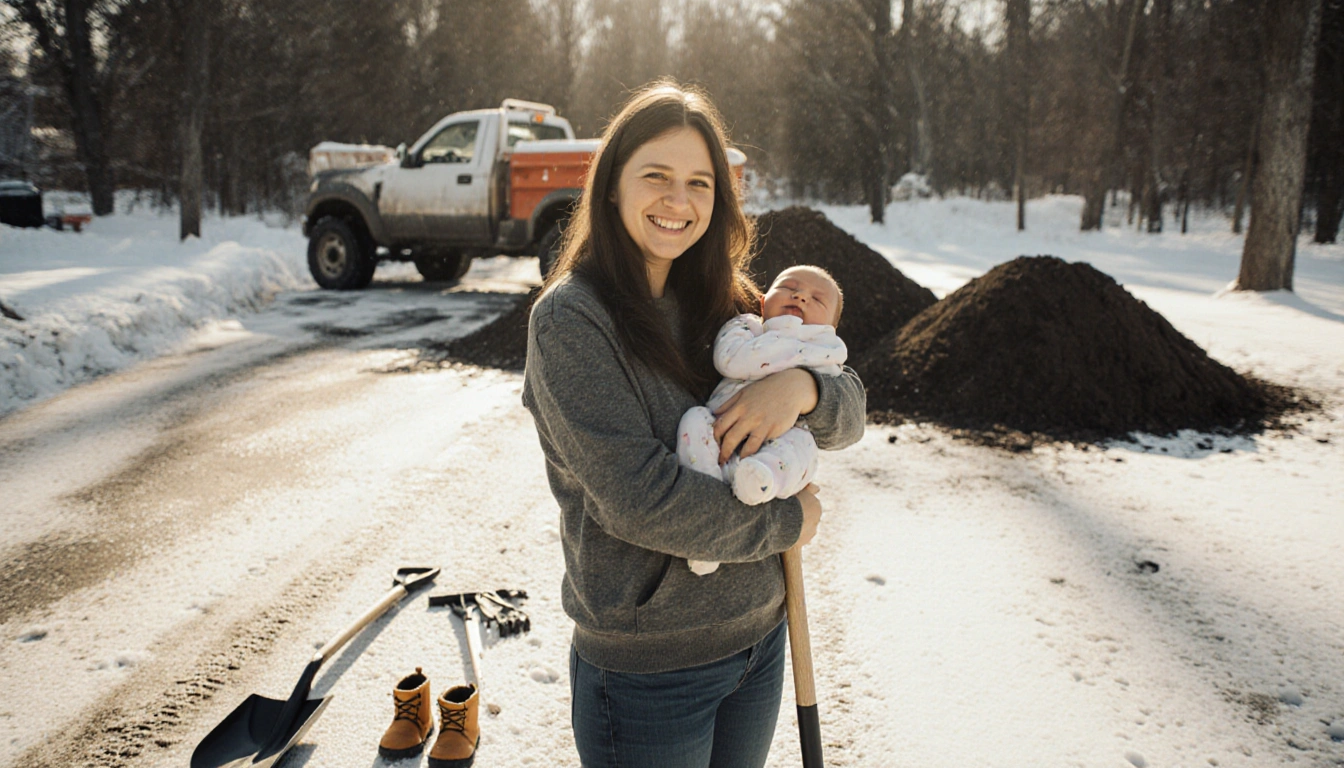

At 37 weeks pregnant, Ashley Caldwell spent her last weekend before giving birth shoveling 11 truckloads of dirt out of her driveway. The act, her version of nesting, became a dramatic pre-birth ritual.
A Life Built on Air
Caldwell left her family in Virginia at age 13 to attend an elite winter sports academy in Lake Placid, New York. She grew up flipping and somersaulting around her parents’ home and, as a teenager away from home, trained as an aerialist. She practiced gliding down a snowy slope on skis before launching upward and performing tricks. Her natural talent earned her the distinction of being the only woman in history to land a quadruple-twisting triple backflip.
The Marriage of Sport and Family
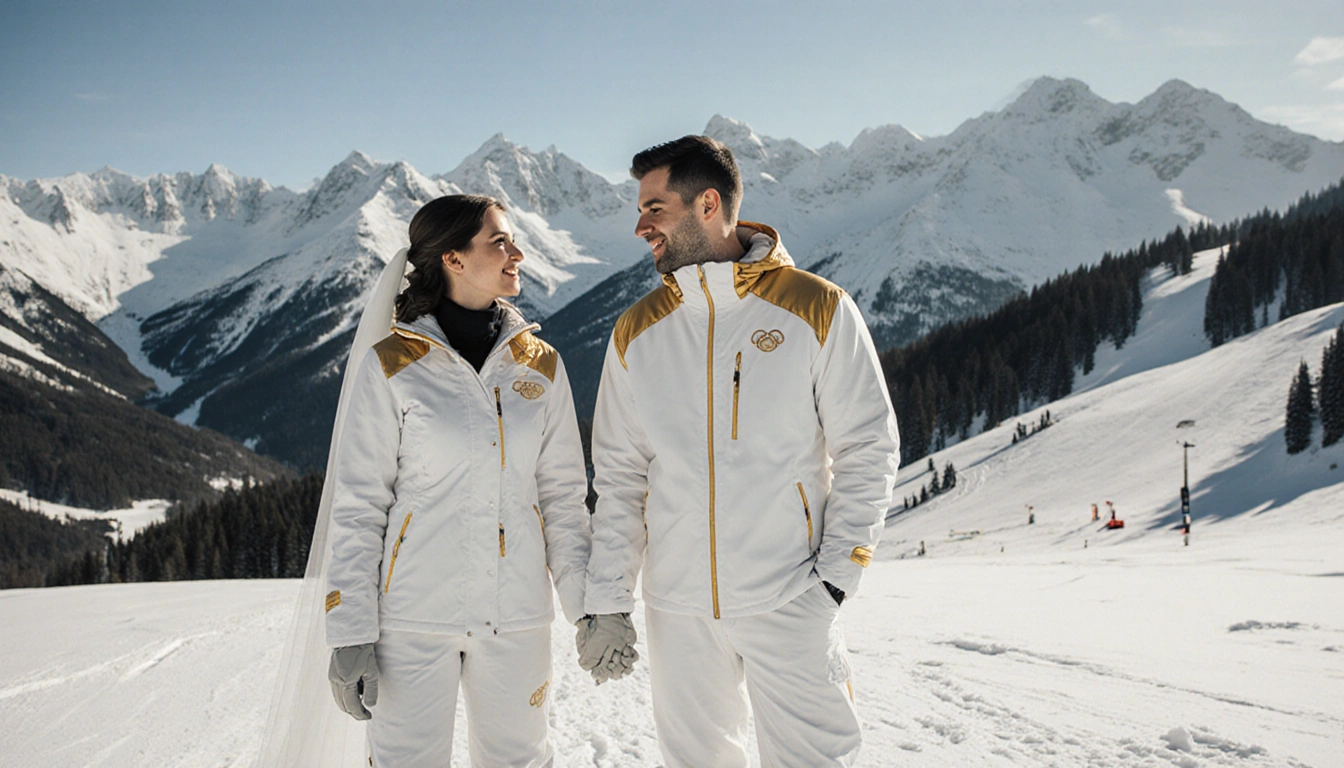
Caldwell and her husband, Justin Schoenefeld, a fellow freestyle skier, met a decade earlier on the aerials world circuit. The couple married in February after a backcountry ski run that lasted 45 minutes above Park City, Utah. Their wedding was held in snow boots, and the bride wore white snow pants and a gold-trimmed jacket.
Schoenefeld’s light protest when Caldwell began shoveling-“Ashley, we don’t have to do all of it,”-was met with her firm reply, “No, we’re doing it all.” He knew that little could dissuade her from trying difficult things.
Pregnancy and the Birth of Harvey
In mid-July, Caldwell learned she was pregnant and began planning what she considered her hardest feat yet: qualifying for the 2026 Winter Olympics in Italy, less than a year after giving birth and after missing almost all of her typical summer training. She admitted, “There’s not that many people that are that [highly ranked] that have come back after a baby.” On July 16-three days after shoveling, two days after mountain biking, and one day after she gingerly squatted nearly 100 pounds in the U.S. Ski and Snowboard Association’s training center near Park City-Caldwell delivered a baby boy named Harvey after 26 hours of labor.
Seven months remained until the Olympics. By the time she returned home from the hospital, she was already considering the path to qualification. “Right away,” she said, “How quickly can I drop weight? How quickly can I get my stomach muscles back? How quickly can I be strong enough and get my ligaments back together?”
The Challenge of Returning to Peak Performance
Caldwell’s training schedule on July 15 in Park City highlighted the difficulty of balancing motherhood with elite sport. She had to manage breastfeeding, a new routine she mapped out for the next six months to coincide with the opening ceremony. She noted, “I’ve been to the last four Olympics. If I’m not there at the next one, I’ll be like, what the heck?”
Schoenefeld encouraged her, saying, “Come back when you’re 36.” Caldwell replied, “I don’t want to half be an athlete, I don’t want to half be a mom at this point. And I think that there’s probably a way to make it work, but for me, it just didn’t feel right.”
Support, Sponsorship, and Financial Reality
The article reveals that athletes like Caldwell often rely on a second job or wealthy parents to cover travel and training costs. Caldwell works for a private-equity firm that lends to real-estate developers. She also mentioned that, after her son’s birth, she found a grant offered by the U.S. Olympic & Paralympic Committee to cover injury-related costs that insurance would not cover. She later learned of a Team USA New Family Fund, a one-time grant to help cover child-care, infant supplies, and feeding support.
Several athletes, including Faye Gulini, expressed frustration that resources were not well-known or organized. Gulini said, “Certainly nobody reaches out with a packet of like ‘Here’s what is available to you, congrats on your growing family! If you have questions, reach out to this person,'” and added that the information was shared ad-hoc, often by text message.
The U.S. Olympic & Paralympic Committee has created a guide listing all its offerings, including private lactation spaces within Team USA facilities, supplies and fees for shipping frozen breast milk, and psychological support. The International Olympic Committee announced that athletes attending Milan Cortina with their children will receive a “Little Champions” kit from Pampers and that there are no restrictions for breastfeeding at the Games.
The Broader Context of Motherhood in Sport
The article references Allyson Felix’s 2019 experience, where her sponsor, Nike, proposed paying her 70 % less after giving birth. The outcry led Nike to change its maternity policy for Olympic athletes. While not a direct quote, the example illustrates the stigma some female athletes face.
Faye Gulini, a four-time Olympian, shared her own perspective: “The very reason I thought I was done snowboarding, having kids and starting a family, was the very reason that I wanted to return. It was no longer about me and my journey. It was about us and our journey and what I could teach them and show them and experience with them. And it just gave me so much motivation to try – for them.” Gulini’s motivation aligns with Caldwell’s desire to set an example for her child.
Key Takeaways
- Caldwell, a 32-year-old freestyle skier, gave birth to Harvey after 26 hours of labor while training to qualify for the 2026 Winter Olympics.
- She has recovered from two ACL operations, won a 2022 team gold, and has competed in four Olympics.
- Financial and logistical support for athlete-parents remains fragmented, with grants and sponsorships often shared informally.
In the weeks following Harvey’s arrival, Caldwell felt ready to resume mountain biking and considered the possibility of a comeback. She emphasized that she was not retiring, but she was not attempting an Olympic comeback this winter either. Her decision underscores the complex balance between motherhood and elite sport, a reality many female athletes confront.
Closing
Ashley Caldwell’s story is one of determination, resilience, and the relentless pursuit of a dream that stretches beyond personal ambition. Whether she returns to the podium in Milan or focuses on raising her son, her journey continues to inspire athletes who navigate the dual roles of parent and competitor.
Key Takeaways
- Caldwell’s 37-week nesting ritual and 26-hour labor highlight her dedication.
- She is weighing an Olympic comeback against the demands of motherhood.
- Athlete-parent support systems are evolving but still lack comprehensive, centralized resources.
The narrative of Caldwell and her fellow athlete-parents illustrates the evolving landscape of motherhood in elite sports and the ongoing need for structured support.