
Hook paragraph
The Pause
The administration’s announcement, effective immediately, marks the latest effort to slow the growth of offshore wind energy. It follows a federal judge’s decision two weeks earlier that declared President Donald Trump’s executive order blocking wind projects unlawful.
What the Administration Says
Interior Secretary Doug Burgum said the pause will give the Interior Department time to collaborate with the Defense Department and other agencies to evaluate ways to mitigate the risks. He added, “The prime duty of the United States government is to protect the American people,” and noted that the action addresses emerging national security risks, including the rapid evolution of adversary technologies and the vulnerabilities created by large-scale offshore wind projects near east-coast population centers.
The statement did not explain the specific security risks. The Interior Department cited unclassified reports that the movement of massive turbine blades and highly reflective towers can create radar interference, or “clutter,” that obscures legitimate moving targets and generates false targets near wind projects.
Projects Affected
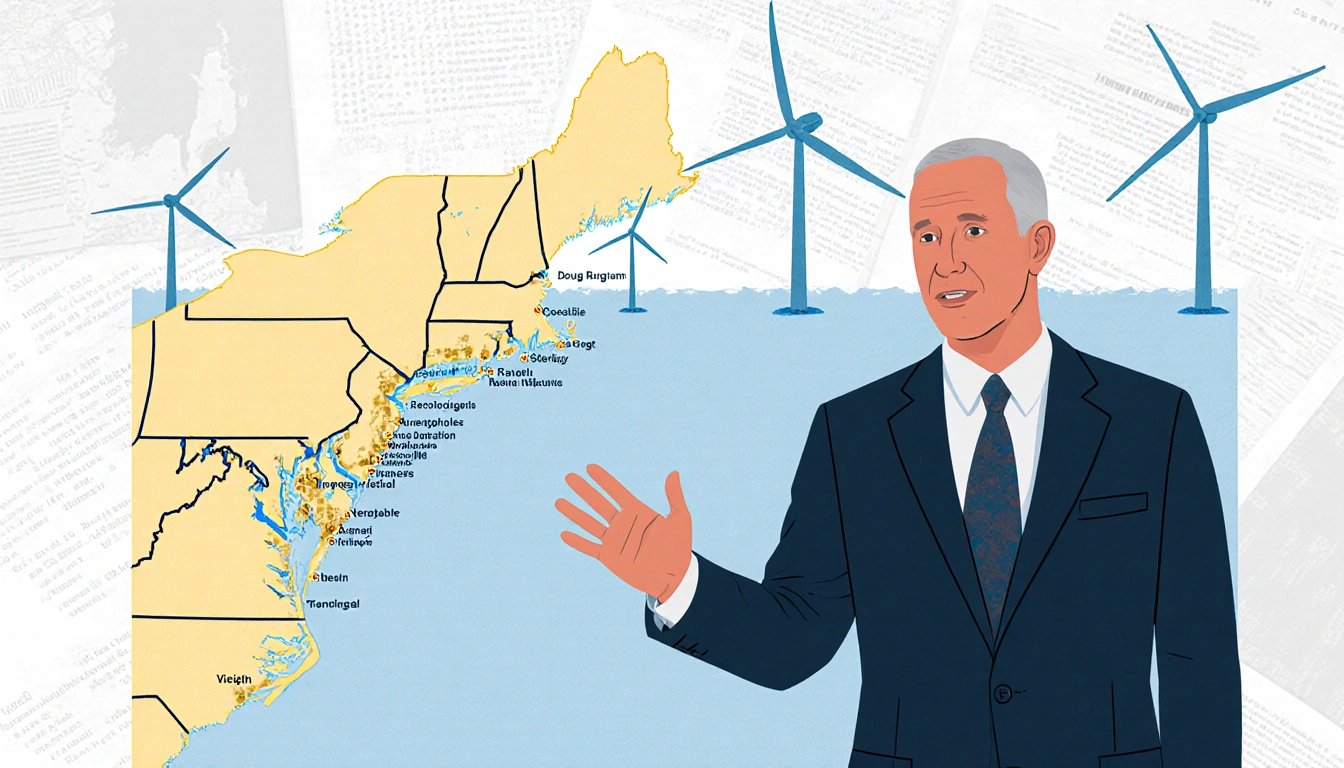
Leases for five projects have been paused: Vineyard Wind in Massachusetts; Revolution Wind in Rhode Island and Connecticut; Coastal Virginia Offshore Wind; and two New York projects, Sunrise Wind and Empire Wind.
National security expert Kirk Lippold, former Commander of the USS Cole, argued that the projects received permits after years of review by state and federal agencies-including the Coast Guard, the Naval Undersea Warfare Center, and the Air Force-and that the Department of Defense was consulted at every stage. He contended that the projects would benefit national security by diversifying the country’s energy supply.
Legal Context
Judge Patti Saris of the U.S. District Court for the District of Massachusetts vacated Trump’s Jan. 20 executive order that had halted leasing and permitting for wind projects. The ruling was in favor of a coalition of state attorneys general from 17 states and Washington, D.C., led by New York Attorney General Letitia James. The court found the order arbitrary, capricious, and in violation of U.S. law.
Trump’s administration has been hostile to renewable energy, especially offshore wind, and has prioritized fossil fuels for electricity production.
Opposition Voices
Wind supporters have called the pause illegal and a setback for clean energy. Ted Kelly of the Environmental Defense Fund said, “For nearly a year, the Trump administration has recklessly obstructed the build-out of clean, affordable power for millions of Americans, just as the country’s need for electricity is surging,” and added, “Now the administration is again illegally blocking clean, affordable energy.” He criticized the administration for supporting aging coal plants that barely work and pollute the air.
The Conservation Law Foundation, a Boston-based environmental group, described the pause as “a desperate rerun of the Trump administration’s failed attempt to kill offshore wind,” noting that courts had already rejected the administration’s arguments. Kate Sinding Daly, senior vice president for law and policy at the foundation, warned that trying again to halt these projects tramples on the rule of law, threatens jobs, and deliberately sabotages a critical industry that strengthens America’s energy security.
Key Takeaways
- Five major offshore wind leases on the East Coast have been paused amid national security concerns.
- The pause follows a court ruling that declared Trump’s wind-blocking executive order unlawful.
- Environmental groups argue the move is illegal, a setback for clean energy, and undermines energy security.
The administration’s decision underscores the tension between national security priorities and the expansion of renewable energy infrastructure along the U.S. coast.