
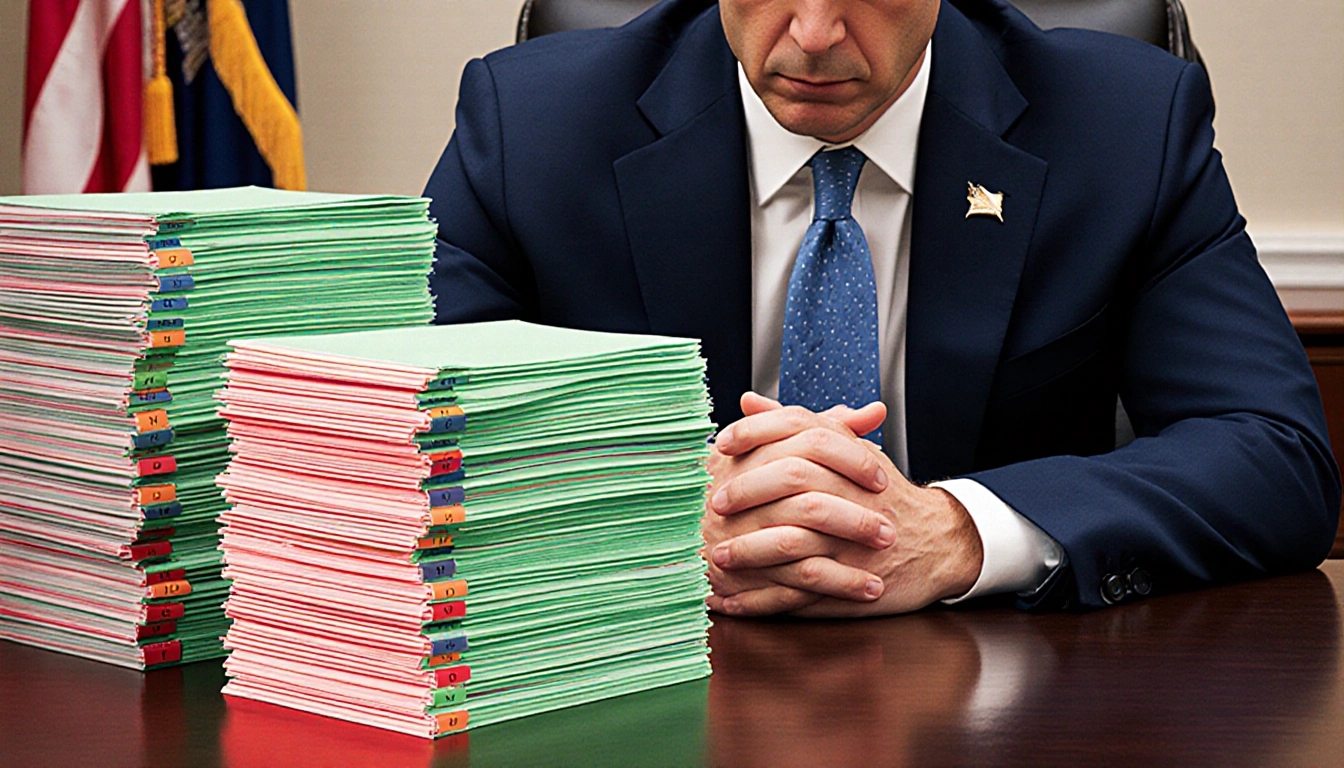

In 2025, California Governor Gavin Newsom signed 794 bills he received from the Democratic-dominated Legislature while vetoing 123. The record shows a governor who tackles a wide array of issues-housing, health, energy, and immigration-while trying to keep a tight grip on the state’s finances.
A Massive Legislative Output
Newsom’s 2025 session produced more than 900 pieces of legislation. He championed the redrawing of California’s congressional map, a move that NBC News projects could give Democrats up to five additional House seats in next year’s midterms. The new map counters Republican redistricting efforts in other states.
The governor’s vetoes followed a consistent pattern. According to an analysis by CalMatters, his veto messages most frequently cited fiscal restraint, redundancy, and blaming President Trump for creating a hostile political and economic environment for certain policies.
Housing and Affordability at the Forefront
Housing remained Newsom’s top priority. He signed bills that streamline development regulation, allowing taller and denser buildings near transit stations and letting developers skip stringent environmental reviews. Other laws ease the rental of parts of homeowners’ homes to new tenants and penalize “slow-growth” cities.
Affordability measures also dominated the agenda. The governor signed bills that enacted $60 billion in electricity bill refunds, expanded affordable child-care-including free summer-school programs-and increased paid family leave for many Californians. He also kept his earlier plans for free universal preschool for four-year-olds on track and added insulin and naloxone to the state-run CalRx program, which sells pharmaceuticals directly to patients.
Health Care, Immigration, and the Center-Ground Shift

Newsom’s 2025 session marked a pivot toward the center on hot-button issues. He scaled back health-care benefits for undocumented immigrants, a stark reversal of his earlier promise of universal coverage for all. Newsom framed the action as a “corrective action” to “level set on what we can do and what we can’t do.”
He also implemented protections for immigrants targeted by federal enforcement agencies, a move praised by progressives. Meanwhile, he fought off efforts to raise taxes on California’s wealthiest residents, most recently opposing a “billionaire tax” championed by many progressive groups.
Energy, Environment, and the “Pragmatic” Approach
In a departure from his earlier environmental agenda, Newsom signed bills that boosted in-state oil production by streamlining drilling permit processes. He also halted plans to decommission a nuclear plant and some gas plants, citing potential power shortages. Environmental groups criticized the shift.
Newsom has repeatedly framed his record as a “pragmatic” approach. “This is not an ideological endeavor. We’re in the practical application business. We’ve got to manifest our ideals and our goals, and so this lays it out, but it lays it out without laying tracks over folks,” he said in September at an event to sign the oil-production bill.
He also said, “I want it to be the Manchin to Mamdani party,” referring to former West Virginia Senator Joe Manchin and New York City Mayor-elect Zohran Mamdani. Through a spokesperson, Newsom declined to comment further on the statement.
Political Implications and the “Gavin Brand”
Political strategists praise Newsom’s record for straddling the progressive-centrist divide. “We’ve seen a continued trend this year of blue states, including with Gov. Newsom and his legislative majority, delivering more on responsive policies that are really about more immediate needs of constituents,” said Mandara Meyers, executive director of The States Project.
However, some progressives warn that his lack of a narrow identity could hurt him in a 2028 Democratic primary. “Who is he being pragmatic towards?” asked Ida Eskamani, senior director on economic issues at the State Innovation Exchange. She praised his insulin move and the “innovation” of CalRx but called his health-care rollback “Trump lite.”
Ted Lempert, a former Democratic Assemblyman and UC-Berkeley political science professor, explained the governor’s style: “Yes, it’s threading the needle. But it’s also that he swings at every pitch,” he said. “And when you do that, yes there’s potential to strike out, which he’s not. For him, it’s about making contact. It’s about doing a little bit in a whole lot of different areas.”
Marva Diaz, a Sacramento-based Democratic strategist, added, “He has always been skilled at the give and take. He has taken things away from the left that they care about and given them something else.”
Key Takeaways
- Governor Newsom signed 794 bills and vetoed 123 in 2025, reflecting a broad legislative agenda.
- Housing and affordability reforms, including $60 billion in electricity refunds and expanded child-care, topped the agenda.
- The governor shifted center-ground on health care for undocumented immigrants and energy policy, sparking debate among progressives.
California’s legislative output underscores Newsom’s strategy of balancing progressive demands with fiscal restraint, a formula that could shape his future presidential bid and the state’s political trajectory.