
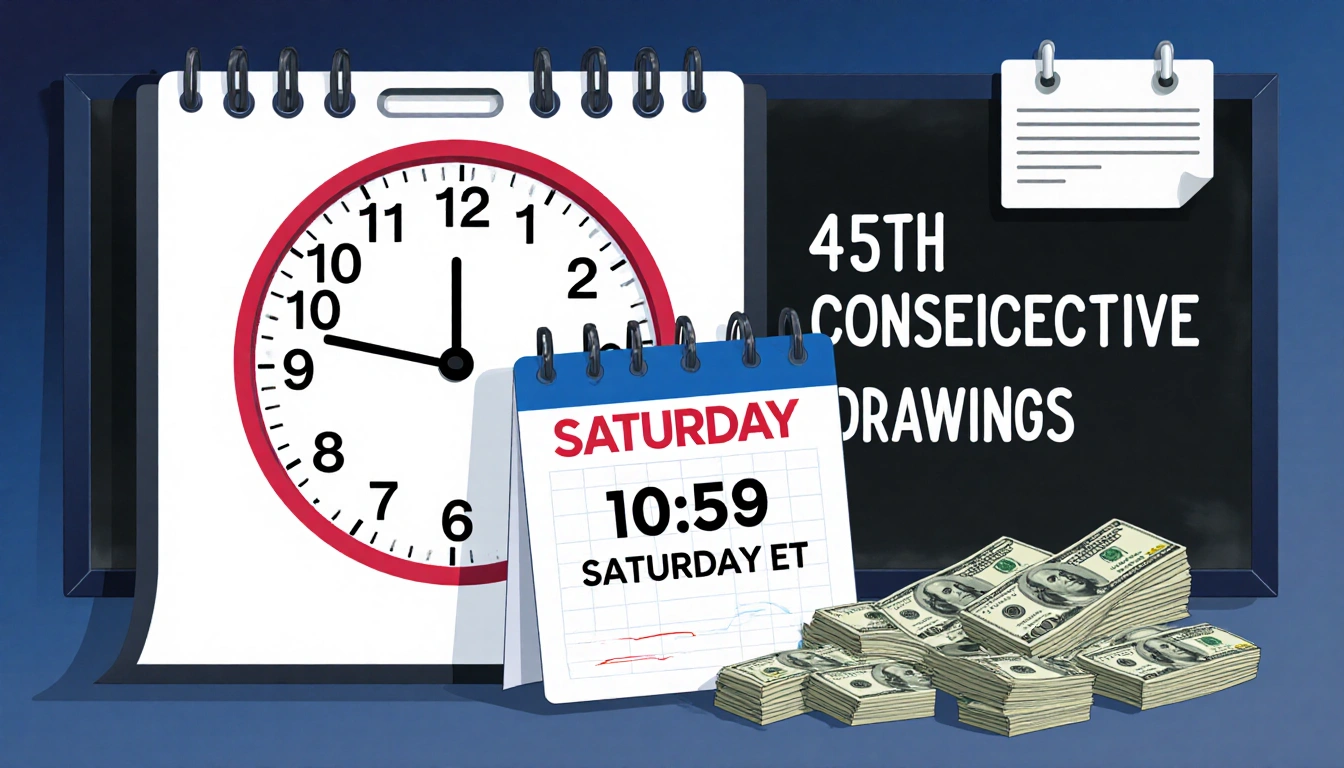
Saturday’s Powerball drawing will take place at 10:59 p.m. ET, and the estimated jackpot climbs to $1.5 billion. This prize will be the sixth-largest ever offered by the game and the seventh time a jackpot has surpassed the $1 billion threshold. The draw marks the 45th drawing since the last winner claimed the prize on September 6, setting a new record for the longest streak of a single jackpot cycle. The previous record of 42 consecutive drawings was held before this cycle began.
During Wednesday’s drawing, no tickets matched all five white balls and the red Powerball, so the jackpot rolled over to Saturday. However, two tickets sold in Arizona and Massachusetts each earned $2 million by matching five numbers with the Power Play multiplier. Additionally, six tickets matched five numbers and won $1 million each: three from New York, one from Connecticut, one from Pennsylvania, and one from Tennessee.
The odds of hitting the Powerball jackpot are 1 in 292.2 million, a figure that underscores the rarity of a win. The current jackpot’s position as the sixth-largest in Powerball history reflects its long run of rollover draws. It is also the seventh jackpot to reach the $1 billion milestone and the second to do so this year.
Earlier this year, the September drawing produced a $1.787 billion grand prize, shared by ticket holders in Missouri and Texas. That prize is the second-largest ever awarded by Powerball and remains the highest jackpot that has been split between two winners. The $1.5 billion jackpot on Saturday follows that historic win as the next significant milestone.
If a ticket matches all five white balls plus the red Powerball, the winner faces a choice between an annuity and a lump-sum payout. The annuity option would deliver $1.5 billion in 30 annual payments, while the lump-sum alternative would provide an estimated $689.3 million today. Both options are subject to federal income tax and, in most states, state tax as well.
The lump-sum figure represents the cash value of the annuity, calculated by discounting future payments to present value. A winner selecting the annuity would receive a steady stream of payments over three decades, whereas the lump-sum option offers immediate liquidity. The decision typically depends on personal financial goals and tax considerations.
Math professor Nicholas Kapoor used a Powerball ticket to illustrate the improbability of winning. He purchased a ticket for a demonstration, but the result was contrary to his expectation: he won $100 000. “The lesson didn’t really go according to plan,” Kapoor said, reflecting on the unexpected outcome.
Kapoor’s experience highlights how the odds can be misleading to the casual player. While the probability of winning the jackpot remains minuscule, smaller prizes still offer a chance for modest winnings. His anecdote serves as a reminder that luck can surprise even those who know the math.
Tickets for Saturday’s drawing can be bought at authorized retailers or online through the official Powerball website. Each ticket costs $2, and players must choose five numbers from 1 to 69 and one Powerball from 1 to 26. The Power Play option, which multiplies non-jackpot prizes, is available for an additional $1 per play.
Should a player win, claiming the prize requires presenting a valid ticket to a state lottery office. Winners can opt for the annuity or the lump-sum payment, after which federal and state taxes are deducted. The process is standardized across all Powerball jurisdictions.
Key Takeaways
- The $1.5 billion jackpot is the sixth-largest in Powerball history and will be drawn Saturday at 10:59 p.m. ET.
- The draw is the 45th since the last jackpot win, setting a new record for consecutive drawings.
- Winners can choose between a 30-year annuity or an estimated $689.3 million lump-sum, both subject to taxes.
- Math professor Nicholas Kapoor’s $100 000 win demonstrates that even improbable outcomes can occur.
With the jackpot approaching $1.5 billion, millions of hopefuls are keeping a close eye on Saturday’s draw. Whether they choose the annuity or the lump-sum, the potential impact on a winner’s life is undeniable. The game’s long history of record-setting rolls keeps the public intrigued, and the next big win may very well be just around the corner.