

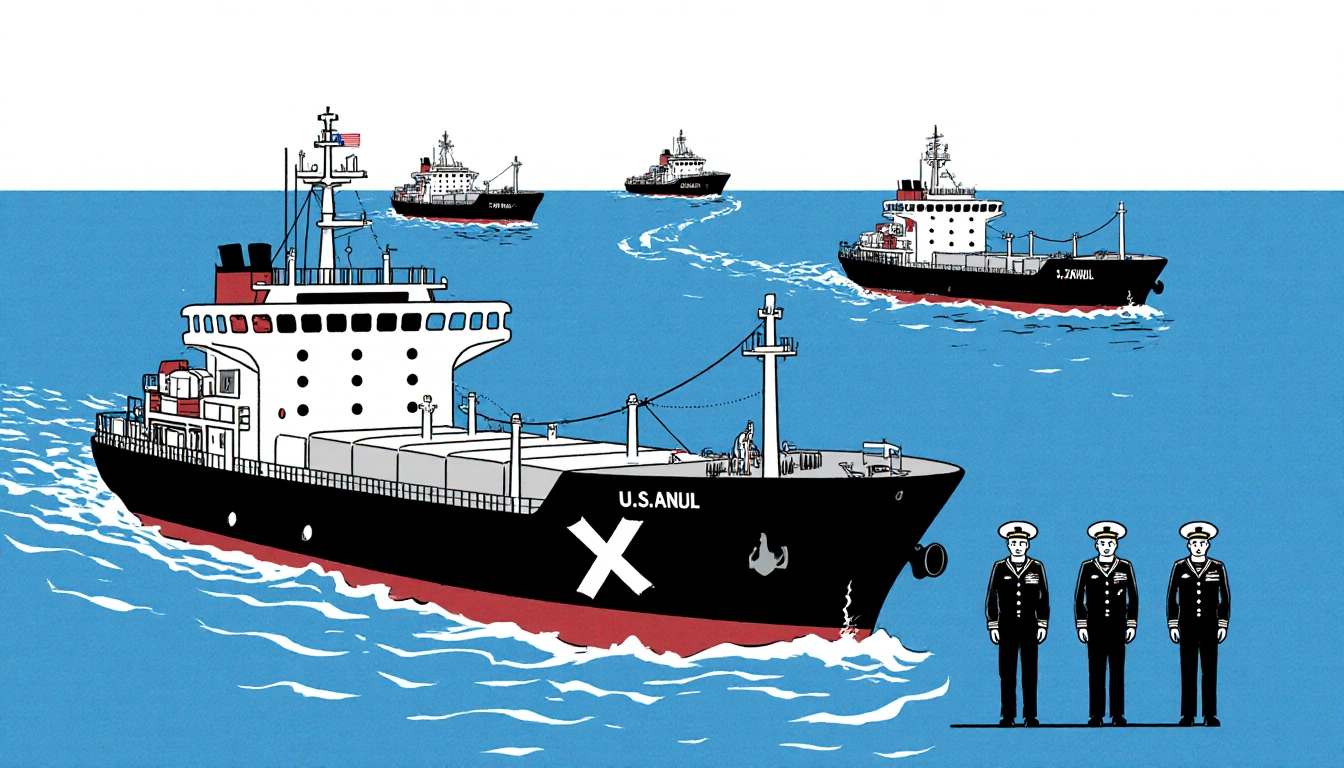
President Donald Trump’s recent remarks have reignited debate over the United States’ engagement in Venezuela. In a phone interview with NBC News on Thursday, Trump admitted that the possibility of a war remains on the table, saying, “I don’t rule it out, no.” The comments come as the administration has intensified pressure on Nicolás Maduro by ordering a blockade of sanctioned oil tankers and seizing a tanker captured near Venezuela.
War with Venezuela
Trump’s statement on Thursday marked a clear shift from his earlier campaign promise to avoid foreign conflicts. In the interview, he first said, “I don’t discuss it,” when asked whether he rules out war. When pressed, he confirmed the possibility, adding that additional seizures of oil tankers would occur. Asked for a timeline, Trump replied, “It depends. If they’re foolish enough to be sailing along, they’ll be sailing along back into one of our harbors.”
Blockade and Seizure
On Tuesday, the administration ordered a blockade of sanctioned oil tankers entering or leaving Venezuela, a move that has increased pressure on Maduro. The U.S. recently seized an oil tanker captured near Venezuela, further tightening the blockade. The blockade is part of a broader campaign that has already led to 28 boat strikes.
Boat Strikes
The administration’s campaign against alleged drug trafficking vessels has resulted in 28 boat strikes that have killed more than 100 people. One of the strikes, described as a “double tap,” is currently facing congressional scrutiny. The strikes are portrayed by the administration as targeting drug boats that allegedly use Venezuelan oil revenue to finance “drug terrorism.”
Economic Policies
In a national prime‑time address, Trump defended his economic agenda amid voter concerns about the cost of living. He announced a $1,776 “warrior dividend” that will be paid to nearly 1.5 million military members. Trump said the payments would begin “very soon,” adding that they would be funded through the “One Big Beautiful Bill” and revenue from tariffs.
Warrior Dividend
A senior administration official said the one‑time bonus will cost about $2.6 billion and will be paid from military housing funds created by the One Big Beautiful Bill. The bill, signed in July, allocated $2.9 billion to reduce out‑of‑pocket costs for service members for two years. A Senate appropriations source confirmed that the money would come from that fund, not from tariffs, and that the Defense Department chose a one‑time payment to avoid setting a precedent for future housing costs.
Health Care
Trump also addressed health care, criticizing large insurance companies. He said, “I’m blasting gigantic health insurance companies that have gotten rich on billions of dollars of money that should go directly to the people.” He urged that people be able to buy their own health insurance, claiming it would provide better benefits at a lower cost. Millions who rely on the Affordable Care Act will see premiums rise next year after House Republicans refused to vote to extend subsidies. Trump stated he does not believe it is necessary to repeal the ACA, saying, “I don’t have to do anything, because Obamacare would just repeal itself automatically because nobody’s going to want to use it. Too expensive,” as he told NBC News.
Congressional Outlook
When asked whether Republicans would retain both chambers of Congress, Trump replied, “I think so. I certainly hope so.” He noted that the upcoming November midterm elections will be a pivotal focus for both parties.
Key Takeaways
- Trump confirms war with Venezuela remains a possibility amid oil tanker blockade and boat strikes.
- The administration has ordered 28 boat strikes, killing over 100 people, and is pursuing additional oil tanker seizures.
- A $1,776 warrior dividend will be paid to 1.5 million military members, funded by the One Big Beautiful Bill.
- Trump criticizes large insurers, supports individual health insurance purchases, and rejects the need to repeal the ACA.
Trump’s remarks underscore a hard‑line stance toward Venezuela, a push for military financial benefits, and a continued focus on cost‑of‑living issues for voters.