
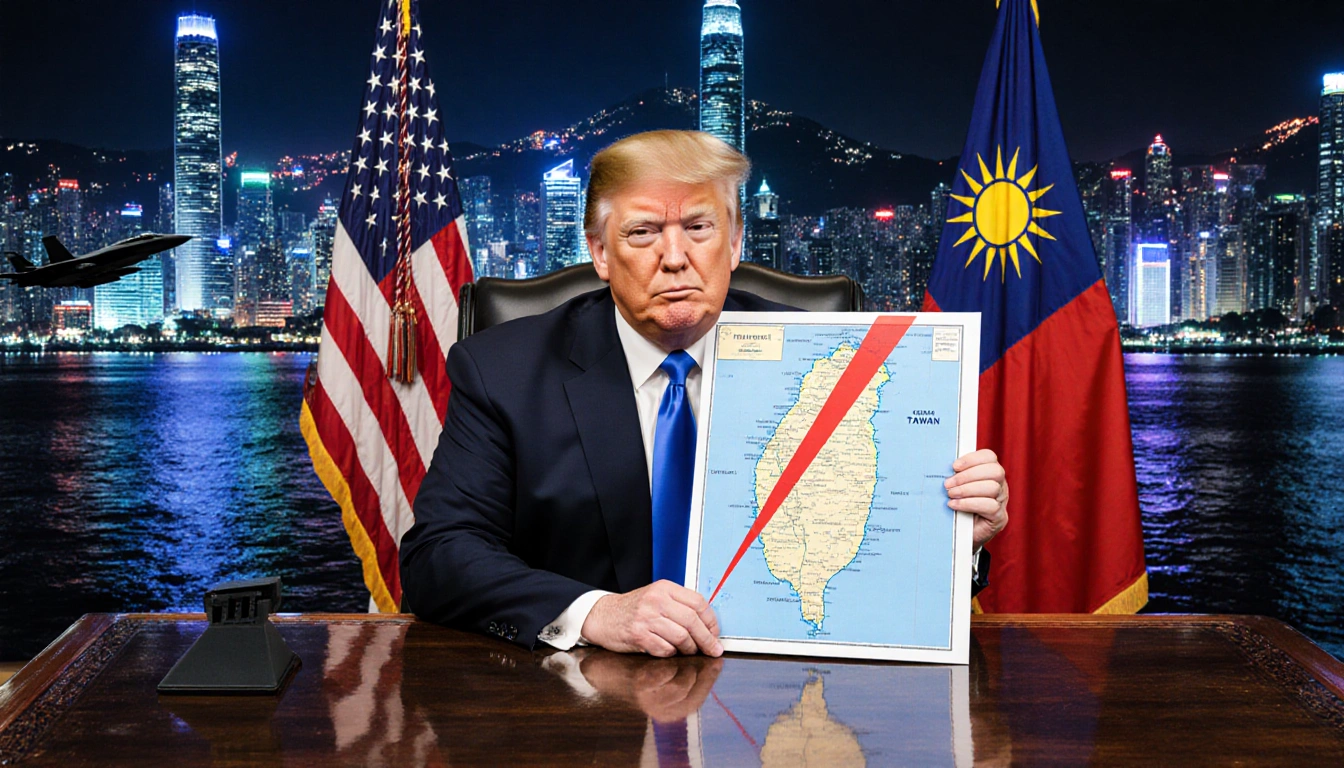

In a televised address, President Donald Trump announced a massive $11.15 billion package of arms for Taiwan, a move that has drawn sharp condemnation from Beijing and intensified already tense U.S.–China relations.
The Package and Its Components
The State Department disclosed eight separate sales agreements that together exceed $10 billion. The agreements include:
- 82 high‑mobility artillery rocket systems (HIMARS) and 420 Army Tactical Missile Systems (ATACMS), valued at more than $4 billion, mirroring the aid the U.S. has supplied Ukraine.
- 60 self‑propelled howitzer systems and related equipment, also worth over $4 billion.
- Drones valued at more than $1 billion.
- Military software exceeding $1 billion.
- Javelin and TOW anti‑armor missiles worth more than $700 million.
- Helicopter spare parts at $96 million.
- Refurbishment kits for Harpoon missiles costing $91 million.
According to Taiwan’s Defense Ministry, the eight agreements total $11.15 billion.
Legal and Strategic Context
Under U.S. federal law, the United States is required to assist Taiwan with its self‑defense. The new sales would represent the largest U.S. weapons package to Taiwan ever, surpassing the $8.4 billion that flowed to the island during the Biden administration.
The State Department framed the sale as serving “U.S. national, economic, and security interests by supporting the recipient’s continuing efforts to modernize its armed forces and to maintain a credible defensive capability.”
It added that “The proposed sale(s) will help improve the security of the recipient and assist in maintaining political stability, military balance, and economic progress in the region.”
China’s Reaction
China’s Foreign Ministry blasted the move as a violation of diplomatic agreements and a threat to its sovereignty, security, and territorial integrity. Foreign Ministry spokesperson Guo Jiakun said:
> “The ‘Taiwan independence’ forces on the island seek independence through force and resist reunification through force, squandering the hard‑earned money of the people to purchase weapons at the cost of turning Taiwan into a powder keg.”
> “This cannot save the doomed fate of ‘Taiwan independence’ but will only accelerate the push of the Taiwan Strait toward a dangerous situation of military confrontation and war. The U.S. support for ‘Taiwan Independence’ through arms will only end up backfiring. Using Taiwan to contain China will not succeed.”
The embassy in Washington denounced the National Defense Authorization Act, calling it an unfair targeting of China as an aggressor.
Taiwan’s Response
Taiwan’s Defense Ministry thanked the United States, stating the sale would help the island maintain “sufficient self‑defence capabilities” and provide strong deterrent capabilities. The ministry said that bolstering its defense is “the foundation for maintaining regional peace and stability.”

Foreign Minister Lin Chia‑lung echoed this sentiment, thanking the U.S. for its “long‑term support for regional security and Taiwan’s self‑defence capabilities,” which he said are key for deterring conflict in the Taiwan Strait.
President Lai Ching‑te announced a special $40 billion budget for arms purchases, including the construction of an air‑defence system called Taiwan Dome, to be funded over eight years from 2026 to 2033.
Taiwan also pledged to raise defense spending to 3.3 % of its GDP next year and to reach 5 % by 2030, a plan that has faced pushback from the opposition KMT party and some of the population.
Congressional and Legislative Backing
The boost in military assistance was previewed in legislation that Congress has adopted. The U.S. Senate passed the National Defense Authorization Act, which the Trump administration is expected to sign shortly. The legislation is part of a broader effort to strengthen U.S. ties with Taiwan amid growing concerns about China’s military posture.
The Bigger Picture
The announcement came during a nationally televised address by President Trump, who did not mention China or Taiwan. The timing and scale of the package underscore the administration’s commitment to Taiwan’s defense amid escalating U.S.–China competition.
Key takeaways
- The U.S. is offering an $11.15 billion package of weapons to Taiwan, the largest ever.
- China has condemned the sale as a violation of diplomatic agreements and a threat to its sovereignty.
- Taiwan has welcomed the aid and is expanding its defense budget and capabilities.
The arms sale marks a significant shift in U.S. policy toward Taiwan, reflecting the administration’s broader strategy to counter China’s regional ambitions.
Closing
As the United States moves forward with this unprecedented package, the international community watches closely. The decision signals a clear intent to support Taiwan’s self‑defense while simultaneously challenging China’s claims over the island. The outcome of congressional approval and subsequent delivery will shape the security dynamics of the Taiwan Strait for years to come.