
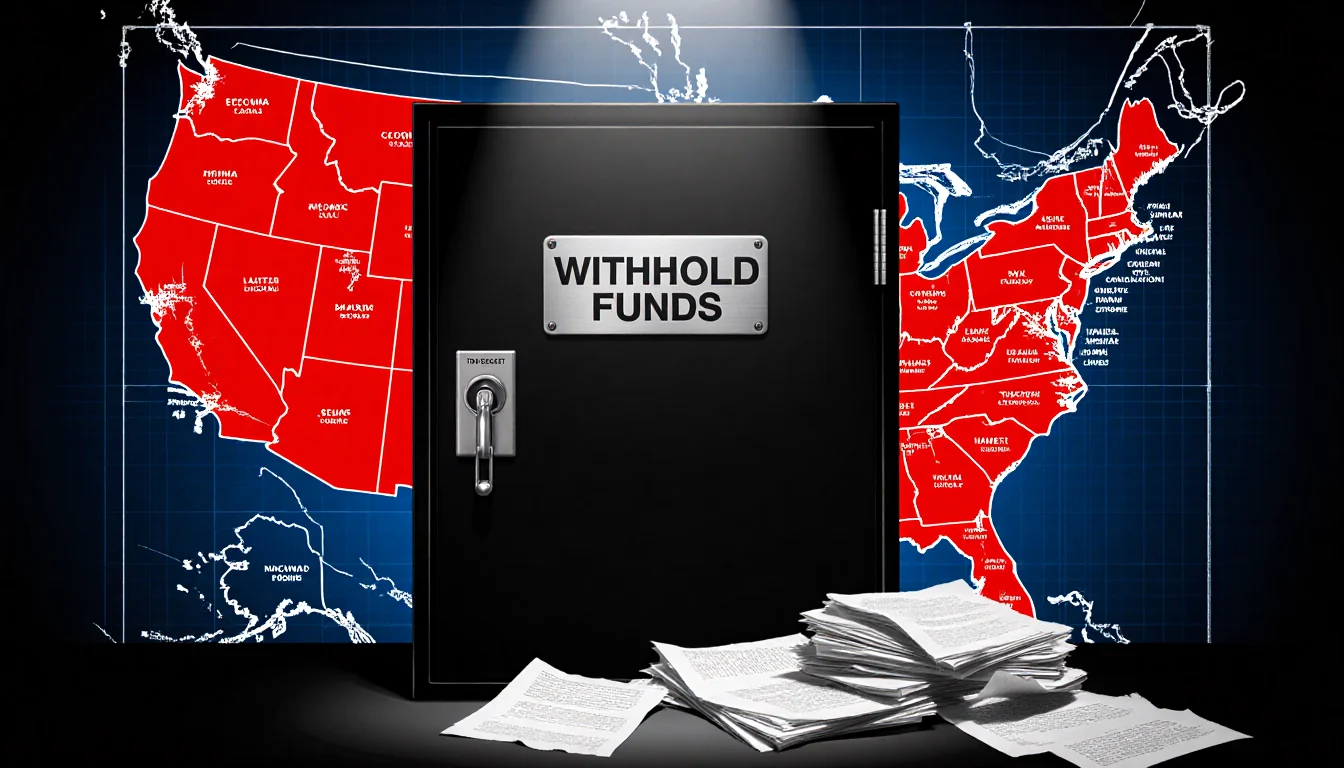

Sixteen states and the District of Columbia filed a federal lawsuit in Seattle on Tuesday, accusing the Trump administration of unlawfully withholding more than $2 billion that was earmarked for electric‑vehicle charging programs. The states argue that Congress had already obligated the money under the bipartisan infrastructure law, and that the Department of Transportation and the Federal Highway Administration are “impounding” the funds. California Attorney General Rob Bonta released a statement declaring the action “illegal” and calling it a “reckless attempt” that would stall progress against air pollution, climate change, and green job creation. The lawsuit adds to a growing legal challenge that Democratic‑led states are mounting over federal EV funding.
Legal Battle Over EV Funding
The lawsuit, filed in the U.S. District Court for the Western District of Washington, specifically targets two federal programs: the $1.8 billion Charging and Fueling Infrastructure Grant program and roughly $350 million for the Electric Vehicle Charger Reliability and Accessibility Accelerator program. The states claim that the Trump administration’s February directive halted state spending on charging infrastructure that had been allocated under the 2021 bipartisan infrastructure law. In May, several states filed a separate lawsuit seeking the release of funds from the $5 billion National Electric Vehicle Infrastructure program, and a federal judge later ordered the administration to return a substantial portion of that funding to more than a dozen states. Transportation Secretary Sean Duffy issued revised guidance to streamline funding applications, but the litigation continues to question the legality of the administration’s withholding.
The lawsuit is led by attorneys general from California and Colorado, and joined by the attorneys general of Arizona, Delaware, Illinois, Maryland, Massachusetts, Michigan, New Jersey, New York, Oregon, Rhode Island, Vermont, Washington, Wisconsin, and the District of Columbia, as well as the governor of Pennsylvania. All of the participating officials are Democrats, underscoring the partisan nature of the dispute. The plaintiffs argue that the administration’s actions violate the federal law that was passed under the previous administration and that the funds were already obligated to the states. They also contend that the withholding is a direct violation of the principle of federalism that grants states authority to implement infrastructure projects.
The case builds on earlier legal battles that have already forced the administration to release some of the withheld money. A federal judge’s order to return funds to states was a significant victory for the plaintiffs, but the administration’s continued refusal to release the remaining amounts has prompted this new lawsuit. The plaintiffs seek a court order to compel the release of the full amount of the two programs, as well as a declaration that the administration’s withholding is unlawful. They also request damages for the losses incurred by the states due to the delay.
Trump Administration’s Policy Shift
The lawsuit comes against a backdrop of a dramatic policy shift by the Trump administration. After taking office in January, President Donald Trump immediately ordered an end to what he called Biden’s “EV mandate.” The administration’s policy changes included rolling back tailpipe emissions rules and gas mileage standards, as well as eliminating fines for automakers that failed to meet those standards. Trump also ended the $7,500 federal tax incentive for electric vehicle purchases that had been introduced by the previous administration. These changes were intended to align federal policy with the administration’s oil and gas industry agenda.
Trump has repeatedly made incorrect statements about the status of federal charging programs. In a December 3 press conference about the proposed weakened fuel‑economy rules, he said, “We had to have an electric car within a very short period of time, even though there was no way of charging them and lots of other things.” He continued, “In certain parts of the Midwest, they spent — to build nine chargers they spent $8 billion. So, that wasn’t working out too well.” These remarks were widely criticized for misrepresenting the funding and infrastructure situation.
The administration’s February order to halt spending on EV charging was a direct reversal of the bipartisan infrastructure law’s provisions. The law had allocated significant funding for a nationwide charging buildout, and the administration’s order effectively froze those funds. The federal judge’s later order to release funds was a partial reversal, but the administration has continued to withhold the remaining amounts, prompting the current lawsuit. The legal dispute underscores the tension between federal policy and state-level infrastructure needs.
The Trump administration’s actions have also sparked concern among automakers and consumers. The U.S. auto industry has responded by shifting focus away from aggressive electrification plans toward hybrid‑electric and more fuel‑efficient gasoline vehicles. Ford Motor Co. announced a pivot away from its once‑ambitious, multi‑billion‑dollar electrification strategy in favor of hybrids. Honda Motor Co. also announced a significant step back from its EV efforts in the spring. These corporate responses reflect the broader uncertainty in the EV market.
The lawsuit is a key moment in the ongoing battle over federal EV infrastructure funding. It highlights the challenges states face in securing the resources promised by Congress. The outcome could set a precedent for how federal agencies handle earmarked funds in future administrations. The legal battle also reflects broader political divisions over the pace and direction of the transition to electric vehicles.
Impact on EV Sales and Automakers
The lawsuit and the policy changes have coincided with a slowdown in EV sales in the United States. According to Kelley Blue Book, new EVs sold for an average of $58,638 last month, compared with $49,814 for a new vehicle overall. The higher price point, coupled with concerns about charging availability, has deterred mainstream buyers. The lack of federal incentives has further dampened demand, as consumers no longer benefit from the $7,500 tax credit that had previously encouraged EV purchases.
Automakers are adjusting their strategies in response to the uncertain regulatory environment. Ford’s pivot to hybrids and more fuel‑efficient gasoline vehicles signals a shift away from a heavy reliance on electric models. Honda’s retreat from its EV plans is another indicator that automakers are reassessing their long‑term commitments. These corporate decisions could influence the pace of EV adoption across the country.
The legal dispute also affects the broader supply chain for EV charging infrastructure. The federal court’s decision to release funds in the past has allowed states to begin deploying chargers, but the current lawsuit threatens to stall further deployment. States that have already received awards under the vehicle infrastructure program—Georgia, Illinois, Maryland, and Wisconsin—have cited the importance of timely funding to keep projects on schedule. Loren McDonald, chief analyst at EV data firm Chargeonomics, noted that these awards were made possible by the revised guidance from Secretary Duffy.
The uncertainty surrounding federal funding also impacts the confidence of private investors and developers in the charging market. The potential for future withholding of funds may make it more difficult to secure financing for new charging stations. This could delay the expansion of the charging network that is essential for widespread EV adoption.
The lawsuit’s outcome could have far-reaching implications for the U.S. EV ecosystem. If the court sides with the states, it would reinforce the principle that federal agencies must honor congressional allocations. Conversely, a ruling in favor of the administration could set a precedent for future withholding of earmarked funds. Either outcome would shape the trajectory of EV infrastructure development.
Key Takeaways
- Sixteen states and DC are suing the Trump administration over more than $2 billion in withheld EV charging funds.
- The lawsuit targets the $1.8 billion Charging and Fueling Infrastructure Grant program and $350 million for the Electric Vehicle Charger Reliability and Accessibility Accelerator program.
- The case follows the administration’s February order to halt spending on charging infrastructure and Trump’s policy rollbacks of emissions rules and incentives.
Closing
The lawsuit represents a critical juncture in the federal-state relationship over infrastructure funding. States argue that the administration’s withholding violates the law and hampers the rollout of electric‑vehicle charging stations. The outcome of this legal battle will likely influence future federal policies on EV infrastructure and the broader transition to electric mobility. As the nation watches the court’s decision, the stakes for consumers, automakers, and the environment remain high.