

At a Glance
- Former Olympic sites across the globe are largely unused months and years after the Games.
- Athens’ beach volleyball arena, Sarajevo’s winter tracks, and Rio’s aquatics complex are key examples.
- The 2004 Games cost Greece 8.5 billion euros ($9.1 billion), yet many venues remain idle.
- Why it matters: The legacy of Olympic spending highlights challenges in post-event city planning.
The grand spectacle of the Olympics leaves behind a trail of impressive but often abandoned infrastructure. From the sun-baked courts of Athens to the icy tracks of Sarajevo, many venues are still standing, unused, and forgotten. The story behind these relics reveals how cities struggle to repurpose Olympic assets and the financial weight that accompanies the Games.
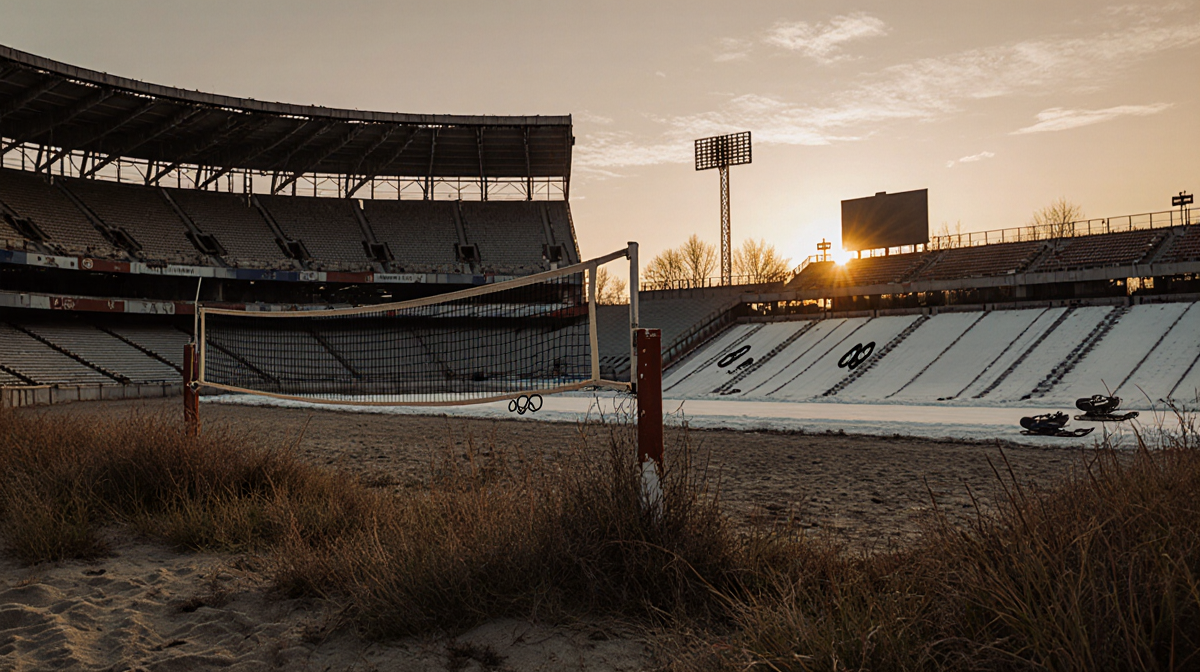
Athens Beach Volleyball Stadium
The beach volleyball arena in the Faliro coastal zone of Athens was captured in a photograph on Feb. 19 2024. Though it was a centerpiece during the 2004 Games, the venue has been used sparingly over the past two decades. The cost of the 2004 Olympics was a staggering 8.5 billion euros ($9.1 billion), according to the Greek finance ministry. The stadium’s current state reflects Greece’s ongoing difficulty in turning Olympic venues into lasting community assets.
Sarajevo’s Winter Legacy
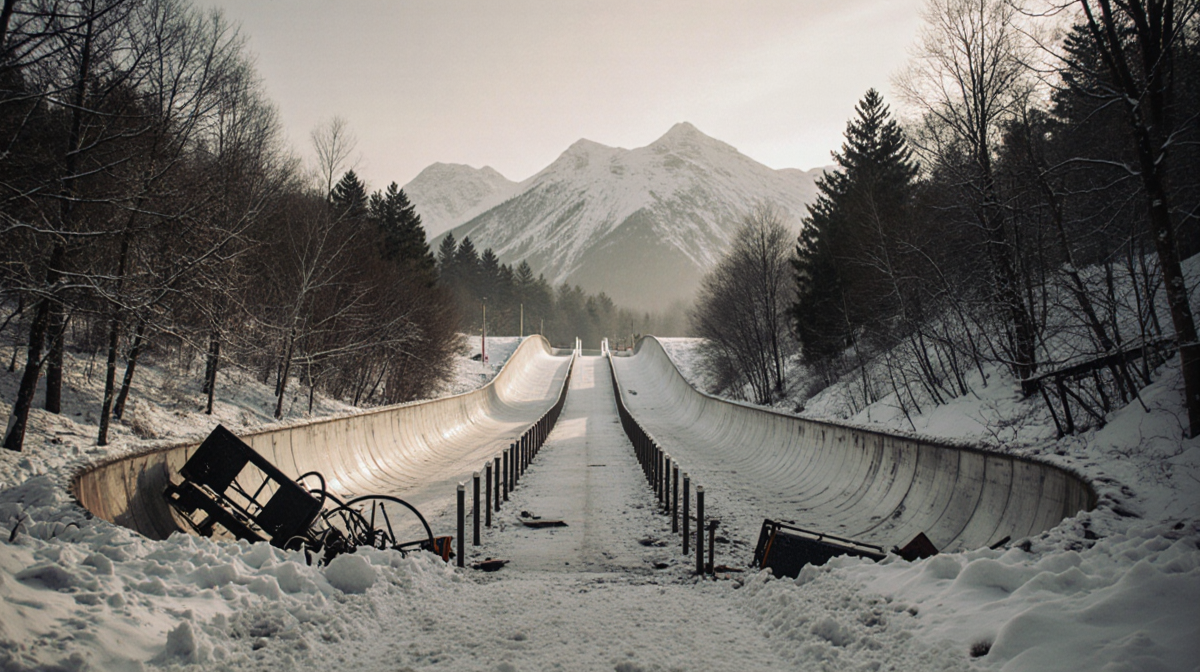
Bobsleigh Track, Mount Trevevic
On Feb. 6 2024, the partially dismantled bobsleigh track on Mount Trevevic was photographed. Built for the 1984 Winter Olympics, the track has never hosted official competition since. Its abandonment is a reminder of the wear and tear that war and time can impose on sporting facilities.
Ski-Jumping Ramps, Mount Igman
A week later, on Feb. 7 2024, the ski-jumping venue on Mount Igman was photographed. Two ramps-80 m and 120 m-were constructed in 1984 as well. Like the bobsleigh track, the ramps have never been used for competition since.
40th Anniversary
2024 marks the 40th anniversary of Sarajevo’s Winter Olympics. The city’s celebration is bittersweet, given that its primary venues remain dormant.
Rio de Janeiro Aquatics Stadium
In Rio, the aquatics stadium at the Olympic Park was photographed on May 20 2017. Within nine months of the Games, only a handful of events were held there. The venue’s underutilization illustrates the challenge of sustaining large-scale event spaces in a post-Olympic context.
Garmisch-Partenkirchen 1936 Bobsleigh Track
The historic bobsleigh track in Garmisch-Partenkirchen, Germany, was photographed on Aug. 11 2021. Constructed in 1910, it was renovated in 1933 for the 1936 Winter Olympics. The track was demolished in 1966, yet remnants remain visible on sleigh rides near the lake. This site serves as a physical reminder of how Olympic infrastructure can be repurposed or erased.
1936 Berlin Olympic Village Facilities
A series of photographs taken on May 17 2021 show the abandoned Hindenburghaus, swim hall, and gymnasium at the former 1936 Berlin Olympic Village in Elstal. Built for the 1936 Games, the village later served as a military school and hospital. After World War II, the Soviet Army used the site for training its own athletes. Today, the buildings stand empty, with a swimming pool still visible in the former swim hall.
Beijing 2008 Mascots and Abandoned Mall
A photograph from July 20 2018 shows the mascots Huanhuan and Fu Niu Lele lying among trees behind an abandoned, never-completed mall in Beijing. The mall was intended to complement the 2008 Games but never reached completion, leaving the mascots in a forgotten setting.
A Broader Pattern
| Venue | Location | Year Built | Current Status | Notes |
|---|---|---|---|---|
| Beach Volleyball Stadium | Athens, Greece | 2004 | Abandoned | Used sparingly in 20 years |
| Bobsleigh Track | Sarajevo, Bosnia | 1984 | Abandoned | Never used post-Games |
| Ski-Jumping Ramps | Sarajevo, Bosnia | 1984 | Abandoned | Never used post-Games |
| Aquatics Stadium | Rio de Janeiro, Brazil | 2016 | Underused | Few events post-Games |
| Bobsleigh Track | Garmisch-Partenkirchen, Germany | 1910 | Remnants | Demolished 1966 |
| Olympic Village | Berlin, Germany | 1936 | Abandoned | Repurposed for military use |
| Beijing Mall | Beijing, China | 2008 | Abandoned | Mascots remain |
The pattern is clear: large, expensive venues are built for a few weeks of global attention, then largely fall into disuse. The financial burden-illustrated by Greece’s 8.5 billion euros cost-does not always translate into long-term community benefit.
Key Takeaways
- Olympic venues worldwide often remain unused for years after the Games.
- The legacy of the 2004 Athens Olympics illustrates how high spending does not guarantee sustained use.
- Post-Olympic planning must address maintenance, repurposing, and community integration to avoid abandoned infrastructure.
The story of these venues underscores the need for comprehensive legacy strategies that turn temporary glory into lasting assets.