

Introduction
Alex Honnold made headlines after scaling the 101-story, 1,667-foot Taipei 101 skyscraper on Jan. 24 during Netflix’s “Skyscraper Live.” While the stunt thrilled viewers, Honnold revealed he earned a surprisingly modest sum for the feat.
At a Glance
- Alex Honnold ascended Taipei 101 during a live Netflix broadcast.
- He said the payment was “embarrassingly small.”
- He compared the amount to MLB contracts of $170 million.
- Honnold noted he would do the climb for free if not for the TV deal.
- Why it matters: The story highlights the disparity between extreme sports pay and mainstream athletics.
The Climb
The event aired on Netflix’s “Skyscraper Live,” a program that showcased the daring ascent of Taipei 101, one of the world’s tallest buildings. The 101-story tower reaches 1,667-foot, a height that dwarfs most conventional climbing routes.
Honnold, 40, had already captured audiences with the Academy Award-winning documentary “Free Solo.” His reputation for solo, rope-free climbs made him a natural choice for the spectacle.
The climb was broadcast live on Jan. 24, drawing millions of viewers worldwide. Honnold’s ascent was accompanied by commentary and behind-the-scenes footage that highlighted the technical challenges of scaling a modern skyscraper.
Payment and Perspective
When asked how much he would be paid, Honnold said, “I’m not gonna say. It’s an embarrassing amount.” He added, “Actually, if you put it in the context of mainstream sports, it’s an embarrassingly small amount.”
He contrasted the payment with Major League Baseball contracts, stating, “Major League Baseball players get like $170 million contracts. Like, someone you haven’t even heard of and that nobody cares about.”
Despite the modest compensation, Honnold emphasized his love for the challenge: “If there was no TV program and the building gave me permission to go do the thing, I would do the thing because I know I can, and it’d be amazing.”
He further clarified, “I’m not getting paid to climb the building. I’m getting paid for the spectacle. I’m climbing the building for free.”
Reactions and Comments
TODAY.com reached out to both Honnold and Netflix for comment, but has not received a response. In an interview that aired on TODAY on Jan. 26, Honnold described the experience as a mix of excitement and fatigue, saying, “It’s kind of like a happy tired. I know I’m going to cross the finish line. I feel great.”
When asked if this was his biggest payday, Honnold played coy, replying, “Maybe. It’s less than my agent aspired to.”
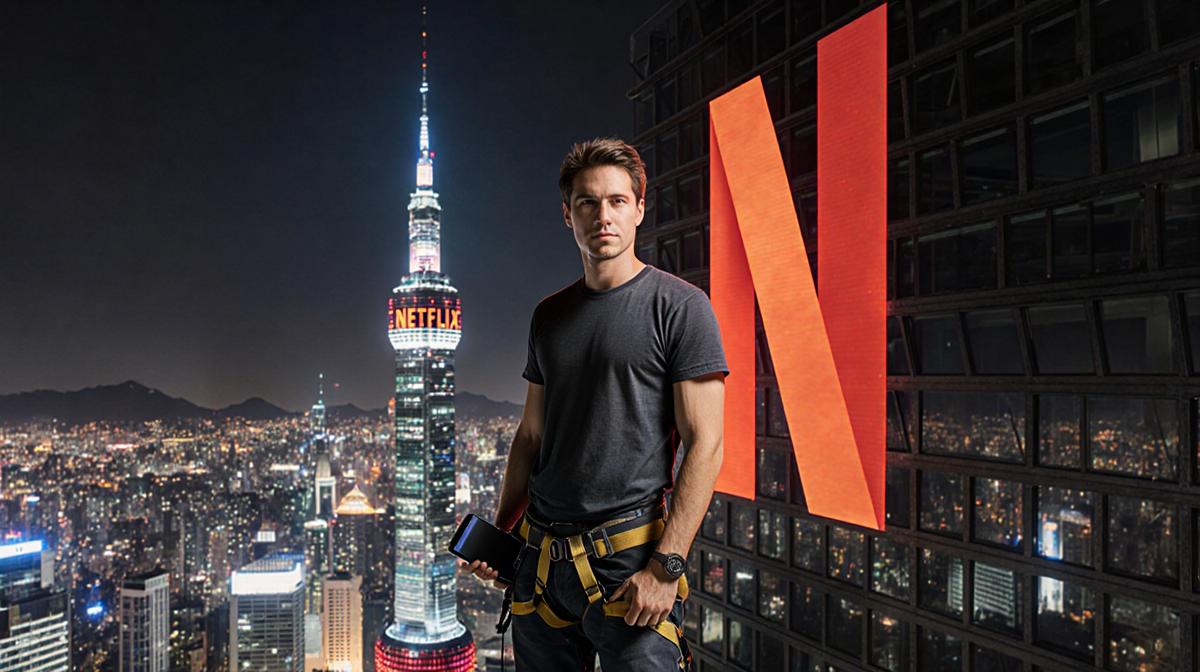
The lack of a formal statement from Netflix leaves the exact figure undisclosed, but Honnold’s remarks suggest a significant gap between the compensation for extreme sports stunts and that of professional athletes in mainstream leagues.
The Bigger Picture
Honnold’s climb underscores a broader trend in sports entertainment where high-risk performances can attract massive audiences yet offer limited financial rewards to the performers.
His background in free-solo climbing, highlighted in “Free Solo,” demonstrates a career built on personal passion rather than commercial gain. The contrast between his earnings and those of MLB players highlights the varying economic models across sporting disciplines.
The event also reflects Netflix’s strategy to diversify content by partnering with athletes who bring authenticity and spectacle to its platform, aiming to capture viewers who seek adrenaline-filled programming.
Key Takeaways
- Alex Honnold climbed Taipei 101 for a modest fee, far below mainstream sports salaries.
- The climb was part of Netflix’s “Skyscraper Live,” attracting global attention.
- Honnold’s comments reveal a commitment to the sport over monetary gain.
—