
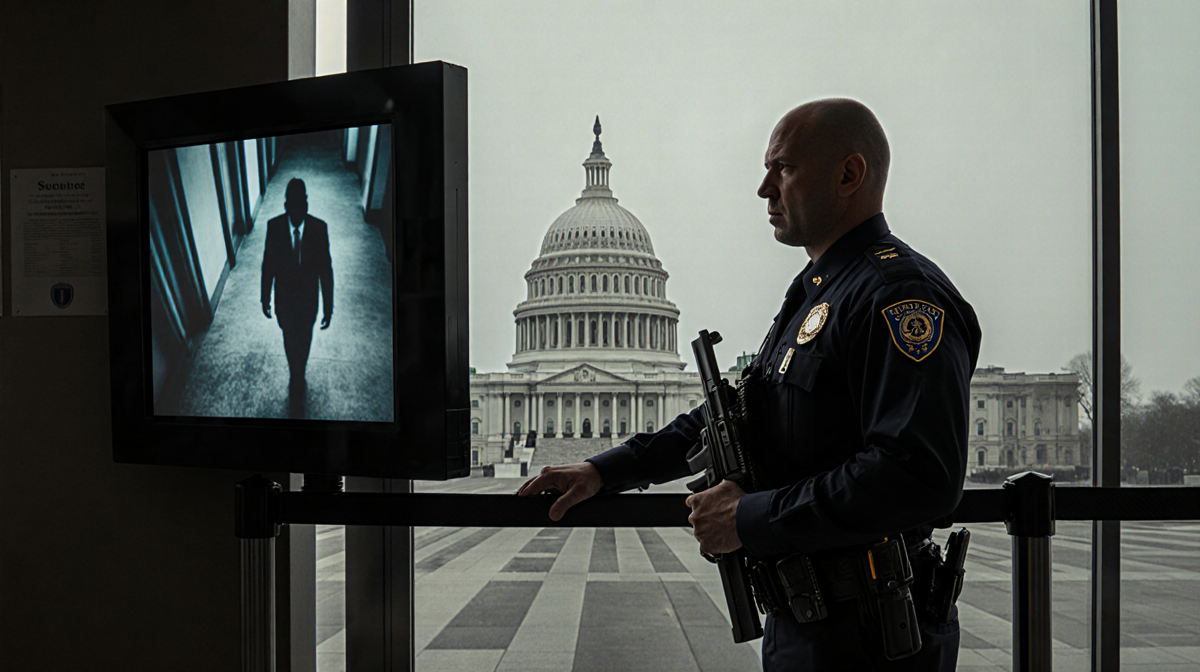

Capitol Police released a new annual report showing a sharp rise in threats against members of Congress and the Capitol Complex.
At a Glance
- Threats to Congress hit a record 14,938 in 2025, up from 9,474 in 2024.
- The surge is linked to a perceived “false sense of anonymity online.”
- Capitol Police now has formal agreements with 3 times as many local agencies as in 2024.
- Why it matters: The data underscores growing political violence and the need for stronger security partnerships.
The report, released Tuesday, details the number of cases involving “concerning statements, behaviors, and communications directed against Members of Congress, their families, staff, and the Capitol Complex.”
Rising Threats to Congress
Capitol Police investigated 14,938 cases last year, a significant increase from 9,474 in 2024. The agency noted that this is the third consecutive year of growth, with 2023’s count at 8,008 and 2022’s at 7,501.
The upward trend aligns with broader reports of political violence across the country, including swatting incidents and pipe bomb threats. Recent attacks on former Rep. Marjorie Taylor Greene and the recent assault on Rep. Ilhan Omar illustrate the variety of threats.
Factors Behind the Surge
According to the report, a “false sense of anonymity online” is partly responsible for the spike. Capitol Police said decreasing violent political rhetoric is one of the best ways to reduce the number of threats nationwide.
The agency also highlighted the role of social media platforms in amplifying extremist language, noting that many threats originate from anonymous or pseudonymous accounts.
Recent Violent Incidents
- A man lunged at Rep. Ilhan Omar, D-Minn., and sprayed an unknown substance toward her.
- Rep. Maxwell Frost, D-Fla., was punched in the face at the Sundance Film Festival by a man who allegedly told him that Trump would deport him.
- Former Rep. Marjorie Taylor Greene received pipe bomb threats after her split with President Donald Trump.
These incidents demonstrate the range of tactics used by individuals who feel emboldened by online anonymity.
Capitol Police Response
Capitol Police has formal agreements with law-enforcement agencies in states and congressional districts. The number of agreements tripled in 2025, a move the agency says helps coordinate responses to threats.
The agency urged agencies that do not yet partner with them to do so, citing the benefits of shared intelligence and rapid response capabilities.
Political Context
The rise in threats coincides with heightened political tension. Democratic Congresswoman Robin Kelly of Illinois introduced three articles of impeachment against Homeland Security Secretary Kristi Noem on Wednesday, citing obstruction of Congress, erosion of public trust, and self-dealing.
The impeachment proceedings, while separate from the threat data, illustrate the broader environment of political conflict that may be contributing to the increase in violent rhetoric.
Key Takeaways
| Year | Cases Investigated |
|---|---|
| 2022 | 7,501 |
| 2023 | 8,008 |
| 2024 | 9,474 |
| 2025 | 14,938 |
The table shows a clear upward trajectory in the number of threats.
Capitol Police’s report signals a growing need for enhanced security measures and stronger collaboration between federal, state, and local law-enforcement agencies. The data also highlights the influence of online platforms in fostering violent political rhetoric.
By addressing the root causes of anonymity and rhetoric, authorities hope to curb the trend of threats against elected officials and protect the integrity of the Capitol Complex.
—

According to News Of Philadelphia