
At a Glance
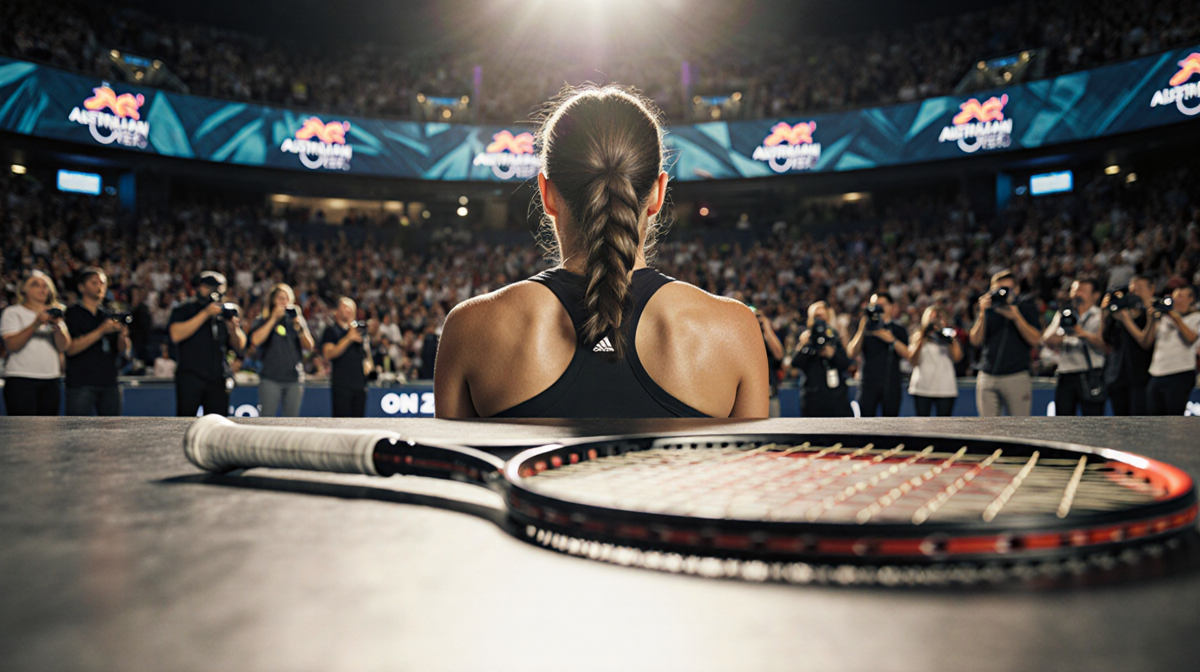
- Iga Świątek and Coco Gauff raised concerns about the pervasive camera coverage at the Australian Open.
- Swiatek compared players to animals in a zoo, calling for more off-court privacy.
- Gauff smashed her racket seven times after a quarter-final loss, seeking a quiet space away from cameras.
- Why it matters: The debate highlights the growing tension between fan engagement and the personal space of elite athletes.
Iga Świątek and Coco Gauff found themselves at the center of a conversation about privacy and constant media coverage during the Australian Open. The two top-ranked players used their platform to question the balance between entertainment, content creation, and player privacy.
The Surge of Cameras at the Australian Open
The Australian Open has long been known for its extensive camera network. Cameras track players from the locker room to the court and beyond. According to the tournament’s official schedule, the event has become a three-week festival that blends competition with fan engagement.
- Locker-room cameras capture players before matches.
- Court cameras record every serve and rally.
- Ramp cameras near the player area record movements outside the court.
| Area | Camera Presence | Purpose |
|---|---|---|
| Locker Room | High | Player prep |
| Court | Continuous | Match footage |
| Ramp | Limited | Player movement |
These cameras are not unique to the Australian Open; other tournaments employ similar surveillance, but the sheer volume at Melbourne has sparked discussion.
Swiatek’s Perspective on Privacy
After her 7-5, 6-1 quarter-final loss to fifth-seeded Elena Rybakina, Swiatek was asked about the lack of off-camera spaces. She responded:
> “Yeah, the question is, are we tennis players, or are we, like, animals in the zoo where they are observed even when they poop, you know?” she said, apologizing slightly for the latter reference. “OK, that was exaggerating obviously, but it would be nice to have some privacy. It would be nice also to, I don’t know, have your own process and not always be, like, observed.”
Swiatek, who has won four French Open titles as well as Wimbledon and the U.S. Open, added that players need a space to practice immediately before matches:
> “We’re tennis players. We’re meant to be watched on the court, you know, and in the press. That’s our job,” she said. “It’s not our job, like, be a meme when you forget your accreditation. Oh, it’s funny, yeah, for sure. People have something to talk about. But for us I don’t think it’s necessary.”
She emphasized that while the public gaze is part of being a champion, the constant observation can feel intrusive.

Gauff’s Racket-Smashing Moment
Coco Gauff, ranked third, smashed her racket into the concrete floor of a ramp near the player area seven times after her quarter-final loss to Elina Svitolina on Day 10. She explained her frustration:
> “Certain moments – the same thing happened to Aryna (Sabalenka) after I played her in the final of the U.S. Open – I feel like they don’t need to broadcast,” Gauff said in her post-match news conference. “I tried to go somewhere where I thought there wasn’t a camera because I don’t necessarily like breaking rackets.”
Gauff noted that she avoided smashing the racket on the court in front of fans because she felt it would not look good. Instead, she sought a quieter area where she could vent.
> “So, yeah, maybe some conversations can be had,” she said, “because I feel like at this tournament the only private place we have is the locker room.”
Her actions drew attention to the lack of truly private spaces for players during the event.
The Broader Context of Player Privacy
The debate over privacy at the Australian Open is part of a larger conversation about the role of media in sports. While cameras generate revenue and fan engagement, athletes often feel the pressure of being constantly observed.
- Fan engagement: The tournament’s festival atmosphere encourages interaction.
- Player well-being: Athletes express a need for moments of solitude.
- Media responsibility: Broadcasters must balance coverage with respect for personal space.
The tournament’s organizers have acknowledged the issue, but no comprehensive solution has yet been announced.
Conclusion
Iga Świątek and Coco Gauff’s remarks have spotlighted the tension between the spectacle of modern tennis and the privacy of its players. Their comments suggest that while the public enjoys behind-the-scenes access, athletes desire a buffer from the relentless camera eye. The Australian Open’s future may hinge on how it navigates this delicate balance.
Key Takeaways
- Players seek privacy amid pervasive camera coverage.
- Swiatek and Gauff used high-profile moments to voice concerns.
- The tournament’s structure offers limited off-camera spaces.
- The debate underscores the need for clearer policies on player privacy.