
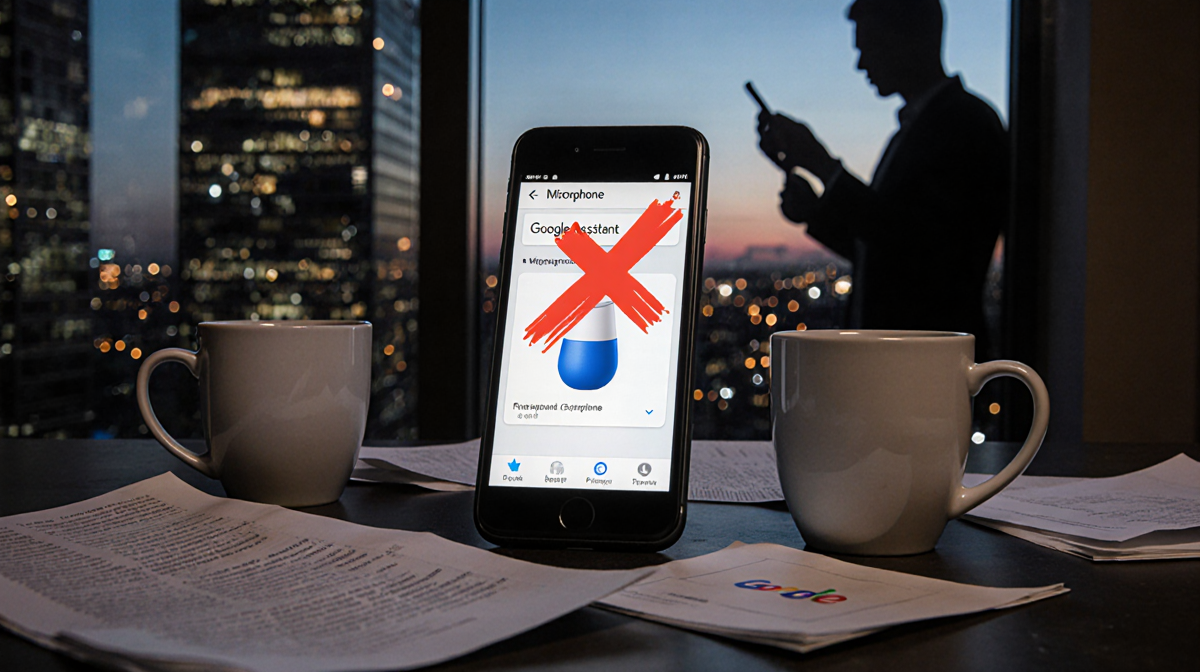

Google agreed to pay $68 million to settle claims that its voice assistant illegally spied on users, according to a report released on January 26, 2026. The settlement resolves a class-action lawsuit alleging that the company’s assistant recorded private conversations without consent and used those recordings for targeted advertising.
At a Glance
- Google will pay $68 million to settle the lawsuit.
- The case centers on “false accepts” where the assistant activates without a wake word.
- Similar settlements: Apple paid $95 million in 2021; Google paid $1.4 billion to Texas in 2025.
- Why it matters: The deal underscores growing scrutiny of voice-assistant privacy practices.
The lawsuit accused Google of “unlawful and intentional interception and recording of individuals’ confidential communications without their consent and subsequent unauthorized disclosure of those communications to third parties.” It also claimed that information gleaned from these recordings was wrongly transmitted to third parties for targeted advertising and other purposes.
Settlement Details
The settlement does not include an admission of wrongdoing. Instead, it provides a financial remedy for affected users. The court documents note that the case was filed in the U.S. District Court for the Northern District of California.
- Key claim: The assistant recorded conversations even when users did not say the wake word.
- Legal language: “False accepts” were the term used by the plaintiffs.
- Outcome: $68 million paid to class members.
Background on Voice-Assistant Privacy
Voice-assistant technology has long raised privacy concerns. The first high-profile case involved Apple’s Siri, which settled in 2021 for $95 million after allegations that it recorded conversations without a prompt.
| Company | Settlement | Year |
|---|---|---|
| Apple | $95 million | 2021 |
| $1.4 billion | 2025 | |
| $68 million | 2026 |
The 2025 settlement with Texas was separate, addressing state data-privacy law violations rather than voice-assistant recordings.
Industry Context
Tech giants face increasing litigation over data collection and user consent. The pattern of settlements suggests a trend toward compliance and risk mitigation.
- Consumer backlash: Users increasingly demand transparency.
- Regulatory pressure: New privacy laws in multiple jurisdictions.
- Competitive dynamics: Companies are investing in privacy-by-design features.
Impact on Users
While the settlement provides compensation, it does not change the underlying technology. Users can still experience “false accepts,” but the company has pledged to improve its wake-word detection algorithms.
- Short-term: Users receive financial restitution.
- Long-term: Potential updates to voice-assistant software.
Key Takeaways
- Google‘s $68 million settlement highlights ongoing legal challenges for voice-assistant platforms.
- The case centers on unauthorized recording and advertising use of private conversations.
- Similar settlements by Apple and earlier Google cases illustrate a broader industry pattern.
- Companies are under pressure to refine technology and enhance user consent mechanisms.
The settlement signals that privacy litigation will continue to shape the evolution of voice-assistant services.