

At a Glance
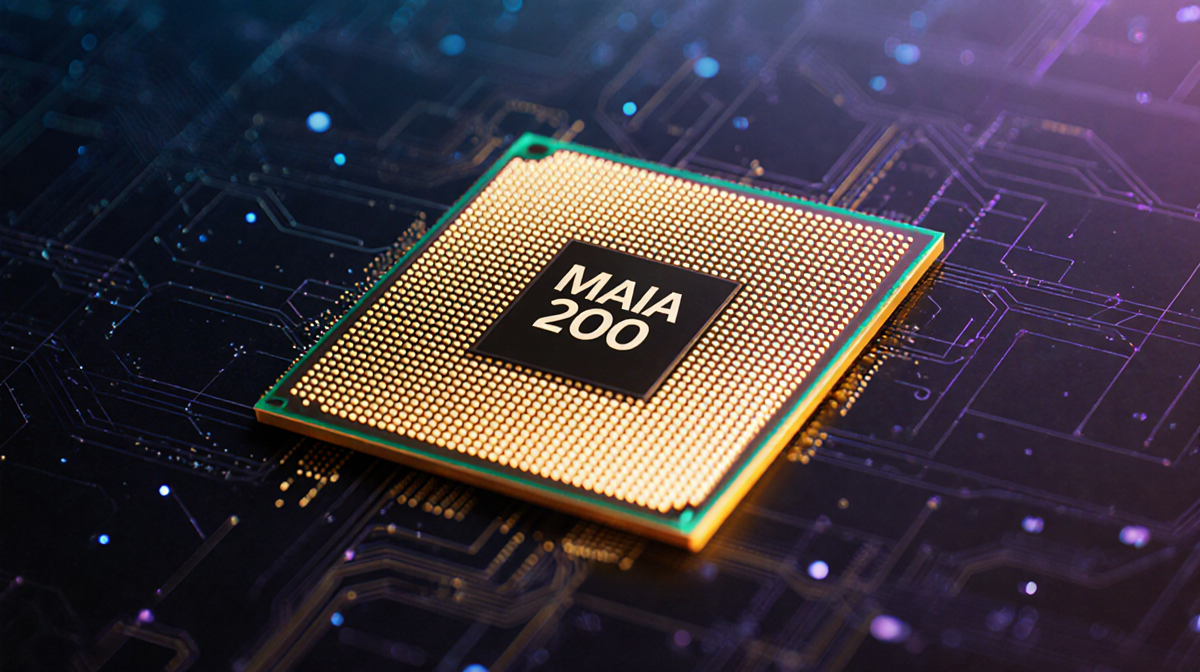
- Microsoft launches the Maia 200 chip, the successor to the 2023 Maia 100.
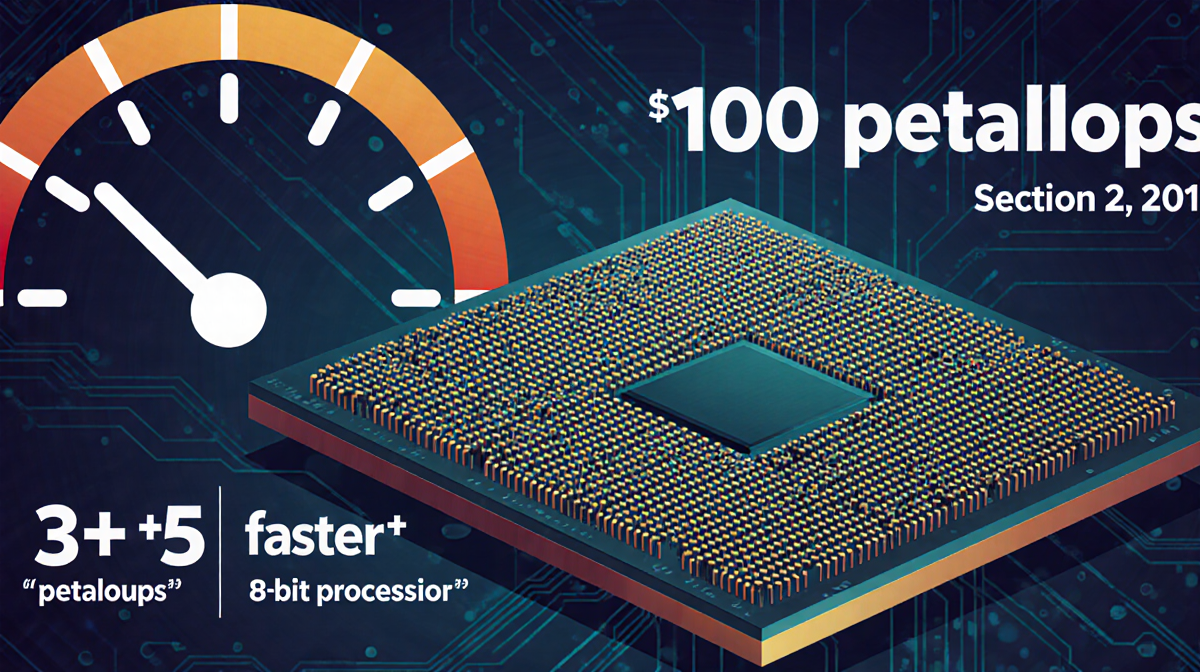
- The chip contains over 100 billion transistors and delivers 10 petaflops in 4-bit precision and 5 petaflops in 8-bit performance.
- Microsoft claims the chip is 3× faster than Amazon’s Trainium 3 in FP4 and outperforms Google’s 7th-gen TPU in FP8.
Why it matters: The Maia 200 is positioned to reduce AI inference costs and lessen Microsoft’s reliance on Nvidia GPUs.
Microsoft unveiled the Maia 200 at a press release on Monday, describing it as a silicon workhorse designed for scaling AI inference. The new chip follows the company’s Maia 100, which debuted in 2023, and is engineered to run powerful AI models at faster speeds and with greater efficiency.
Microsoft Unveils Maia 200
The company announced that the Maia 200 is equipped with more than 100 billion transistors. It delivers 10 petaflops in 4-bit precision and approximately 5 petaflops of 8-bit performance, a substantial increase over its predecessor.
Microsoft explained that inference refers to the computing process of running a model, as opposed to the compute required to train it. As AI companies mature, inference costs have become an increasingly important part of their overall operating cost, leading to renewed interest in ways to optimize the process.
Technical Specs and Performance
- Transistor count: >100 billion
- 4-bit performance: 10 petaflops
- 8-bit performance: ~5 petaflops
- FP4 vs. Trainium 3: 3× faster
- FP8 vs. Google TPU v7: superior
The chip is designed to support large models with headroom for future growth. “In practical terms, one Maia 200 node can effortlessly run today’s largest models, with plenty of headroom for even bigger models in the future,” the company said.
Strategic Context: Reducing Dependence on Nvidia
Microsoft’s new chip is part of a broader trend of tech giants turning to self-designed chips to lessen their dependence on Nvidia. Nvidia’s cutting-edge GPUs have become pivotal to AI companies’ success.
Other examples include:
- Google: Tensor Processing Units (TPUs), sold as cloud compute rather than hardware
- Amazon: Trainium, with its latest Trainium 3 released in December
In each case, these custom accelerators can offload compute that would otherwise be assigned to Nvidia GPUs, reducing overall hardware cost.
Microsoft positions the Maia 200 to compete with these alternatives. The press release highlighted that Maia delivers 3× the FP4 performance of third-generation Amazon Trainium chips, and FP8 performance above Google’s seventh-generation TPU.
Early Adoption and Deployment
Microsoft says that Maia is already hard at work fueling the company’s AI models from its Superintelligence team. It has also been supporting the operations of Copilot, its chatbot.
As of Monday, Microsoft invited developers, academics, and frontier AI labs to use its Maia 200 software development kit in their workloads. The company is encouraging a broader ecosystem to experiment with the chip.
Event and Community Engagement
The announcement coincided with a News Of Philadelphia event in San Francisco on October 13-15, 2026. The event showcased the Maia 200 and highlighted its potential impact on AI inference.
Key Takeaways
- The Maia 200 represents a significant leap in inference performance.
- Microsoft is actively reducing reliance on Nvidia by offering a competitive custom chip.
- Early adopters include internal teams and external developers via an SDK.
- The chip’s performance advantages are quantified against Amazon Trainium 3 and Google TPU v7.
Contact
You can contact Emily Carter Reynolds by emailing Emily Carter Reynolds.ropek@News Of Philadelphia.com.