
At a Glance
- U.S. military destroyed a drug-trafficking vessel in the eastern Pacific on Jan. 23, 2026, killing two and leaving one survivor.
- The strike follows a series of U.S. operations that began with the capture of Venezuelan President Nicolás Maduro on Jan. 3, 2026.
- Earlier in December, the U.S. struck five alleged smuggling boats, killing 5 people.
- Why it matters: The attacks signal a renewed U.S. focus on curbing drug routes from Venezuela to the Caribbean and beyond.
The U.S. military announced on Friday that it had carried out a deadly strike on a vessel accused of trafficking drugs in the eastern Pacific Ocean. The attack, the first known since the raid that captured Venezuelan President Nicolás Maduro earlier in the month, killed two people and left one survivor. The incident underscores the growing intensity of U.S. efforts to disrupt drug smuggling operations linked to Venezuela.
The Strike
The U.S. Southern Command posted a video on social media showing the boat moving through the water before exploding in flames. The command stated that the vessel was “engaged in narco-trafficking operations” and that the strike killed 2 people, leaving one survivor. It also notified the Coast Guard to launch search and rescue operations for the survivor.
The video, released by the command, provides a stark visual of the destruction. The boat, identified only by its movement, was destroyed in a controlled explosion that left the water black with debris and smoke. The survivor was seen clinging to a piece of wreckage before rescue teams reached the scene.
Context of U.S. Operations
The U.S. military has recently focused on seizing sanctioned oil tankers with connections to Venezuela. This focus intensified after the Trump administration launched an audacious raid to capture Maduro and bring him to New York to face federal drug trafficking charges. The raid, conducted on Jan. 3, 2026, resulted in the capture of Maduro and his wife, who were flown to New York.
Maduro, before his capture, said the U.S. military operations were a thinly veiled effort to oust him from power. The U.S. has repeatedly claimed that its strikes are having a significant impact on drug trafficking routes in the Caribbean and eastern Pacific.
Previous Strikes
The last boat strikes occurred in late December, when the military said it struck five alleged drug-smuggling boats over two days. The attacks killed a total of 5 people while others jumped overboard. Days later, the Coast Guard suspended its search.
These December strikes set the stage for the Jan. 23 attack. The pattern of operations shows a coordinated effort to target vessels suspected of carrying narcotics. Each strike is accompanied by a public statement from U.S. Southern Command, often including a video and casualty figures.
Statements and Quotes
- U.S. Southern Command: “The boat was engaged in narco-trafficking operations,” the command said. “The strike killed two people and left one survivor.”
- President Donald Trump: “We’ve stopped – virtually stopped almost 100% of all drugs coming in by water,” Trump said in remarks at the World Economic Forum at Davos.
- Maduro: “The U.S. military operations were a thinly veiled effort to oust me from power,” Maduro said before his capture.
These statements highlight the political stakes and the U.S. narrative of combating drug trafficking while also addressing allegations of political interference.
Coast Guard Involvement
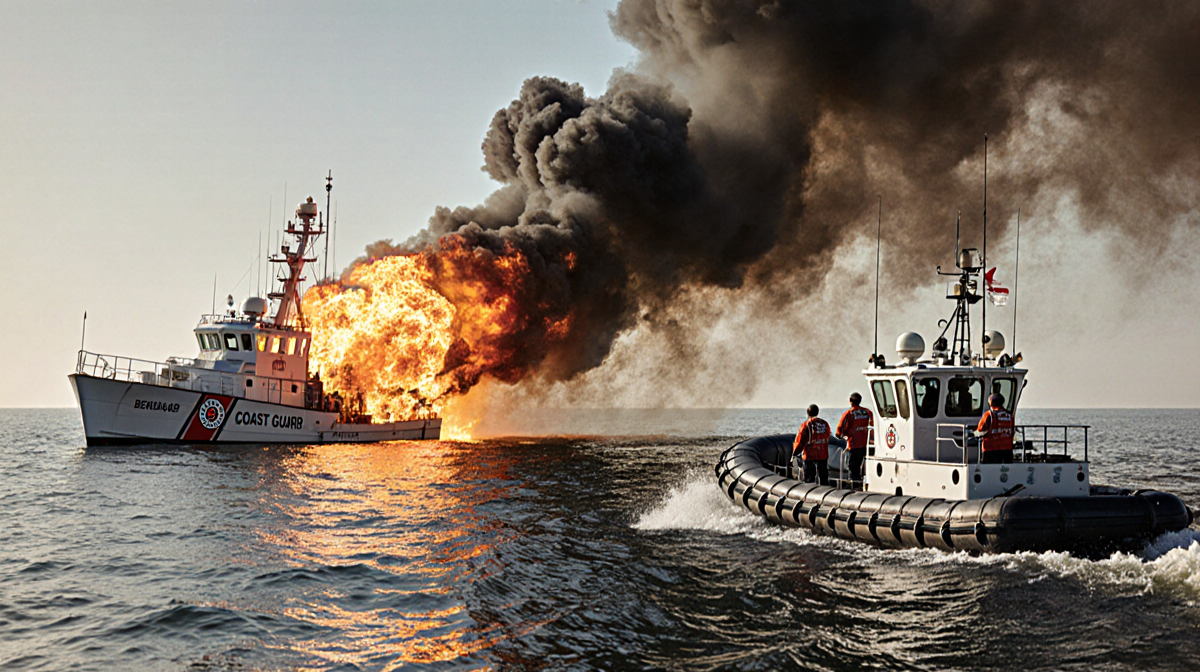
Following the strike, the Coast Guard was notified to launch search and rescue operations for the survivor. The survivor was eventually rescued, but the incident illustrates the risks faced by maritime personnel during such operations.
The Coast Guard’s involvement is a standard procedure when a U.S. military strike occurs near U.S. waters or when there is a potential for civilian casualties. The agency’s swift response helped ensure that the survivor received medical attention promptly.
Implications for the Region
The U.S. military’s renewed focus on drug trafficking routes could have several implications:
- Disruption of Supply Chains: Targeting vessels reduces the volume of narcotics that reach the Caribbean and U.S. shores.
- Political Tensions: The operations, especially those involving Venezuelan assets, may heighten diplomatic friction between the U.S. and Venezuela.
- Maritime Security: Increased military activity in the eastern Pacific could lead to more stringent monitoring of vessels suspected of smuggling.
The U.S. government maintains that these actions are part of a broader strategy to curb drug trafficking and protect national security.
Key Takeaways
- The Jan. 23, 2026 strike was the first known U.S. attack on a drug-trafficking vessel since the capture of Nicolás Maduro.
- Two people were killed, and one survivor was rescued by the Coast Guard.
- The operation follows a series of December strikes that killed 5 individuals.
- President Trump and Maduro’s statements reveal the political context surrounding these military actions.
- The U.S. aims to significantly reduce drug flow into the Caribbean and U.S. waters.
The continued focus on maritime drug trafficking underscores the U.S. commitment to enforcing international drug control measures and maintaining regional security.