
At a Glance
- bipartisan bill is 1,059 pages and aims to fund the federal government through Jan. 30.
- It allocates $18 billion to ICE, a move that has drawn sharp criticism.
- The package includes $20 million for body-worn cameras for ICE agents and cuts to enforcement operations.
The new package was unveiled on Tuesday as lawmakers rushed to avoid a government shutdown that would take effect on Jan. 31. The 1,059-page deal covers the Pentagon, Labor, Health and Human Services, and Homeland Security, and is designed to reduce the risk of another lapse after the longest shutdown in U.S. history last fall.
Bipartisan Bill Seeks to Avoid Shutdown
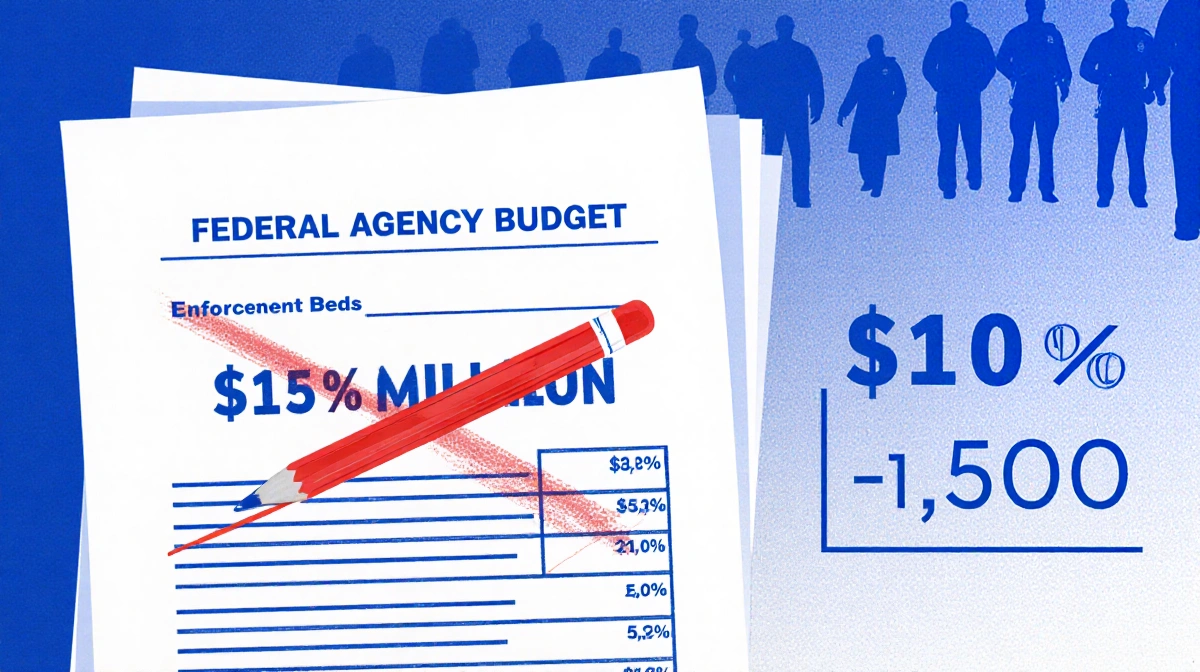
The bill contains funding for 12 federal agencies and aims to keep the federal payroll moving. It keeps ICE funding essentially flat at $10 billion for the remainder of the fiscal year that ends Sept. 30, even as the agency receives $75 billion of additional money for detention and enforcement from the Trump administration’s “big beautiful bill.” The package also cuts funding for ICE enforcement and removal operations by $115 million and reduces the number of ICE detention beds by 5,500.
A key feature is the allocation of $20 million for the procurement, deployment, and operations of body-worn cameras for ICE agents. The bill also encourages DHS to develop a uniform policy that would make federal law-enforcement officers clearly identifiable.
ICE Funding Sparks Controversy
Democrats in both chambers have expressed deep concerns about the bill’s treatment of ICE. Rep. Ted Lieu, D-Calif., said, ‘There should absolutely be reforms to ICE. And if there aren’t reforms, I’m going to be a hard no on that bill, the DHS bill,’ before the bill’s release. Rep. Ro Khanna, a California Democrat, called the $18 billion allocation “a surrender to Trump’s lawlessness” and said he would lead the opposition.
The bill “leaves in place an additional $18 billion a year for ICE, tripling the budget,” said Khanna. Democratic appropriator Rep. Rosa DeLauro, D-Conn., acknowledged that the package does not include broad reforms to rein in ICE, but she endorsed it, arguing it would prevent a partial shutdown and that it does include some Democratic priorities.
DeLauro highlighted that the bill cuts ICE enforcement and removal operations by $115 million and reduces the number of ICE detention beds by 5,500. She also noted the $20 million for body-worn cameras and the encouragement for a new uniform policy to ensure officers are clearly identifiable.
Congressional Reactions and Vote Outlook
The House is expected to vote on the package later this week. DeLauro said GOP leaders have promised to hold a separate vote on just the Homeland Security portion of the package, giving Democrats an opportunity to oppose it without moving Washington toward another shutdown. ‘I understand that many of my Democratic colleagues may be dissatisfied with any bill that funds ICE,’ she said.
The Senate, which returns to Washington next week, has passed half of the 12 funding bills. It will require 60 votes to avoid a partial shutdown affecting the remaining agencies beginning on Jan. 31. Republicans hold 53 seats, so the Senate will need Democratic support to pass the DHS portion.
Sen. Ruben Gallego, D-Ariz., said on CNN, ‘We cannot vote for anything that actually adds more money and doesn’t constrain ICE.’ He warned that funding the “lawless, brutal Trump ICE operation” without significant reforms would have political and societal implications. Sen. Chris Van Hollen, D-Md., echoed the sentiment, saying he would not vote to give ‘one dime to support this lawless, brutal Trump ICE operation’ without ‘significant reforms to rein in this lawless ICE operation.’
Key Takeaways
- The 1,059-page bipartisan bill is the most comprehensive funding package yet, covering 12 agencies and aiming to keep the government running through Jan. 30.
- ICE receives an additional $18 billion annually, a move that has split lawmakers and sparked intense debate.
- Democrats have called for reforms, while Republicans argue the bill is necessary to avoid a shutdown, creating a legislative showdown that could decide the fate of the federal workforce.