
At a Glance
- Tesla announced it will restart work on Dojo3, focusing on space-based AI compute instead of Earth-based self-driving training.
- The move follows the company’s shutdown of its Dojo team five months ago and a shift from in-house silicon to partners.
- Musk is recruiting engineers directly and plans to use SpaceX’s upcoming IPO to fund a constellation of compute satellites.
- Why it matters: It signals Tesla’s ambition to pioneer off-planet data centers, potentially reshaping AI infrastructure.
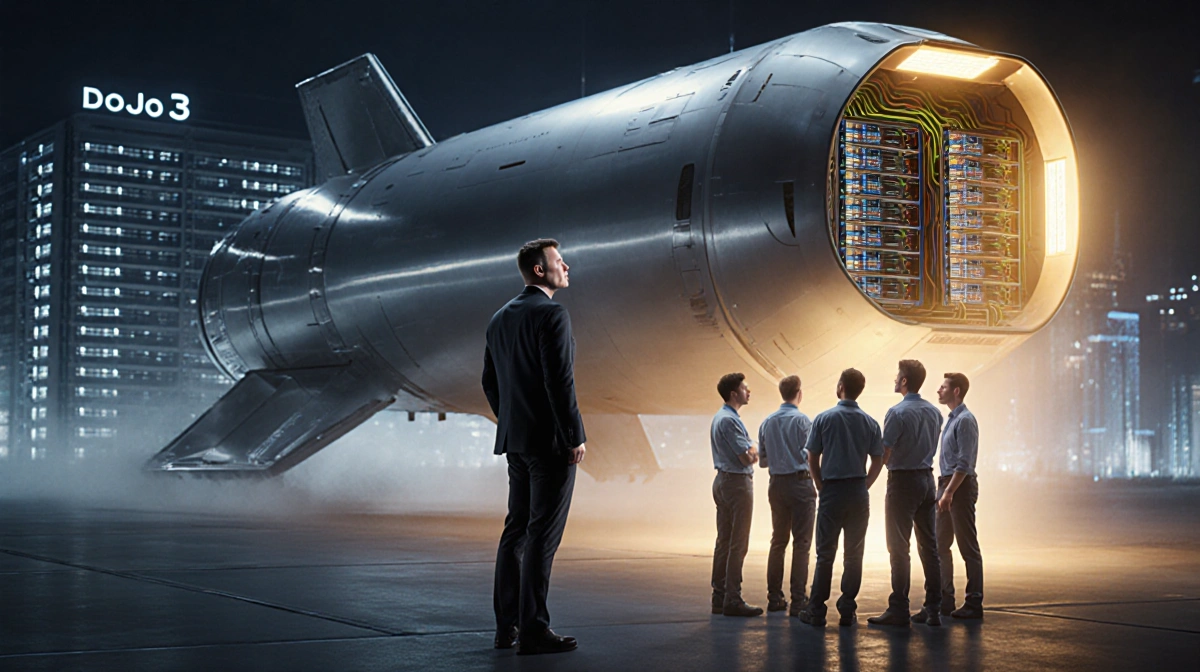
Tesla’s decision to revive its abandoned Dojo3 chip project marks a dramatic pivot from its previous focus on Earth-based autonomous driving. Over the long weekend, Elon Musk announced that the new Dojo3 will be dedicated to space-based AI compute, a move that could redefine where and how AI training happens.
The Comeback of Dojo3
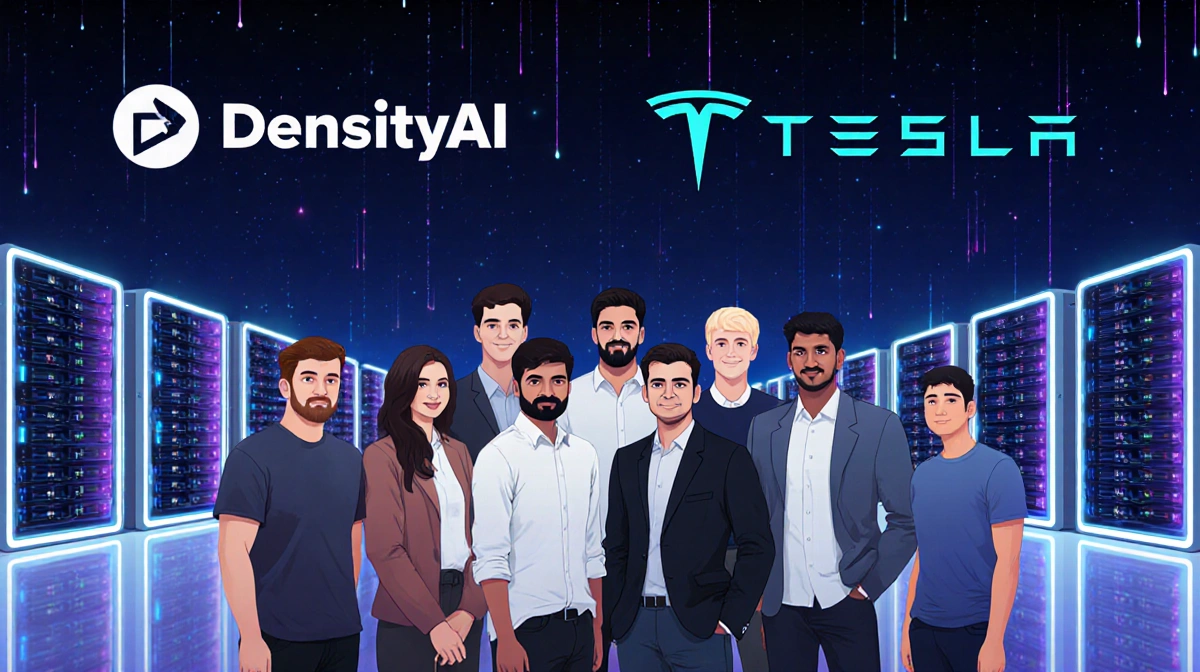
After the departure of Dojo lead Peter Bannon and the disbanding of the team, Tesla had effectively shut down its Dojo effort. Around 20 former Dojo workers joined DensityAI, a startup founded by former Dojo head Ganesh Venkataramanan and ex-Tesla employees Bill Chang and Ben Floering.
Bloomberg had reported that Tesla would lean more heavily on Nvidia, AMD, and Samsung for compute and chip manufacturing rather than continue developing its own silicon. Musk’s latest comments suggest that strategy has shifted again.
Musk explained on X that the decision to revive Dojo was based on the state of Tesla’s in-house chip roadmap. He noted that Tesla’s AI5 chip design was in good shape.
The AI5 chip, manufactured by TSMC, powers Tesla’s automated driving features and Optimus humanoid robots. Last summer, Tesla signed a $16.5 billion deal with Samsung to build AI6 chips that promise to power vehicles, Optimus, and high-performance AI training in data centers.
From Earth to Space: New Mission
“AI7/Dojo3 will be for space-based AI compute,” Musk said on Sunday, positioning the resurrected project as more of a moonshot.
The timing of the announcement is notable. At CES 2026, Nvidia unveiled Alpamayo, an open-source AI model for autonomous driving that directly challenges Tesla’s FSD software. Musk commented on X that solving the long tail of rare edge cases in driving is “super hard,” adding: “I honestly hope they succeed.”
Musk and several other AI executives have argued that the future of data centers may lie off-planet, since Earth’s power grids are already strained to the max. Axios recently reported that OpenAI CEO Sam Altman is also excited about the prospect of putting data centers into orbit. Musk has an edge over his peers because he already controls launch vehicles.
Per Axios, Musk plans to use SpaceX’s upcoming IPO to help finance his vision of using Starship to launch a constellation of compute satellites that can operate in constant sunlight, harvesting solar power 24/7.
Recruiting Engineers
To achieve that, Tesla is now gearing up to rebuild the team it dismantled months ago. Musk used the same post to recruit engineers directly, writing: “If you’re interested in working on what will be the highest volume chips in the world, send a note to [email protected] with 3 bullet points on the toughest technical problems you’ve solved.“
This direct-to-talent approach signals the urgency and ambition behind the project. It also reflects a broader trend of companies reaching out to engineers on social platforms to fill highly specialized roles.
Industry Context
The shift to space-based AI compute is part of a larger conversation about the limits of terrestrial infrastructure. With power grids reaching capacity, the idea of placing compute in orbit offers a potential solution to continuous power availability.
However, there are many roadblocks to making AI data centers in space a reality. Cooling high-power compute in a vacuum remains a significant technical challenge. Musk’s comments of Tesla building “space-based AI compute” fit a familiar pattern: float an idea that sounds far-fetched, then try to brute-force it into reality.
Key Takeaways
- Tesla is reviving Dojo3, redirecting it from Earth-based autonomous driving training to space-based AI compute.
- The company will recruit engineers directly and intends to fund the effort through SpaceX’s IPO.
- The initiative aligns with a broader industry debate about off-planet data centers as a response to terrestrial power constraints.
- Technical hurdles, especially cooling in vacuum, remain a major obstacle.
In a rapidly evolving AI landscape, Tesla’s bold pivot underscores its willingness to explore unconventional solutions. Whether the company can overcome the engineering and logistical challenges of space-based compute remains to be seen.
Techcrunch Event
San Francisco | October 13-15, 2026
The event highlighted Tesla’s new direction and its potential impact on the AI and automotive sectors.