
At a Glance
- Eight more nations invited to Trump’s Gaza oversight body, bringing total to at least 20 countries
- Hungary and Vietnam accept; India, Australia, Jordan, Greece, Cyprus and Pakistan still deciding
- $1 billion secures permanent seat; no fee for three-year term
- Why it matters: New board could rival U.N. Security Council on global conflicts
President Donald Trump’s newly created Board of Peace is rapidly expanding, with at least eight additional countries receiving invitations to join the body that will oversee Gaza’s reconstruction and could reshape how global conflicts are managed.
New Invitations
The U.S. has extended invitations to Hungary, Vietnam, India, Australia, Jordan, Greece, Cyprus and Pakistan, according to statements from their governments on Sunday and Monday. Hungary and Vietnam have already accepted.
Hungarian Prime Minister Viktor Orbán, one of Trump’s strongest European allies, accepted the invitation, Foreign Minister Péter Szijjártó told state radio.
Vietnam’s Communist Party chief To Lam also accepted, according to a foreign ministry statement.
India has received an invitation, a senior government official confirmed, speaking anonymously because the information hasn’t been made public.
Australia will discuss the invitation with Washington “to properly understand what this means and what’s involved,” Deputy Prime Minister Richard Marles told Australian Broadcasting Corp.
Jordan, Greece, Cyprus and Pakistan confirmed receiving invitations on Sunday. They join Canada, Turkey, Egypt, Paraguay, Argentina and Albania, which previously acknowledged invitations. The total number of invited countries remains unclear.
Membership Structure
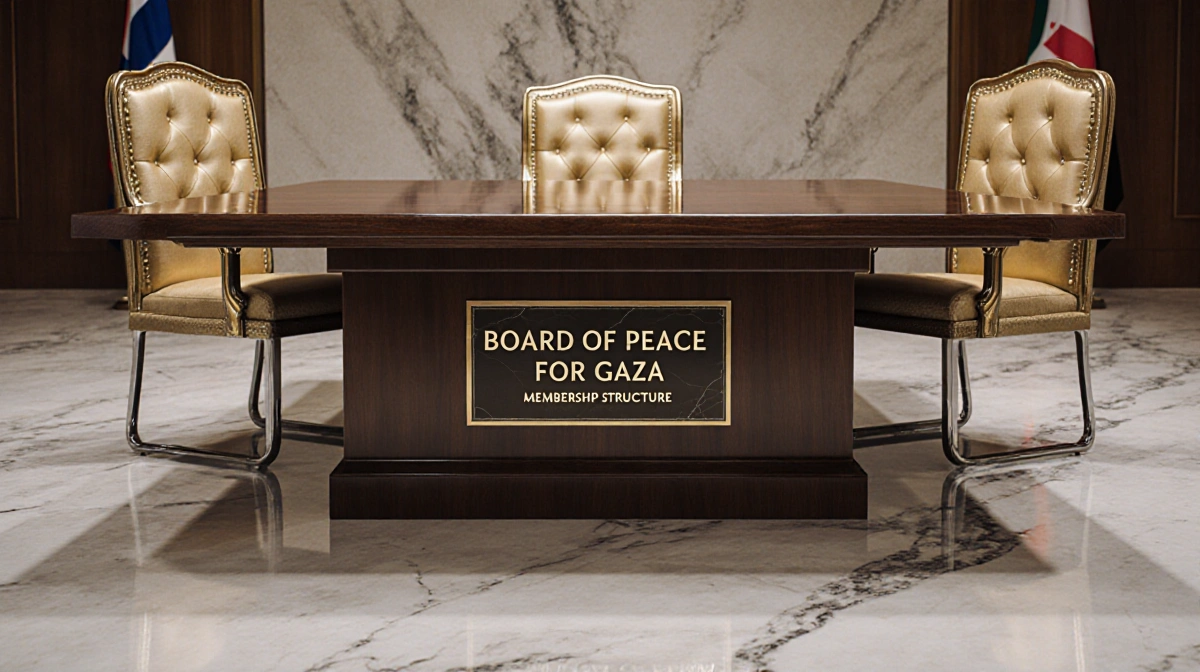
A $1 billion contribution guarantees permanent membership on the Trump-led board, according to a U.S. official who spoke anonymously about the unpublished charter. Countries can also serve three-year terms without payment.
The official said funds raised will support Gaza’s rebuilding efforts.
Gaza Oversight Role
Board members will supervise Gaza’s next phase as the Oct. 10 ceasefire enters its challenging second stage. Responsibilities include:
- Overseeing a new Palestinian committee in Gaza
- Deploying an international security force
- Disarming Hamas
- Reconstructing war-damaged territory
Global Ambitions
In Friday letters to world leaders, Trump said the Board of Peace would “embark on a bold new approach to resolving global conflict.” This vision positions the body as a potential alternative to the U.N. Security Council, which has been paralyzed by U.S. vetoes on Gaza action.
Trump’s letters noted the Security Council had endorsed the U.S. 20-point Gaza ceasefire plan, which includes creating the board. Several invitees posted the letters on social media.
Executive Committee Announced
The White House unveiled an executive committee to implement the board’s vision, including:
- U.S. Secretary of State Rubio
- Trump envoy Steve Witkoff
- Trump’s son-in-law Jared Kushner
- Former British Prime Minister Tony Blair
- World Bank President Ajay Banga
- Trump’s deputy national security adviser Robert Gabriel
- Israeli billionaire Yakir Gabay
Representatives from Qatar, Egypt and Turkey-ceasefire monitors-also serve. Turkey’s involvement is significant given its strained ties with Israel but strong relations with Hamas, potentially helping persuade the group to relinquish Gaza control and disarm.
Israeli Objection
Israel on Saturday criticized the executive committee, saying it “was not coordinated with Israel and is contrary to its policy,” according to Prime Minister Benjamin Netanyahu’s office. The rare rebuke of Washington didn’t include specific details.
Official List Coming
The U.S. plans to release its official member list in coming days, likely during the World Economic Forum in Davos, Switzerland.
The Trump administration has already slashed U.N. funding, diminishing the organization’s influence as this new peace initiative gains momentum.
Key Takeaways
- The Board of Peace is assembling a diverse coalition spanning Europe, Asia, the Middle East and the Americas
- Financial commitment varies dramatically: $1 billion for permanent status versus free three-year terms
- The initiative directly challenges existing multilateral structures, particularly the U.N. Security Council’s authority
- Israel’s objection highlights potential friction with traditional allies as the administration pursues its Gaza strategy
- The board’s success will largely depend on whether invited countries ultimately join and contribute resources